
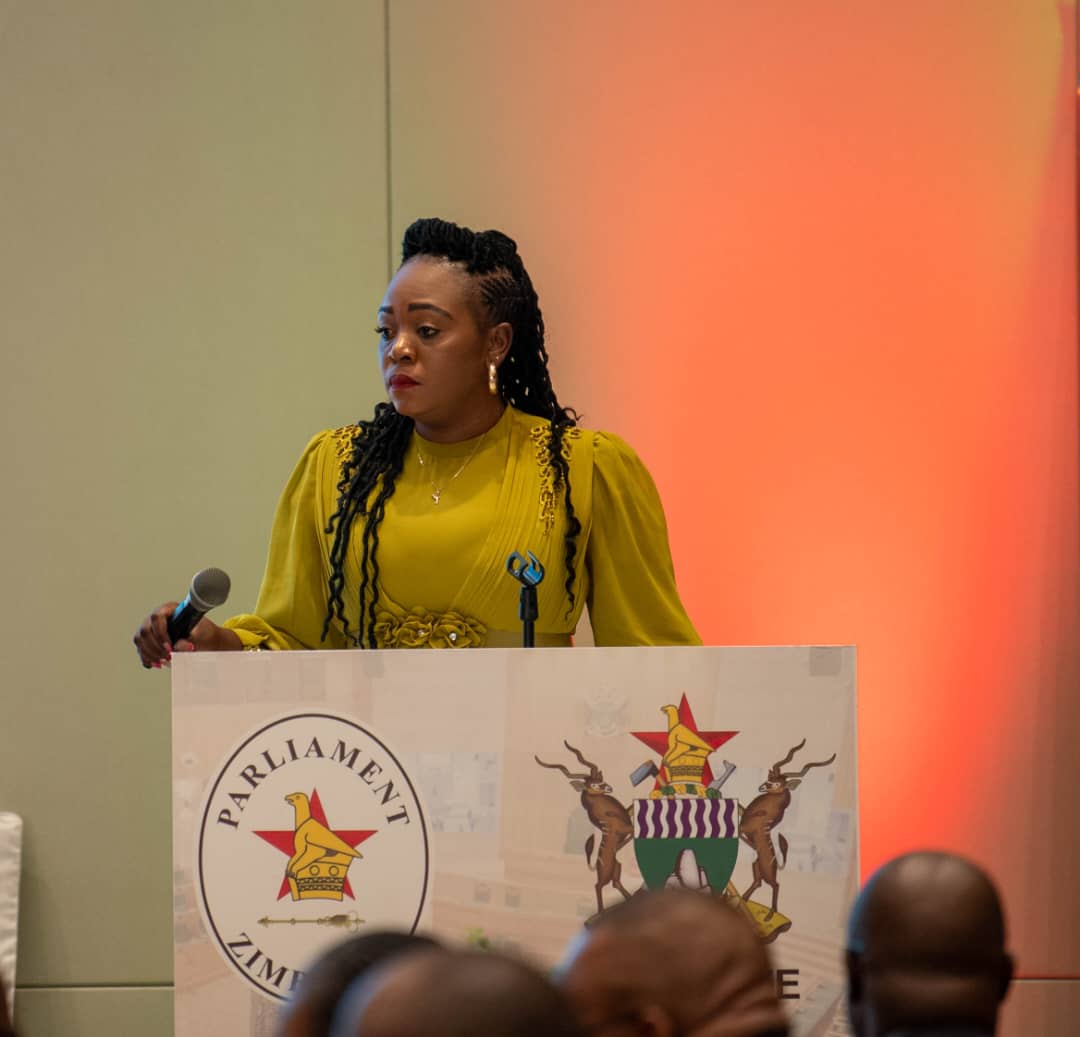

Harare (New Ziana)– Cyber-attacks are increasing each day and are posing a huge threat to national security, a Cabinet Minister has said.
Information Communication Technology Postal and Courier Services, Tatenda Mavetera, said this on Wednesday while handing over laptops and phones to winners of the Hackathon in the capital.
“We must stay ahead of these threats and continuously step on them with our cyber defence forces,” she said.
“With this army of educated young innovators our country can build its technical solutions rather than relying on software from other countries. Hackathon provides a unique way that we can use to identify vulnerabilities and work on them.”
A cyberattack is any intentional effort to steal, expose, alter, disable, or destroy data, applications or other assets through unauthorized access to a network, computer system or digital device.
Zimbabwe is currently using the Cyber Bill which was enacted in 2021 to protect citizens from hackers and bullies, with perpetrators liable to a jail sentence.
“There is need for collaboration between the public and private sectors as cyber security is not just a governments responsibility, but it requires a collective effort,” said Mavetera.
Contestants of the hackathon were drawn from 12 universities with 49 teams in pairs.
Tertiary institutions that competed include the university of Zimbabwe (UZ), National University of Science and Technology (NUST), Harare Institute of Technology (HIT), Great Zimbabwe University (GZU), Bindura University of Science Education (BUSE), Chinhoyi University of Technology (CUT), Solusi, Harare and Masvingo Polytechnics, Midlands State University (MSU), Eden University from Zambia, Telone Institute and the Reformed Church University.
Bakertiliy Digital Technology Services organised the competition, which included people with disabilities who competed in different categories.
A hackathon (also known as a hack day, hackfest, datathon or codefest, a partmanteau of the words “hacking” and “marathon”) is an event where people engage in rapid and collaborative engineering over a relatively short period of time such as 24 or 48 hours.
They are often run using agile software development practices, such as sprint-like design wherein computer programmers and others involved in software development, including graphic designers, interface designers, product managers, project managers, domain experts and others collaborate intensively on engineering projects, such as software engineering.
New Ziana

