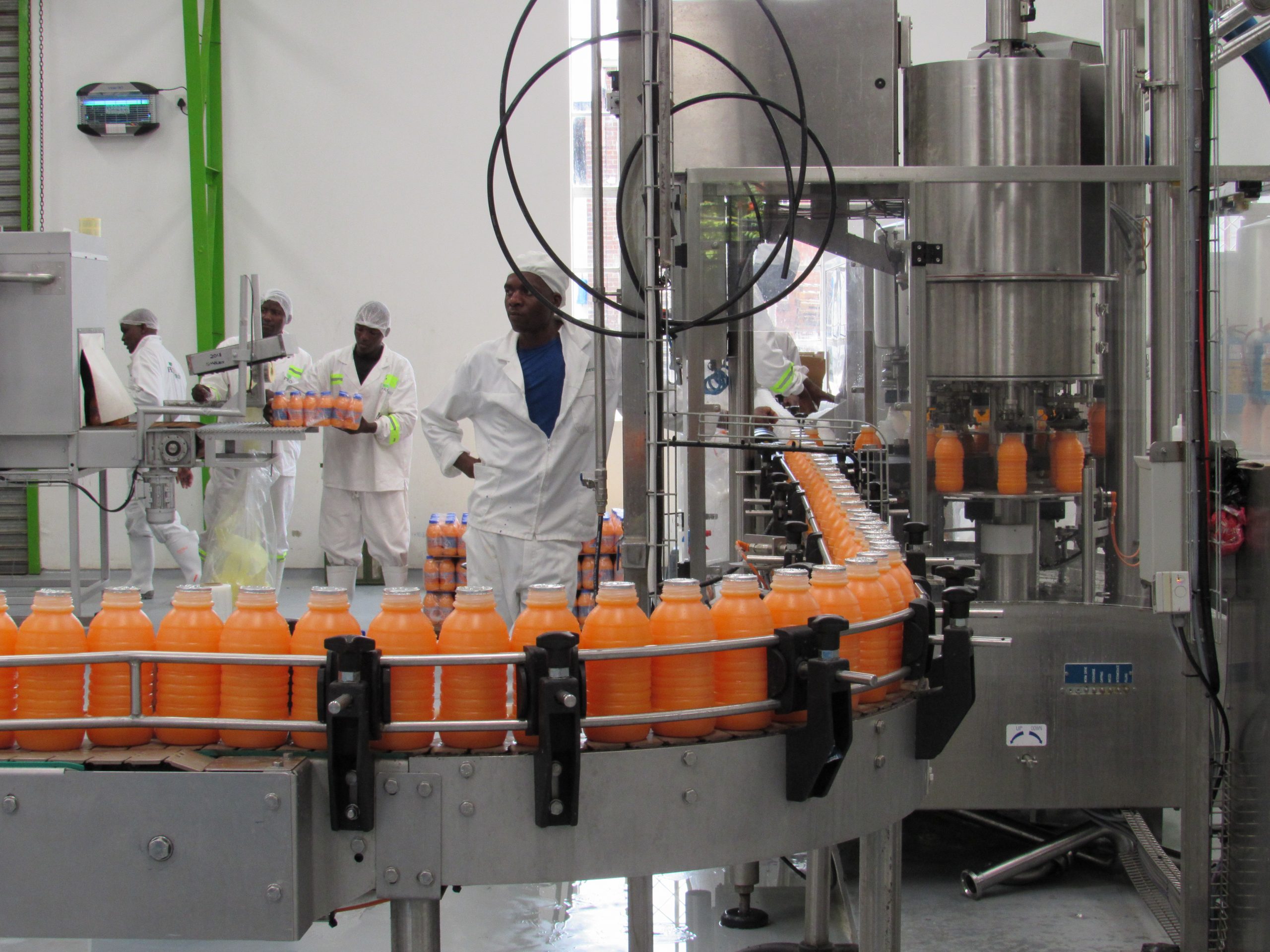
Harare (New Ziana) – Capacity utilization in the manufacturing sector remained static at 44.7 percent in the third quarter of the year, weighed down by under-performance by small and medium size enterprises in the industry, the Zimbabwe National Statistical Agency (ZimStat) has said.
But large manufacturing enterprises registered a slight increase in capacity utilisation in the period to 56.8 percent from 54.7 percent in the second quarter.
Releasing the statistics, ZimStat official, Kuda Chiguma said the mining sector recorded a slight improvement in capacity utilisation in the third quarter of 52.6 percent, up from 51.1 percent registered in the second quarter of the year.
Both sectors had been affected by challenges such as tight cash flows, power shortages and economic and political uncertainty after the August general elections.
This was found in a business tendency survey carried out by ZimStat in the period.
Chiguma said the tendency survey collected information on the general business climate, capacity utilisation, production, employment, order books, inventories, selling prices, supplier delivery time and the main constraints to production. The overall response rate was 59.0 percent and 81.8 percent for the manufacturing and mining sectors respectively.
Of the respondents in the manufacturing sector, 25.3 percent were more optimistic towards the general business climate in the third quarter, while in the mining sector 23.9 percent were of the same view.
On the other hand, 45.2 percent in the manufacturing sector viewed production levels as having remained static when compared to the second quarter, while 22.4 percent were of the view that the levels had increased.
“For the mining sector, 45.7 percent of the respondents had the perception that production levels had remained almost the same in the third quarter compared to the previous quarter,” the ZimStat report said.
“Excluding seasonal variations, 70.7 percent of the respondents in the manufacturing and mining sectors report their firms’ total employment levels as having remained unchanged during the third quarter 2023 against second quarter 2023.”
All manufacturing sub-sectors had more than 50 percent of the respondents anticipating the employment levels to remain the same during the fourth quarter, while on the level of order books, 55.5 percent of respondents in the manufacturing sector were of the view that they were normal for the season and in the mining sector, 70.7 percent of the respondents held the same sentiment.
Sentiments towards stocks of finished goods were such that 5.9 percent and 6.5 percent in the manufacturing and mining sectors respectively considered them normal, while proportions of respondents that felt their third quarter stocks of raw materials as being normal were 52.8 percent for manufacturing and 69.6 percent for the mining sector.
“The outlook for selling prices was such that 64.3 percent of respondents in the manufacturing sector and 53.3 percent in mining anticipated no change in the selling prices during the fourth quarter,” the report said. “In terms of supplier delivery time, 12 percent of respondents in the manufacturing sector and 9.8 percent in the mining sector viewed the turnaround time in third quarter 2023 as having been faster that was in the second quarter 2023.”
The manufacturing sector’s purchasing manager index for the third quarter 2023 was 39.6 percent, a 0.5 percent decrease to that of the second quarter which stood at 40.1 percent. This sector’s confidence index increased from 3.5 in the second quarter to 8.3 in the third quarter. The mining confidence index decreased from 12.7 in the second quarter to 4 in the third quarter.
New Ziana