Harare, (New Ziana)-The Zimbabwean Parliament is considering a proposal to amend the law to ban smoking in public places amid concerns over the health implications of the habit.
Shamva South legislator Joseph Mapiki tabled a motion in the National Assembly last Thursday, calling for the amendment of the Public Health (Control of Tobacco) Regulations, Statutory Instrument (SI) 264 of 2002.
The amendment, if adopted, will see the coverage of the law extending to high-traffic public areas, including bus terminuses and markets, which are not banned under current regulations.
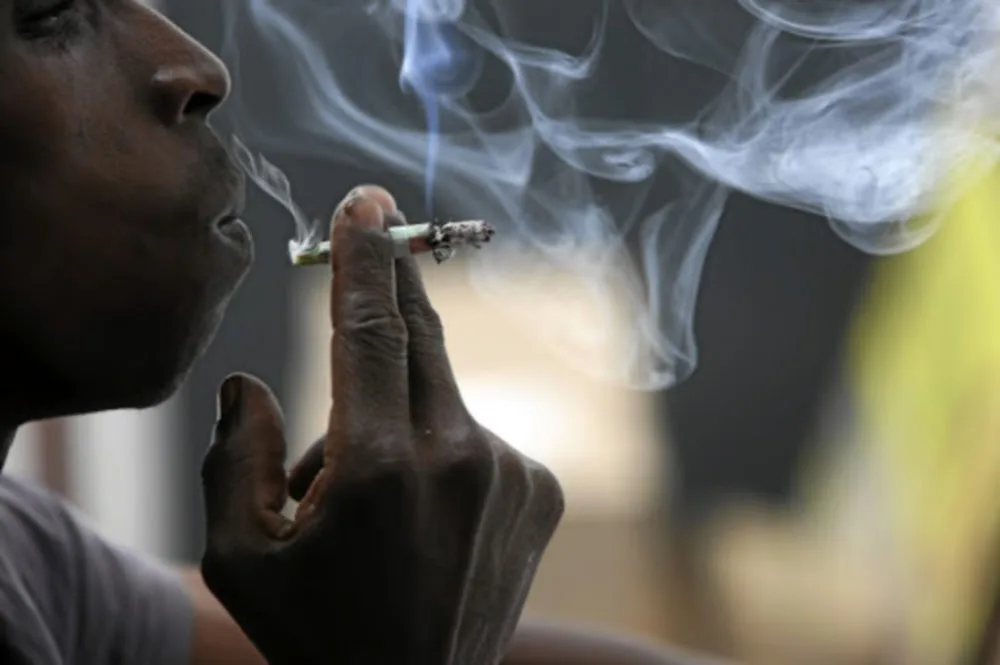
Mapiki expressed concern over the health risks caused by passive smoking especially to vulnerable groups.
“Children and vulnerable populations are particularly at risk, as their developing bodies are more vulnerable to the harmful effects of tobacco smoke,” he said, adding that many people continued to smoke at places like bus stops, markets and on crowded city streets without facing any consequences due to weak monitoring and lack of accountability.
He urged the Ministry of Health and Child Care to lead public awareness campaigns to educate citizens about the dangers of passive smoking.
“The Public Health (Control of Tobacco) Regulations, 2002 (Statutory Instrument 264 of 2002), prohibit smoking in designated public places such as public transport, public halls, public gatherings and eating places. These regulations were established to protect non-smokers from the harmful effects of second-hand smoke and to promote public health,” he said.
“However, while these measures are commendable, they do not encompass all public spaces where individuals congregate, leaving gaps in our tobacco control framework.”
Mapiki said he had identified significant dangers associated with passive smoking.
“It was noted that exposure to passive smoke, also known as second-hand smoke or environmental tobacco smoke, poses significant health risks to non-smokers,” he said.
Some countries including Ireland, Norway, the United Kingdom, Canada, Australia and New Zealand, have implemented near-total bans on smoking in public places and workplaces.
“These bans are usually comprehensive, covering indoor public spaces, transport and often extending to outdoor areas adjacent to building entrances,” said Mapiki, adding that it was difficult to walk on streets where people smoke without regard for others.
He also called for the drafting of a comprehensive Tobacco Control Act to ban smoking in enclosed public places and workplaces.
New Ziana