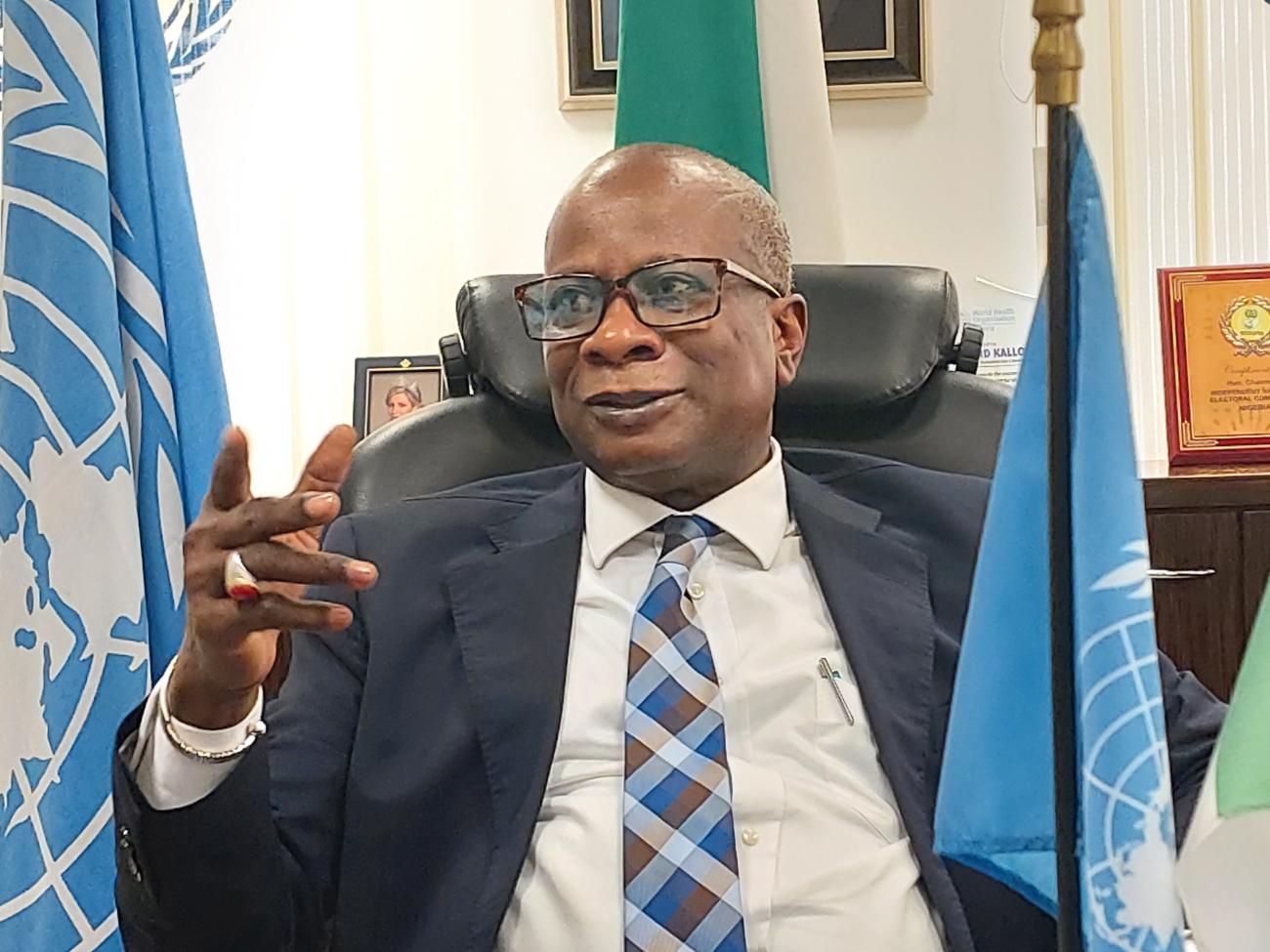
Harare, (New Ziana) – The United Nations (UN) and its partners have mobilized US$2 billion out of the US$2.8 billion budgeted towards implementing the five year Zimbabwe UN Sustainable Development Cooperation Framework since 2022, an official has said.
The platform was designed to ensure that the UN development system remains strategically aligned with Zimbabwe’s sovereign development trajectory.
Addressing delegates at a Joint Sustainable Development Goals (SDGs) and Cooperation Framework Steering Committee meeting in Harare on Thursday, UN Resident and Humanitarian Coordinator Edward Kallon said the Cooperation Framework has evolved into the central platform for strengthening partnerships and financing for the SDGs in Zimbabwe.
“Since implementation began in 2022, the UN and its partners have mobilized approximately US$2 billion of the US$2.8 billion planned for the five years of the Cooperation Framework,” he said.
“Achieving this level of delivery in the context of shrinking Official Development Assistance (ODA) and tightening global financial conditions underscores the value of a strategic, nationally aligned, and jointly owned Cooperation Framework as an instrument to attract and align financing behind national priorities and the 2030 Agenda,” he added.
Kallon said last year alone, during the fourth year of the Cooperation Framework, more than US$288.5 million was mobilized in support of its four pillars, namely people, planet, prosperity, and peace.
“Significantly, more than 54 percent of these resources were delivered through joint programs and initiatives. This marks a decisive shift towards collaborative programming, surpassing the global 30 percent benchmark. It is enhancing coherence, reducing transaction costs, and clearly improving value for money, while at the same time strengthening Government–UN co-leadership and national ownership,” he said.
Last year, the Cooperation Framework also began to generate concrete blended finance and private sector-driven initiatives.
“Joint investments in renewable energy involving the Government and Old Mutual, as well as partnerships with domestic financial institutions, are demonstrating how the Cooperation Framework can move beyond traditional ODA to leverage private capital, Diaspora resources, and innovative instruments, while upholding social inclusion, environmental sustainability, and
accountability,” Kallon said.
Chief secretary to the President and Cabinet Martin Rushwaya commended the development partners, saying their contribution to the approximately 52 percent of delivery achieved through joint programs was a testament to the power of pooled financing and a shared developmental vision.
He added that, to sustain and accelerate the gains of the framework, the government has institutionalized a rigorous culture of high performance and results-oriented governance.
“We have fully embraced performance contracting and awards to enhance accountability across all tiers of public administration. These contracts are the standard by which we measure our commitment to the people of Zimbabwe,” he said.
“By rewarding excellence and addressing underperformance, we are transforming the public service into a results-driven system. We expect our partnership with the United Nations to reflect this same rigor, ensuring that every joint initiative is backed by clear ownership, transparent reporting, and measurable impact on the ground,” he added.
New Ziana