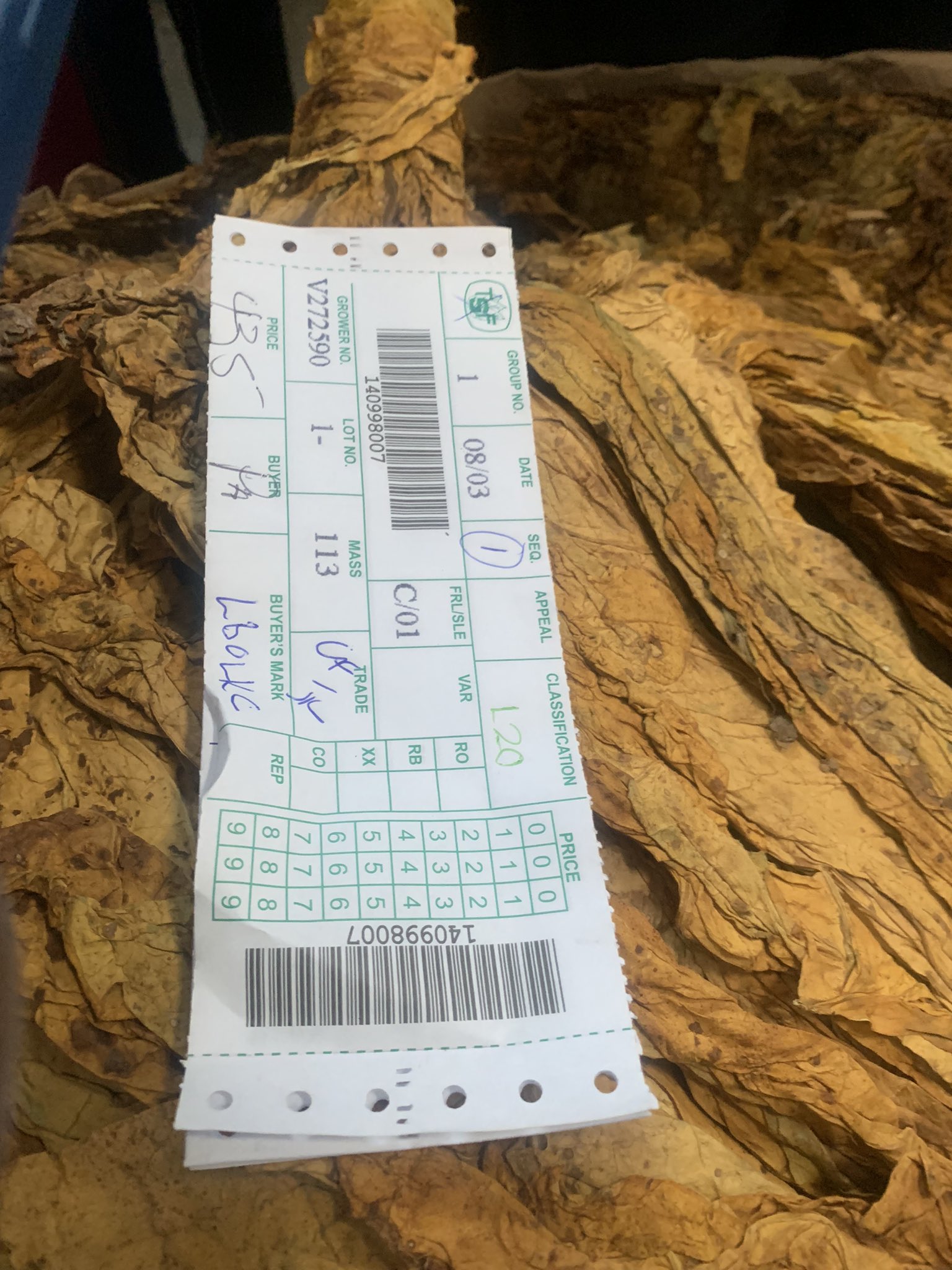
Harare, (New Ziana)-Zimbabwean farmers have so far sold 280.4 million kilograms of tobacco in the ongoing 2026 marketing season, statistics released by the industry regulator on Wednesday show.
Last year, Zimbabwe produced a record 354 million kilograms of the crop, and authorities have put the target for this season at 400 million kg of the golden leaf.
According to the statistics from the Tobacco Industry and Marketing Board (TIMB) on day 57 of sale, the volume of the crop has gone up 18 percent to a total of 280. 4 million kilograms which has so far gone under the hammer since the opening of the selling season in March this year.
During the comparative period last year, 237.2 million kilograms of tobacco had been sold, according to the official statistics.
The value of the crop sold is US$708 million, reflecting a 11 percent drop from US$800.3 million, which had been paid to farmers during the same period last year.
From the statistics, about 77 percent of bales worth 3.5 million kilograms have been rejected so far for various reasons including moisture, weight and mixed hands.
Tobacco prices at the country’s sales floor are continuing to tumble and as of Wednesday, a kilogram of tobacco went for an average price of US$2.26, reflecting a 25 percent decline from US$3.37 per kilogram during the comparable period last year.
The highest price paid so far per kilogram of tobacco is US$5.75, compared to US$6.30 per kg that was offered last year.
The TIMB and industry players argue that the lower tobacco prices this season are driven by global oversupply, reduced demand from China, and low initial participation from buyers.
According to analysts, for farmers, the challenge is sustaining livelihoods under shrinking margins while for international buyers, the concern is whether Zimbabwe can maintain quality and pricing stability in a competitive global market.
Smallholder farmers produce about 85 percent of Zimbabwe’s tobacco, making the crop a critical source of income for rural households.
Tobacco is Zimbabwe’s largest agricultural export and a major foreign currency earner, cultivated primarily by smallholder farmer, with the bulk of the crop exported to the Far East, Europe and the Middle East.
New Ziana