By Johnson Siamachira
Harare, (New Ziana) – Farmers across Africa require maize varieties that can perform under climate stress, declining soil fertility, pests, diseases, and changing market conditions. At the same time, breeding programmes need to adapt rapidly to the growing pressures through access to elite germplasm, strong testing networks, advanced research services and continuous capacity development.
The solution lies in not a single breakthrough, but in sustained investment in agricultural research, stronger seed systems and collaboration between breeders, seed companies and farmers. The International Maize Improvement Consortium for Africa (IMIC-Africa) is a CIMMYT-coordinated public-private partnership established to strengthen maize breeding programmes and improve farmers’ access to high-quality, affordable, high-yielding, and locally adapted maize seed. The consortium gives national programmes and seed companies extended access to CIMMYT’s early-and advanced-generation maize lines, strong multi-location testing networks, advanced research services and training opportunities.
For farmers, this work is important because improved varieties can reduce production risks and help stabilise harvests under climate stress. For seed companies and national breeding programmes, access to diverse germplasm and testing platforms can reduce product development costs, shorten breeding cycles and support the release of varieties that respond to both farmer needs and market demand.
“Smallholder farmers in Southern Africa, including Zimbabwe, often plant maize varieties that are relatively old and lack adequate adaptation to current climatic conditions and end up getting poor harvests,” said Dr. Zaman-Allah Mainassara, CIMMYT Country Representative for Zimbabwe. “Addressing this challenge requires helping breeding programmes reduce the time and cost associated with developing new varieties, allowing faster deployment of improved genetics and ensuring that farmers gain access to the latest climate-resilient cultivars.”

The consortium’s approach also reflects a broader shift in maize research. Beyond yield alone, breeders are increasingly selecting for traits such as tolerance to heat, waterlogging and low soil fertility, as well as resistance to pests, diseases and Striga, a parasitic weed that affects maize production in parts of Africa. Nutritional quality and market uses, including food, feed, fodder and industrial demand, are also becoming more important. For example in 2025, IMIC-Africa brought together partners from seven African countries and displayed more than 600 elite germplasm, from four product profiles and trait donor lines for drought, drought and heat, low nitrogen. It also featured 126 provitamin A-enriched maize lines that partners can select to boost their breeding programmes.
‘’The diversity allows us to combine expertise, share knowledge, and ensure that breeding priorities remain closely linked to the realities of African farmers and seed markets,’’ says DrDagne Wegary, CIMMYT Principal Maize Breeder for Southern Africa.
For emerging seed companies, access to improved germplasm can be decisive. Kabamba Mwanza, of Afriseed in Zambia said the company’s partnership with IMIC-Africa has helped its access to maize breeding material and strengthen its own product pipeline. ‘’Afriseed is growing fast because of this partnership and we are breeding the right seed at the right time.’’ Mwanza said
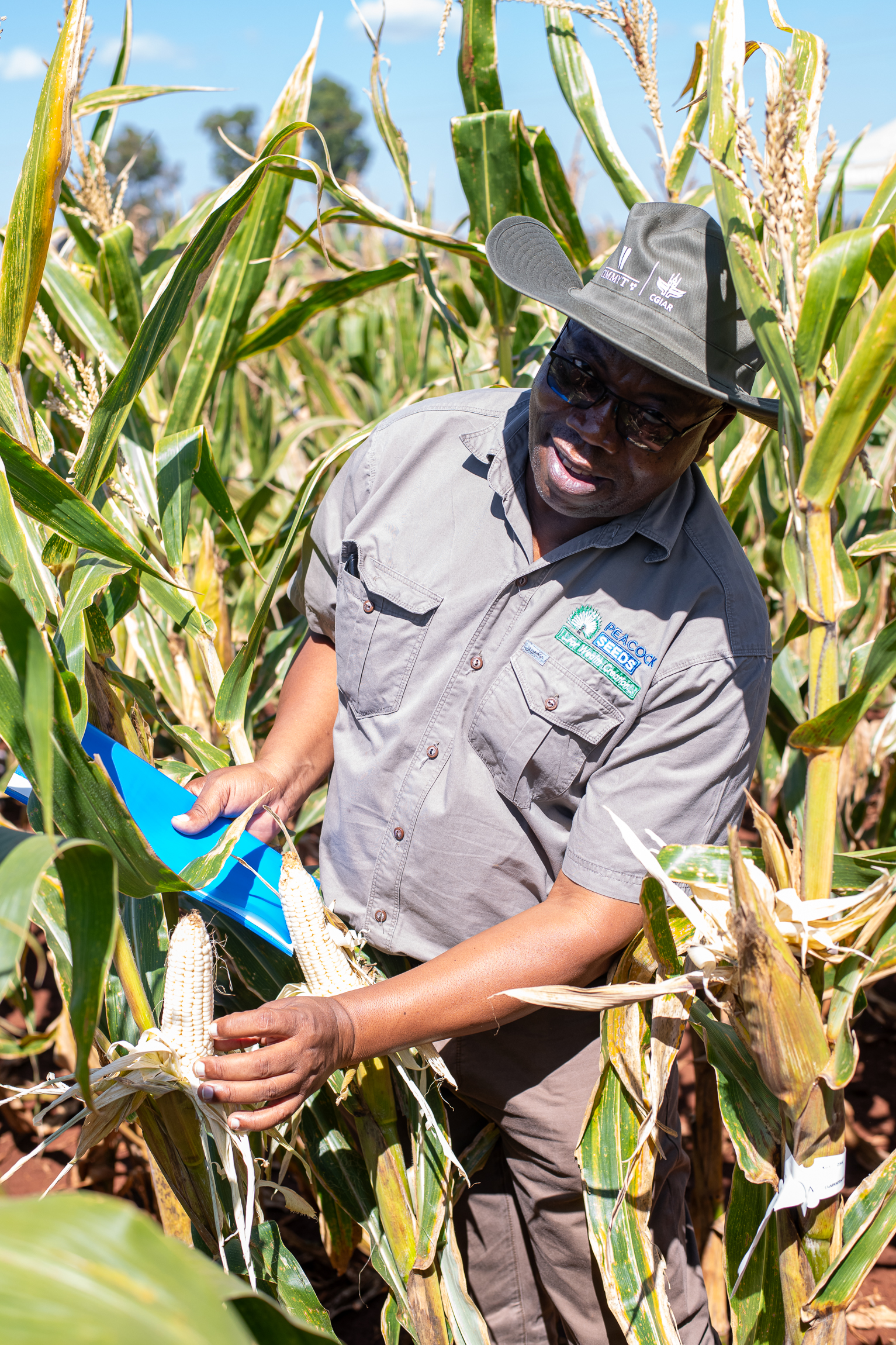
In Malawi, Dr. Felix Jumbe, founder of Peacock Seeds, said collaboration with CIMMYT through IMIC-Africa helped his company evaluate and release improved maize varieties.‘’ Collaboration with CIMMYT through the IMIC-Africa project has been extremely instrumental in facilitating me to release my own varieties,” said Dr Jumbe.“I was able to get some of the best germplasm, evaluate them through on-farm and on-station trials, and successfully released drought-tolerant varieties in the market. With the quality of maize we get from CIMMYT, it’s very possible to release new improved maize varieties every year,’’ added Dr Jumbe.
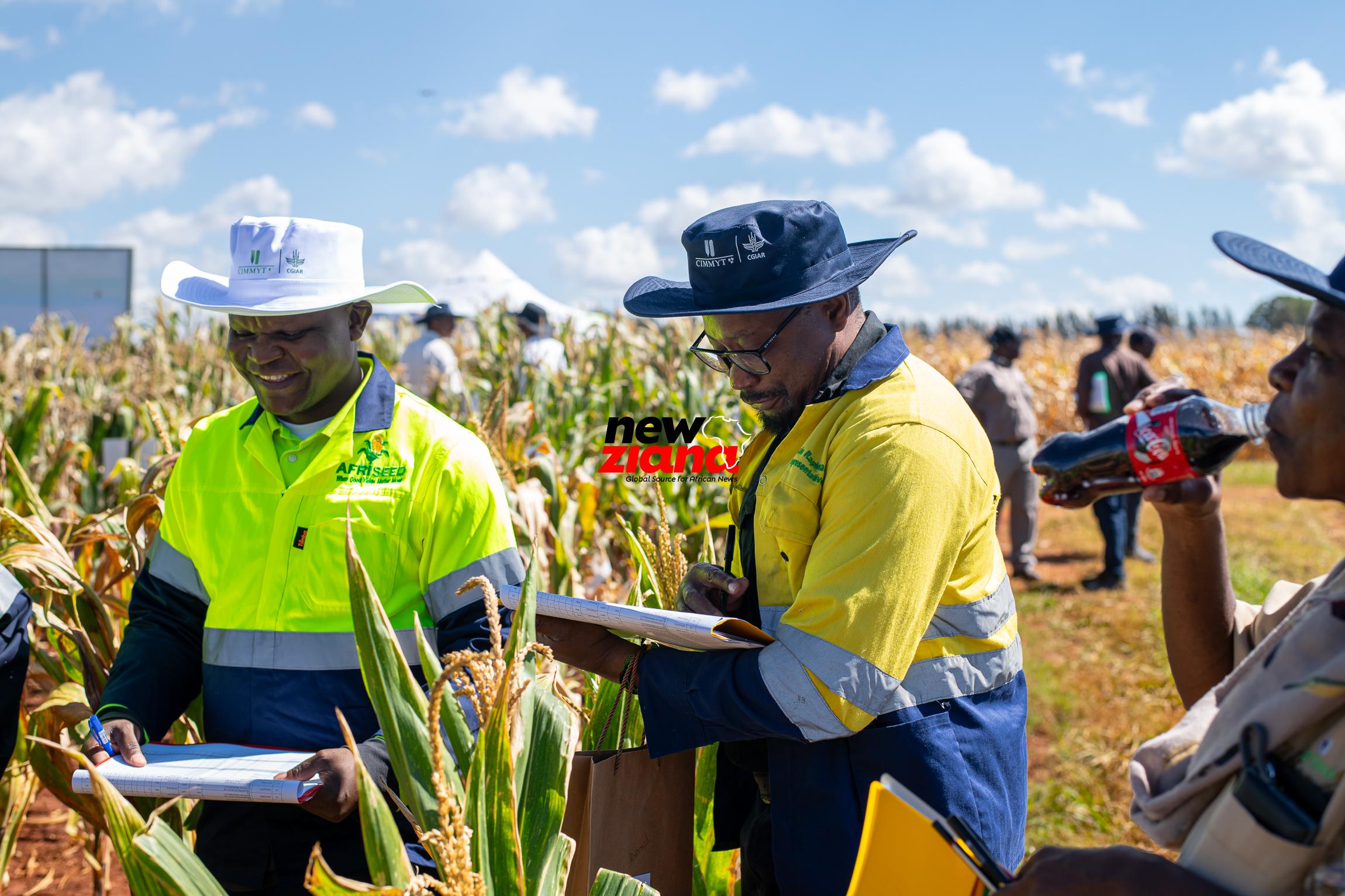
CIMMYT hosted the 2026 IMIC-Africa field day for Southern Africa on April 28 in Harare, Zimbabwe, bringing together more than 40 maize scientists, breeders and seed-sector representatives from public and private sector organisations across the region. The annual event provided a platform for partners to evaluate and select maize materials, exchange technical feedback and identify promising lines for further testing and development.
Addressing the participants, Dr. Xavier Mhike, CIMMYT Maize Breeder for Southern Africa, guided participants through the field demonstrations, explaining how the plots had been organizsed and documented. Participants assessed maize lines at different stages of the breeding pipeline, from early to advanced-stage materials. The field day was designed not only as a showcase, but also as a practical selection exercise. Breeders moved through the plots, compared materials, discussed traits and submitted selections aligned with their breeding goals and market needs. Participants had the opportunity to evaluate over 600 maize lines across the breeding pipelines. Selections focused on traits most critical to African maize systems: high yield potential, tolerance to drought, heat stress tolerance and low soil fertility, resistance to Striga, pest tolerance, and nutritional quality.
Some participants described the range of materials on display as an important opportunity for breeding programmes. “It felt like a shopping mall for maize germplasm, offering outstanding choices for our breeding programme,” said Ronica Mukaro, a maize breeder with Zimbabwe’s Ministry of Agriculture, Mechanization and Water Resources Development. Such feedback forms a valuable contribution of field days, allowing breeding programmes, seed companies and researchers to assess what is working, identifying gaps and improve the pipeline before varieties reach farmers.
Participants called for stronger capacity-building efforts, particularly for the new generation scientists, to sharpen technical skills and promote market-responsive breeding. The field day finallyemerged as a powerful platform for sharing solutions, strengthening partnerships, and aligning innovation with market realities.
The visit was followed by an afternoon feedback session chaired by Dr. Dagne Wegary, Principal Maize Breeder, which created space for strategic reflection on the future of maize systems and the research priorities needed to address emerging challenges. The discussion also generated valuable market intelligence, highlighting the growing demand for yellow maize to reduce competition between human consumption and livestock feed currently reliant on white maize. Participants further emphasised the need for varieties with enhanced tolerance to ear rot and downy mildew; while also raising concerns about the spread of Goss’s wilt, a disease increasingly viewed as a regional threat following its detection in several provinces of South Africa. Drawing on experiences from Asia, Dr. AbduRahman Beshir highlighted how market segmentation, hybrid adoption, irrigation, mechanization and digital seed innovations can build more efficient and transparent seed sectors. Lessons and experiences from Bangladesh and Nepal underscored the value of understanding demand, strengthening seed traceability, linking supply with market needs and using digital tools to curb counterfeit seed, insights increasingly relevant for Africa.
As climate and market pressures intensify, IMIC-Africa is emerging as a vital platform for accelerating maize innovation and ensuring that improved seed reaches farmers faster, more efficiently and at scale.
‘’Science can reverse ‘’new normal’’ of hunger and climate change in Africa’’, says Dr Mainassara.