
By Sharon Chimenya
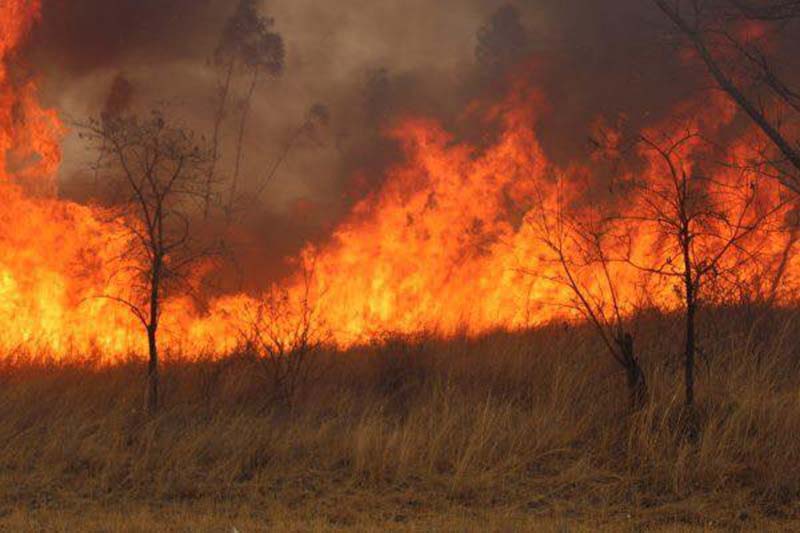
MASVINGO province has started preparations for the veld fire season, with farmers and communities urged to invest in prevention and equip firefighting teams.
This year, the country officially launched the Joint 2026 Integrated National Fire Management Framework and National Fire Week in May, marking a shift from seasonal, reactive firefighting to a highly coordinated, risk-informed, and prevention-led management strategy.
This year’s campaign theme is “Prevent, Protect, Preserve: Combating Veld Fires Together.”
The fire season, under Statutory Instrument (SI) 7 of 2007, runs from July 31 to October 31. Environment Management Agency (EMA) Provincial Manager Milton Muusha urged communities to begin work that will help protect the environment from veld fires.
Last Friday, the country commemorated World Environment Day, highlighting veld fire prevention as a key issue of concern.
Each year, many properties and large quantities of farm produce are destroyed by fires, leaving uninsured farmers particularly vulnerable to significant losses.
“Last month we launched the veld fire season, and we encourage communities to complete pre-suppression measures, such as removing excess vegetation, preparing fire guards, and ensuring firefighting equipment is ready,” he said.
“This is the time that they should have firefighting teams, which will help in extinguishing fires. We encourage communities to start now to do activities safeguarding the environment from veld fires.”
Other recommended pre-suppression measures include reducing biomass by harvesting thatching grass and baling hay, with the residues repurposed for gardening or animal feed.
Communities are encouraged to invest in fire beaters and knapsack sprayers when putting out veld fires to ensure safety and lessen the chances of firefighters incurring burn wounds.
Frequent veld fire outbreaks pose serious threats to forests, grasslands, wildlife, and, in some cases, human life. Such fires can cause severe environmental degradation, including increased soil erosion, biodiversity loss, and decreased soil fertility.
Smack Chimbeva, team leader for the Mudengu firefighting team in Bikita, said that when it comes to firefighting, everyone has a role to play in both prevention and extinguishing fires.
She said only children of school-going age and the elderly are exempted from firefighting, for fear that if the fire engulfs them, they are not able to flee from the site.
“I am appealing to communities that have existing firefighting teams to not fold their hands just because there is a team instituted and it is their job. It is, however, the duty of everyone when they see a fire, they should be there to help extinguish the fire so that we help protect the environment,” she said.
“Village heads, you are required to follow up to see where the fire started and who started it. After the assessment, you should know the properties damaged in your areas, and after that, you should send your report to the Chiefs, EMA, Forest Commission, and the police.”
According to the Environmental Impact Assessment and Ecosystems Statutory Instrument 7 of 2007, no person is allowed to light a fire outside their residential and commercial premises during the fire season.