

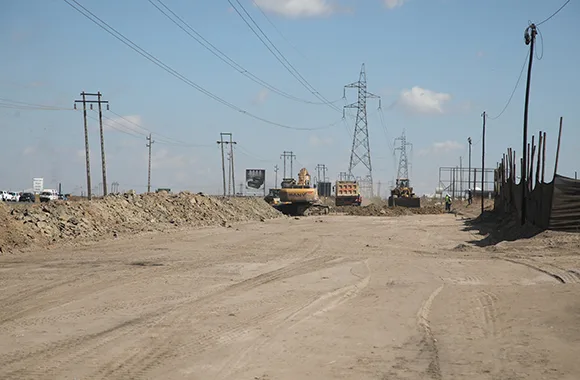
Harare, (New Ziana) – Construction of the Mabvuku Interchange is gathering momentum, with the Government saying the landmark project reflects the Second Republic’s commitment to modernizing the country’s transport infrastructure and improving connectivity.
The project, situated at the busy junction of Harare Drive and the Harare–Mutare Highway, is expected to transform one of the capital’s busiest transport corridors by easing chronic traffic congestion, improving road safety, and facilitating faster movement of people and goods between Harare, Mabvuku, Tafara, Ruwa and the eastern parts of the country.
According to the Government’s National Development Strategy 2 social media platform, the interchange is another demonstration of President Dr Emmerson Dambudzo Mnangagwa’s vision of building a modern, industrialised Zimbabwe through strategic infrastructure investment.
“The transformative infrastructure agenda of the Second Republic continues to reshape the nation’s landscape, with the Mabvuku Interchange construction project standing as the latest testament to His Excellency President Cde Dr E.D. Mnangagwa’s vision of a modern, industrialised Zimbabwe,” the Government said.
The Government noted that the interchange would provide lasting benefits to thousands of commuters who have endured years of congestion along the eastern gateway into Harare.
“This strategic interchange, once completed, will significantly de-congest traffic along one of Harare’s busiest corridors, enhancing connectivity and spurring economic activity in Mabvuku, Tafara and surrounding communities. It is infrastructure with a human face designed not merely for vehicles but to improve the quality of life for ordinary Zimbabweans who have endured years of transit bottlenecks,” the statement read.
The project forms part of the wider Greater Harare Interchanges Programme, which seeks to eliminate traffic bottlenecks at key intersections across the capital while supporting economic growth through efficient transport systems. The initiative follows the successful commissioning of the Trabablas Interchange and is among several major road infrastructure projects being undertaken to improve urban mobility.
Construction works at the Mabvuku Interchange have reached an advanced stage, with precast beams completed and ready for installation, while bridge support structures, steel girder installation, reinforcement works and deck slab preparations continue progressing steadily. Government has indicated that the interchange remains on course for completion later this year.
The Ministry of Transport and Infrastructural Development has previously said the overpass will elevate the Harare–Mutare Highway, while traffic entering and exiting Mabvuku will be regulated beneath the bridge through signalized intersections.
The Government said the pace of construction demonstrates its determination to deliver quality infrastructure that supports national development.
“Under the watchful eye of the Second Republic, this project is being executed with the speed and quality befitting a nation on the rise. The President’s clarion call that ‘Nyika inovakwa nevene vayo’ finds concrete expression in every pillar, every bridge deck and every metre of tarmac laid. This is Zimbabweans building Zimbabwe, brick by brick, interchange by interchange,” the statement said.
The Government further emphasized that the project reflects the Second Republic’s development philosophy of ensuring balanced national development.
“His Excellency President Cde Dr E.D. Mnangagwa has consistently demonstrated that his administration’s commitment to leaving no one and no place behind is not a slogan but a lived reality. The Mabvuku Interchange is proof that communities once neglected are now firmly in the centre of the national development matrix,” it said.
Once completed, the Mabvuku Interchange is expected to enhance trade, reduce travel times, improve commuter safety and strengthen the efficiency of one of Zimbabwe’s busiest regional transport routes linking Harare with eastern Zimbabwe and neighbouring Mozambique.
The government says the project is another milestone in implementing Vision 2030 through the infrastructure priorities outlined under the National Development Strategy 2.
New Ziana