Sharon Chigeza
MUTARE-Media houses need to elevate their coverage and embrace innovation as Zimbabwe assumes a non-permanent seat on the United Nations Security Council and prepares to take over the chairmanship of COMESA later this year.
To show the country’s economic progress, the media was also urged to have dedicated business desks to produce regular segments focusing on industrialisation, profiling progress on agro-processing, energy, value chain and beneficiation, and fertiliser production, among other critical sectors.
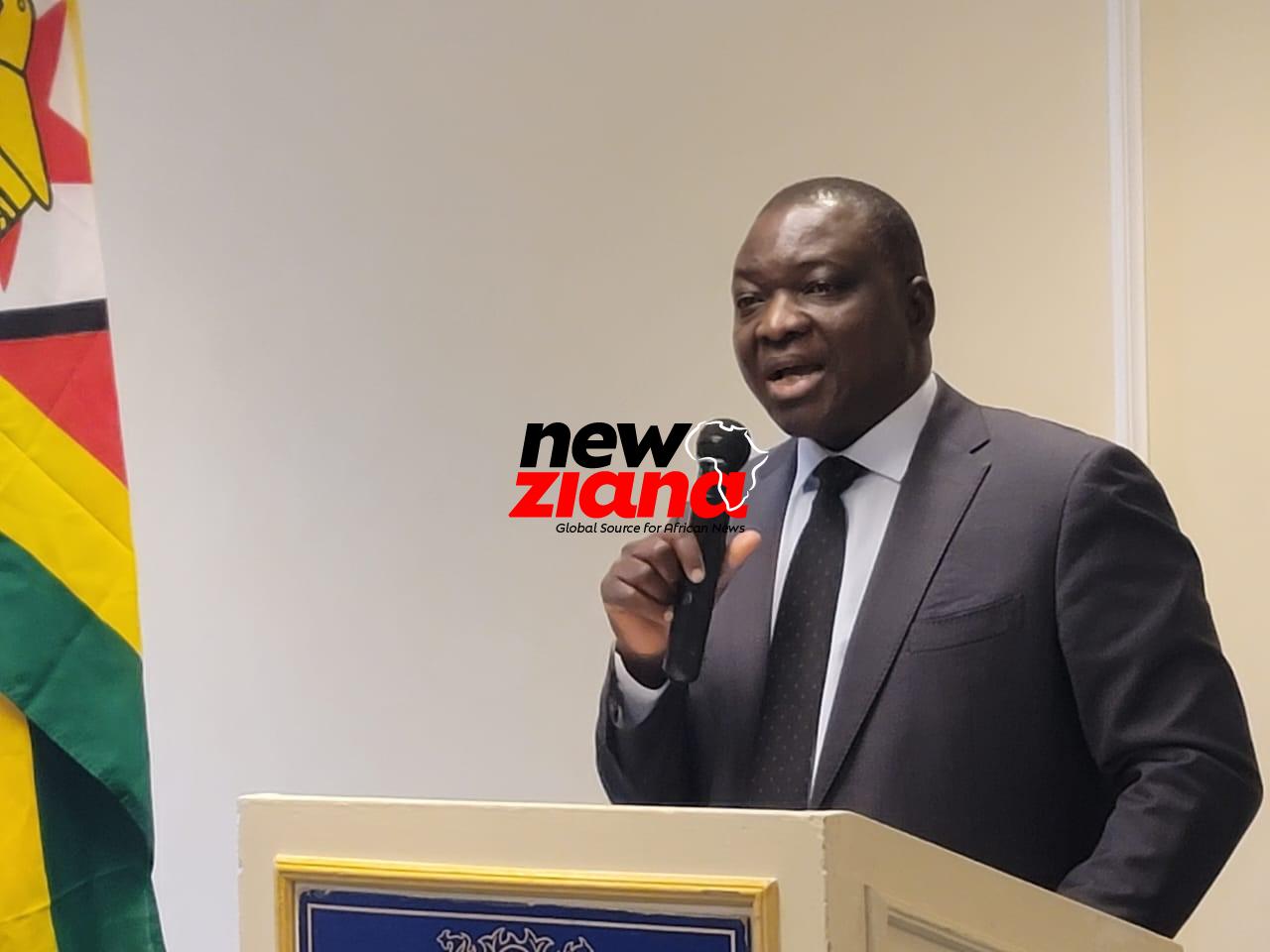
Speaking at the ministry’s midterm performance review workshop in Vumba, Manicaland Province, the Minister of Information, Publicity and Broadcasting Services, Zhemu Soda, said Zimbabwe’s elevated global standing demands a corresponding shift in how the media tells the country’s story and engages with both domestic and international audiences.
He said the country’s place in the world has changed as it now is a non-permanent member of the United Nations Security Council at ta time it is preparing to assume the chairmanship of COMESA this year.
“This places Zimbabwe at the centre of global and regional decision-making. Our media must therefore rise to the occasion to ensure that we unite Zimbabweans around Vision 2030, inform investors, entrepreneurs and financiers about the opportunities for trade and investment,” said Minister Soda.
He emphasised that the ministry’s strategic position in government requires it to lead government messaging, facilitate access to information, promote media development, and protect Zimbabwe’s image. He said the ministry’s work influences public perception, investor confidence, and fosters national unity and social cohesion.
While acknowledging progress made across several areas, the minister noted significant gaps that must be addressed, including implementation delays due to resource constraints, procurement processes, and infrastructure challenges. As such, he called for innovative solutions rather than allow constraints to define media houses’ destiny.
He called for accelerated operationalisation of licensed community radio stations to ensure equitable access to information and opportunities for participation in national development. He noted that the ministry has institutionalised memoranda of understanding with media institutions in South Africa, Kenya, China, and UNESCO, covering skills exchange, content production, and technology transfer for community radio, but stressed that a tracking mechanism must be put in place to realise the benefits of collaboration.
The Minister also called for upscaling digital terrestrial television deployment, embracing innovation and technology, and remaining responsive to emerging digital trends such as artificial intelligence while safeguarding the integrity of information and Zimbabwe’s sovereignty.
“Performance management is not merely a compliance exercise. It is a commitment to excellence and a demonstration of our accountability to the people of Zimbabwe. I therefore expect senior managers to ensure the effective utilisation of public resources, continuously address bottlenecks before they become obstacles to service delivery,” he added.
He urged ministry officials to cultivate a results-oriented culture where innovation is rewarded, teamwork is encouraged, and every member of staff understands how their contribution supports the broader objectives of the ministry and the whole of government.
“As we move into the second half of the year, let us renew our commitment to excellence, integrity and service. Let us challenge ourselves to exceed our targets rather than merely achieving them,” he said.
The workshop was convened to take stock of achievements, assess challenges, and recommit to delivering on the mandate entrusted to the ministry by President Emmerson Mnangagwa, with every programme expected to demonstrate value for money, align with Zanu PF resolutions, and support the National Development Strategy 2 and Vision 2030.