By Zachary Gava
Harare, (New Ziana) – President Emmerson Mnangagwa has challenged the Zimbabwe Defence Forces (ZDF) to accelerate modernisation, embrace science and technology and strengthen its capabilities to confront emerging security threats as the country pursues its Vision 2030 development agenda.
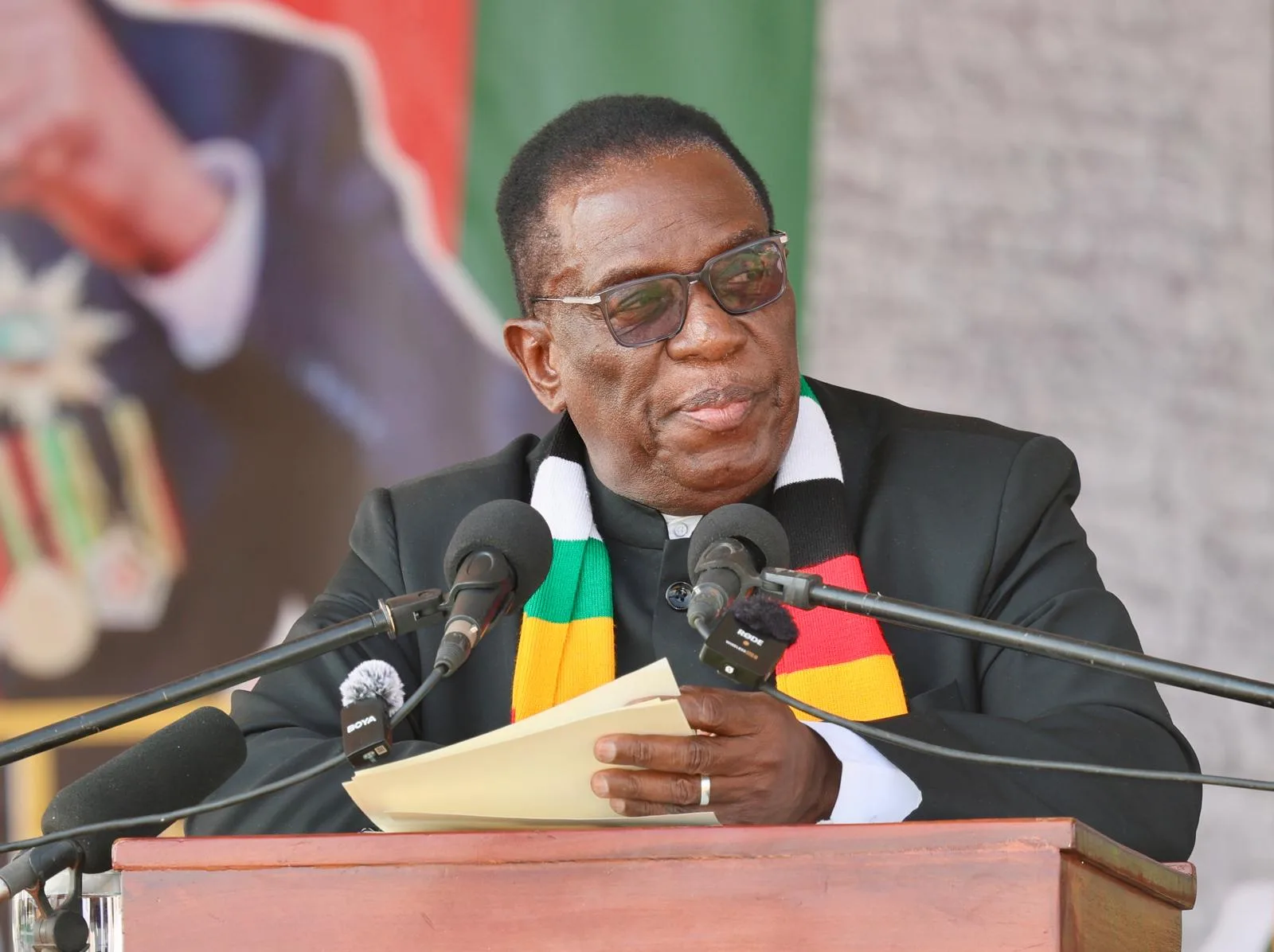
Speaking at the 46th anniversary of the Defence Forces Day at Rufaro Stadium in Harare on Tuesday, President Mnangagwa said Zimbabwe’s security environment was evolving amid growing global instability, making it imperative for the country to continuously adapt its defence systems without compromising the ethos and character of the national army.
He said the ZDF remained central to preserving the peace and stability necessary for Zimbabwe’s economic development.
“Zimbabwe Defence Forces guaranteeing peace and stability for the attainment of Vision 2030 is befitting and timely,” President Mnangagwa said.
He said the current global environment, characterised by unpredictable geopolitical developments and a turbulent international relations landscape, had generated economic and social shocks whose effects were being felt across the world.
“In the face of the complex security threats and challenges, Zimbabwe is accordingly expediting the modernisation of defence systems and capabilities through effective leadership, a holistic approach, robust strategies and policy systems,” he said.
He said the modernisation drive would focus on improving combat effectiveness and readiness, strengthening coordination and efficiency, and increasing the application of science and technology in military operations.
President Mnangagwa said the ZDF must pay particular attention to emerging threats in cyberspace and the implications of artificial intelligence for contemporary warfare.
“We must strengthen cyberspace security and anticipate the impact of artificial intelligence. The relevant units should be strengthened or established where necessary to increase combat readiness in respect of contemporary military trends,” he said.
President Mnangagwa said modernisation should, however, not come at the expense of the fundamental character and ethos of the ZDF, which he described as a people’s army rooted in the country’s liberation struggle.
He said the establishment of a national defence and security apparatus after independence in 1980 was intended to reflect the aspirations of the majority of Zimbabweans, adding that the ZDF had continued to uphold this responsibility.
“I wish to congratulate our Defence Forces for living up to this national expectation. Forty-six years after independence, members of the Defence Forces continue to be inspired by the ethos and revolutionary spirit that guided our forebearers. I implore you to maintain this enduring tradition,” President Mnangagwa said.
He said the Government would continue supporting training and capacity development within the ZDF to produce highly skilled, disciplined and professional personnel capable of operating in an increasingly sophisticated security environment.
“My Government stands ready to increase support to the training facilities within the ZDF,” he said, while challenging the military to reconfigure its training models and methodologies to optimise the application of science and technology.
President Mnangagwa also called for greater investment in a science and technology-driven national defence industry, saying self-reliance and sovereignty remained key pillars of the Second Republic.
“Let us never shy away from transformation in line with our national interests through all-round reform, innovative ecosystems and self-reliance,” he said.
He added that innovations emerging from institutions such as the Zimbabwe National Defence University should be supported by industry and other stakeholders with a view to their eventual deployment and commercialisation.
Beyond its traditional defence role, President Mnangagwa commended the ZDF for strengthening civil-military relations and contributing to community development, disaster response, healthcare and education.
He said the Defence Forces had undertaken community projects, including the construction of schools and health infrastructure in several parts of the country, while also conducting medical outreach programmes in partnership with the Ministry of Health and Child Care.
The ZDF, he added, remained a critical component of the country’s civil protection, disaster management and risk reduction architecture.
President Mnangagwa also highlighted the continued demining of areas contaminated by landmines planted by Rhodesian colonial forces during the liberation struggle, saying the exercise was opening up previously unusable land while protecting communities from the deadly remnants of war.
On foreign policy, he reaffirmed Zimbabwe’s commitment to diplomacy, multilateralism and dialogue as mechanisms for resolving conflicts and advancing shared prosperity.
“I am a friend to all and an enemy to none in Zimbabwe. My Government is advancing diplomacy, multilateralism and dialogue as sustainable pathways for shared prosperity and resolution of conflicts,” he said.
He said Zimbabwe’s election to serve as a non-permanent member of the United Nations Security Council for the 2027-2028 term was a recognition of the country’s commitment to international peace and security.
President Mnangagwa said the Government would continue strengthening the country’s defence capabilities while paying attention to the welfare and conditions of service of military personnel.
He disclosed that, as Commander-in-Chief, he had established a special facility to expand the ZDF’s air-lift capability, with the initiative set to be extended to other critical units as part of efforts to upgrade and modernise the country’s defence systems.
He said the ultimate objective was to maintain a peaceful and secure environment that would allow Zimbabwe to sustain its economic transformation.
“We are sure that our forces will continue to play their part for an environment of peace and tranquillity that facilitates an accelerated, irreversible economic growth trajectory towards Vision 2030,” he said.
New Ziana