By Johnson Siamachira
Harare, (New Ziana) — A wild fruit once gathered mainly for household consumption is emerging as a source of income for families in Muzarabani, as Bindura University of Science Education (BUSE) links traditional knowledge with food processing and rural industrialisation.
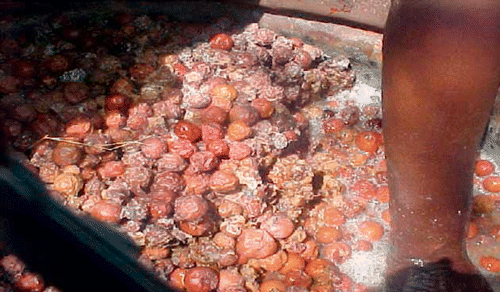
About 45 kilometres from Muzarabani Centre, families in Sohwe Village are spending the July-to-November masawu season harvesting the fruit for sale to BUSE’s masawu value-addition project.
The initiative reflects the government’s push to move economic activity into rural areas by processing local raw materials closer to their source. It also fits Zimbabwe’s Education 5.0 policy, which calls on universities to contribute to industrialisation through innovation and production. BUSE says its Innovation Hub is developing commercial products from indigenous resources.
- For villagers, the economic value of masawu, scientifically known as Ziziphus mauritiana, has changed attitudes toward the trees. Families now protect fruit-bearing trees from livestock and outsiders and spend much of the peak harvesting period near their orchards.
- Villagers attending this year’s Zimbabwe Agricultural Show in Harare told New Ziana during interviews:“Cattle and goats feed on masawu because of the perennial droughts we experience in Muzarabani,” said Lowin Kasamunzira. “Now that we have struck gold with masawu, we move from our homes and set up camp close to the trees during the masawu season.”
Nyengeterai Madziwa said a family can collect seven or more buckets a day. Villagers grade the fruit by size before selling it at a local collection point.
“A bucket costs up to US$3. We are paid cash on the spot; sometimes one can go home with US$300 or more,” she said.
The local market has also reduced transport costs for producers who previously travelled to Harare to sell their harvest.
“Sometimes we took the fruits to Mbare ourselves. We paid fees at the boom gate, on the bus and again at the market,” said Max Matisika. “BUSE’s masawu plant is a huge advantage because now we sell locally.”
Masawu has long played a role in the diets and rural economies of communities in Zimbabwe’s lowveld and Zambezi Valley. Research has found that the fruit contains significant amounts of vitamin C, carbohydrates, fibre and minerals, while traditional processing includes drying the fruit and making porridge, cakes, mahewu and jam.
Matisika said families also consume the fruit fresh, make maheu and exchange it for grain.
BUSE Vice Chancellor Prof. Eddie Mwenje said the project was changing the economic value attached to masawu trees.He said this on the sidelibes of the Zimbabwe Agricutural Show being held from August 24-29.
“The trees are now fiercely protected as villagers realise their newfound economic value,” he said.
The university has developed several masawu-based juice flavours, including masawu-baobab, masawu-tamarind, masawu-ginger and masawu-honey. Mwenje said government funding had supported establishment of the processing plant, with equipment manufactured in China.
The project was reported as 94 percent complete in BUSE’s 2025 publication, with the university targeting commercial production.
For Muzarabani families, the value of masawu now extends beyond the annual harvest: the wild fruit is becoming a locally sourced raw material for a rural processing industry, creating a direct link between indigenous resources, household income and Zimbabwe’s industrialisation drive.