Antony Chawagarira
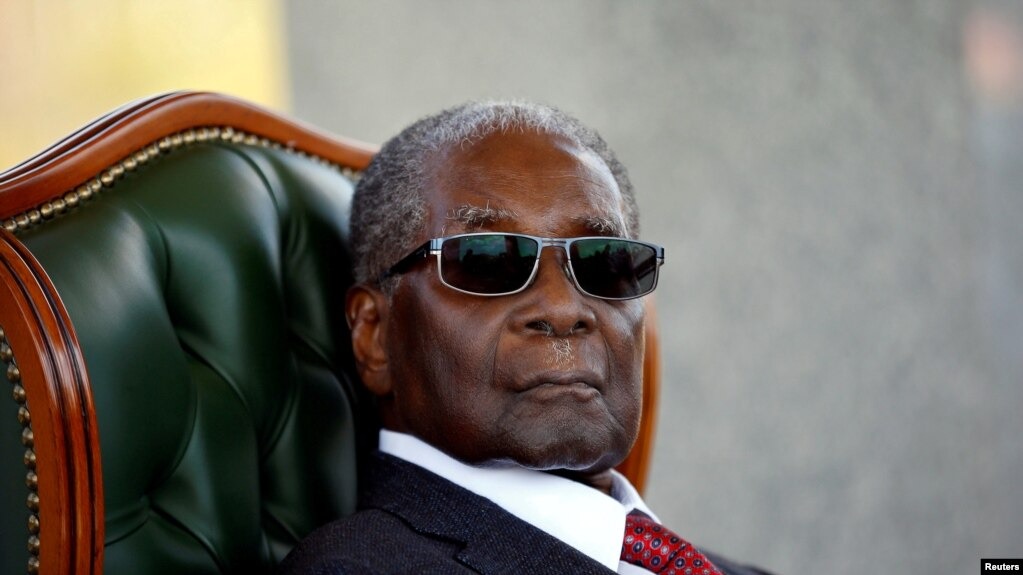
HARARE – President Dr Emmerson Mnangagwa has described the late founding leader of Zimbabwe, Robert Gabriel Mugabe, as a revolutionary and Pan-Africanist whose contribution to the liberation of Zimbabwe and the African continent continues to inspire generations.
President Mnangagwa made the remarks in a commemorative message marking the seventh anniversary of Robert Mugabe’s death. Mugabe died in Singapore on September 6, 2019, aged 95.
The President said his predecessor Robert Mugabe played a pivotal role in the liberation struggle and the development of Zimbabwe following independence in 1980.
“A revolutionary of unassailable credentials, Cde Robert Mugabe led our nation through a gruelling, protracted armed struggle against colonial rule, leading to the birth of our nation on 18 April 1980,” President Mnangagwa said.
He said Cde Mugabe endured 11 years in prison under the colonial regime before his release in 1974. After his release, he led the decisive phase of the armed liberation struggle from neighbouring Mozambique.
President Mnangagwa also paid tribute to the late Vice President and nationalist icon, Dr Joshua Nkomo, saying the two leaders remained steadfast in defending the interests of Zimbabweans during and after the liberation struggle.
“Together with the late Father Zimbabwe Dr Joshua Nkomo, Cde Mugabe resolutely defended the cause of the people of Zimbabwe throughout the struggle, and after our political independence in 1980,” he said.
The President further described Cde Mugabe as a towering Pan-Africanist who worked closely with leaders of the Frontline States in the fight against colonialism and apartheid.
Among them were the late Presidents Julius Nyerere of Tanzania, Kenneth Kaunda of Zambia, Agostinho Neto of Angola, and Samora Machel of Mozambique, as well as Botswana’s former President Seretse Khama.
President Mnangagwa said Cde Mugabe’s contribution extended beyond the attainment of political independence, particularly through the Land Reform Programme and investments in education and skills development.
“Never satisfied with merely titular political independence, the founding father of our nation led the Third Chimurenga for the recovery of our birthright—land—through the Land Reform Programme,” he said.
He described the land reform exercise as an “epochal transformation of property relations,” which, together with education and skills development, created a foundation for empowerment and Zimbabwe’s developmental aspirations.
President Mnangagwa said the legacy of the late former President would continue to be honoured and cherished by Zimbabweans.
Cde Mugabe, who was born on February 21, 1924, became actively involved in nationalist politics after training as a teacher and subsequently emerged as one of the leading figures in Zimbabwe’s liberation struggle.
His political activism resulted in more than a decade of detention under the Rhodesian colonial authorities, but he remained committed to the struggle for majority rule.
At independence in 1980, Cde Mugabe became Zimbabwe’s first Prime Minister. He later assumed the presidency in 1987, a position he held until his resignation in November 2017.
During his tenure, he became particularly associated with the expansion of education and the implementation of the Fast Track Land Reform Programme. However, his leadership also attracted criticism and controversy over governance, human rights, and economic policies.
Despite differing assessments of his nearly four decades in power, Cde Mugabe remains one of the most consequential figures in Zimbabwe’s post-independence history.
Seven years after his death, his legacy continues to feature prominently in national conversations around the liberation struggle, land reform, education, sovereignty, national identity and Zimbabwe’s development trajectory.
For many Zimbabweans, the anniversary also provides an opportunity to reflect on the sacrifices made during the liberation struggle and the achievements and challenges of the post-independence era.
President Mnangagwa said the country would continue to honour the memory of Cde Mugabe and draw inspiration from his contribution to the liberation and development of Zimbabwe.
His political chapter may have ended with his death, but debates over his contribution to Zimbabwe’s history continue to shape the country’s understanding of its past and its aspirations for the future.