
By Zachary Gava
Harare, (New Ziana) – Behind Zimbabwe’s efforts to monitor pollution, protect water sources and enforce environmental standards is a sophisticated laboratory equipped to turn samples of water, soil, air and plant material into scientific evidence for decision-making.
The Environmental Management Agency (EMA) Laboratory in Harare is playing an increasingly important role in determining the quality of Zimbabwe’s environment, with its work supporting regulatory enforcement, policy formulation, research and environmental management.
The laboratory, which is equipped with specialized equipment sourced from the United Kingdom and the United States, is currently EMA’s only laboratory facility in the country, with the Agency planning to expand its laboratory network to other parts of Zimbabwe.
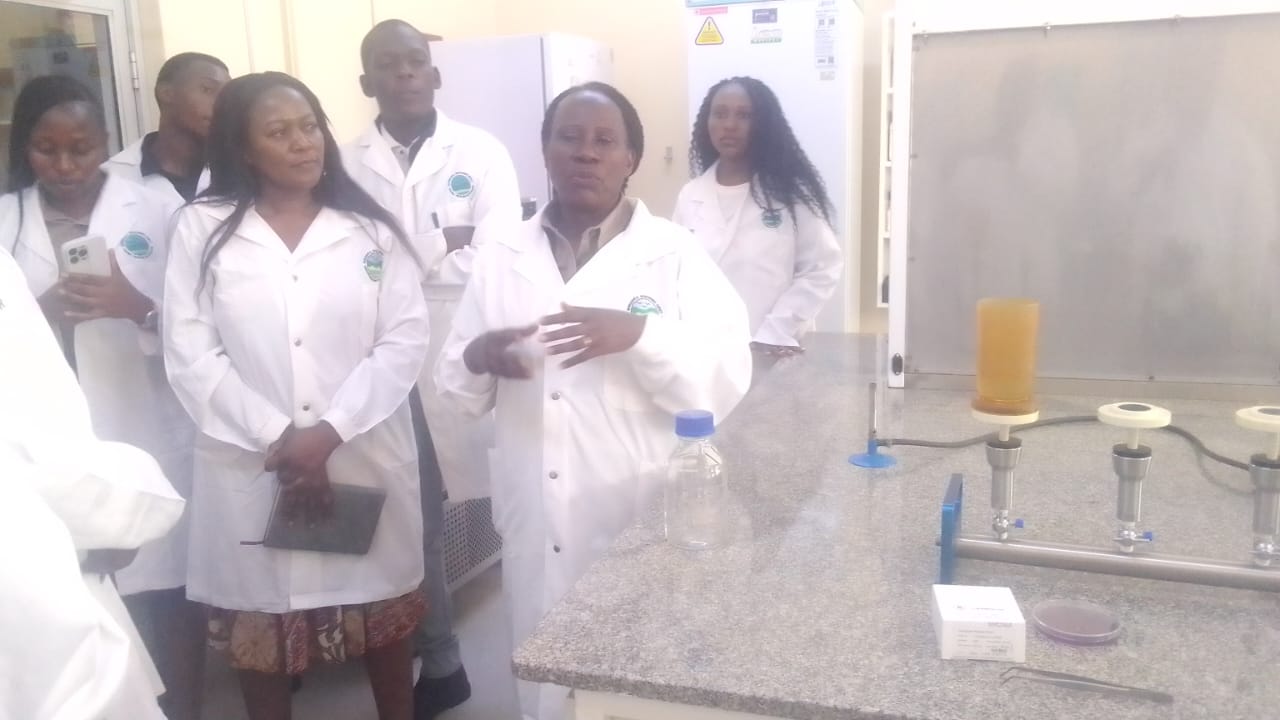
Speaking to journalists on Monday after a tour of the facility, EMA Laboratory Manager Sylvia Yomisi said the laboratory’s core mandate was to provide accurate and timely analytical results to support environmental management.
“Our objective is to produce precise and accurate results, which is core to our customers, both internal and external,” she said.
Yomisi said timely results were particularly important in dealing with environmental emergencies such as pollution incidents, accidents and suspected poisoning, where delays could compromise regulatory and public-health responses.
The laboratory analyses a wide range of environmental samples, including water, soil, air and plant material, enabling EMA to establish the extent and nature of environmental pollution.
“We need to do environmental testing and analysis to make sure that we know the quality of our environment. We also do research and run research programmes where we assess the environment to come up with information or assist in some areas,” Yomisi said.
The facility also conducts treatment studies, including assessments of wastewater treatment technologies, to determine whether emerging technologies are effective for their intended purposes.
Its work covers wastewater and effluent from industrial, mining and sewage sources, as well as water bodies monitored by EMA.
According to EMA, its laboratory provides chemical and microbiological testing, soil and folia testing, pesticide and organic-substance testing, sampling services and training in water sampling and quality testing.
Yomisi said the laboratory’s results were critical in supporting EMA field officers when determining the quality of discharges entering the environment.
“When we are saying that so and so is polluting, how true are we that it is polluting?” she said.
“When the field officers go there and collect samples, they want to know what quality is being discharged, what is being spilled into the environment and whether it has been cleaned efficiently. We provide analytical services for decision-making and regulatory compliance.”
The laboratory is also open to external clients, including farmers, non-governmental organizations, local authorities, industry and other Government departments.
A major strength of the facility is its accreditation to the ISO/IEC 17025:2017 international standard through the Southern African Development Community Accreditation Services (SADCAS).
SADCAS records show that EMA Laboratory currently holds accreditation for both chemical and microbiological testing, with its chemical-testing accreditation issued in January 2026 and valid until March 2028.
Yomisi said maintaining accreditation required continuous investment in staff competency, equipment maintenance, calibration and quality-management systems.
“No one is allowed to do a test where he or she is not competent. We use appropriate equipment, well maintained and calibrated,” she said.
She said the costs associated with maintaining sophisticated equipment were significant, noting that specialized service providers were sometimes brought in from outside Zimbabwe to service and calibrate equipment.
The laboratory employs 19 members of staff, including chemists, microbiologists and technicians, with continuous training undertaken to maintain competence in environmental testing.
During the media tour, journalists were taken through different sections of the laboratory and shown how environmental samples are received, handled and analyzed.
The tour also provided an insight into sampling procedures, an important first step in ensuring reliable laboratory results. Samples collected from sources such as rivers, industrial discharge points, soils or other environmental locations have to be properly collected, preserved, labelled and transported before analysis.
The principle is that even sophisticated analytical equipment cannot compensate for a poorly collected or improperly handled sample. EMA consequently provides sampling services and training on water sampling and quality testing, with the Agency noting that the quality of analytical results begins with the quality of sampling.
The laboratory’s analytical work covers four major environmental components – air, soil, water and plant material – while microbiological and chemical tests are conducted according to the nature of the sample and the parameters being investigated.
Yomisi said the laboratory also collaborates with universities and other institutions to address environmental challenges and provide opportunities for students to gain practical exposure.
Among the institutions with which it collaborates are the University of Zimbabwe, National University of Science and Technology and other research institutions.
Looking ahead, EMA is preparing to decentralize its laboratory services.
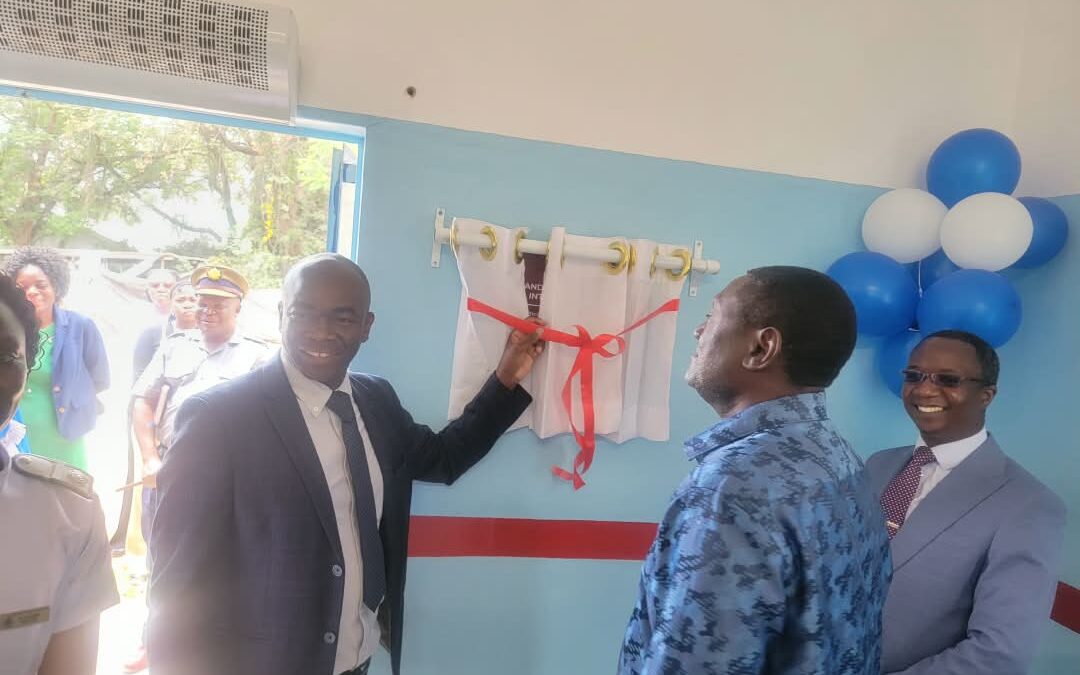
Yomisi said a new EMA laboratory was expected to be opened in Beitbridge in January 2027, with equipment for the facility already sourced. The Agency also plans to establish another laboratory in Bulawayo, where a structure for the facility is already available.
The expansion is expected to bring environmental testing services closer to communities, industries and other clients outside Harare.
As the country intensifies efforts to tackle pollution and environmental degradation, the laboratory’s role is likely to become increasingly important, providing the scientific evidence required to determine the condition of the environment and support enforcement of environmental standards.
EMA is a statutory body established under the Environmental Management Act [Chapter 20:27] and is responsible for sustainable management of natural resources, protection of the environment and prevention of pollution and environmental degradation.
New Ziana