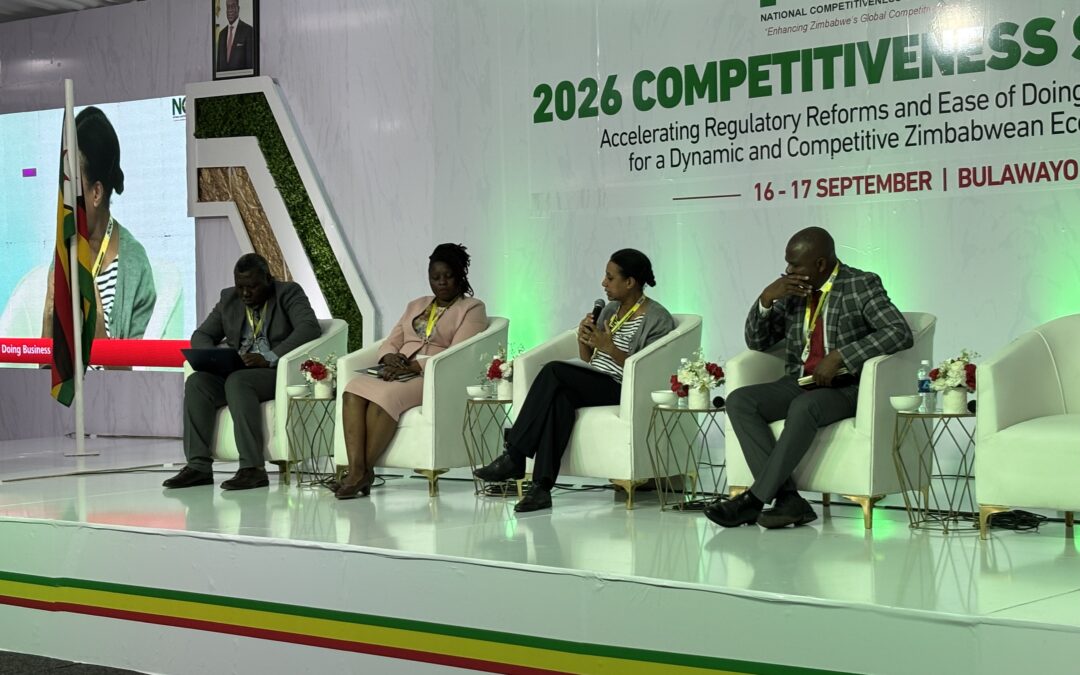
Bulawayo, (New Ziana) — Ongoing ease of doing business reforms by government should translate into lower costs and better services for ordinary consumers, not merely boost corporate savings, the Office of the President and Cabinet (OPC) has said.
Speaking during an interactive session during the National Competitiveness Commission(NCC) 2026 Competitiveness Summit in Bulawayo, director in the OPC, Ernest Mujongondi said government would engage the business community to ensure companies reciprocate reforms aimed at reducing the cost of operating.
“We want to make sure that, where possible, the consumer on the ground also benefits from this. This should not just end at corporate level.
“Businesses must respond and reciprocate what government has done in terms of their service to the general public,” he said.
Mujongondi said the reforms were intended to lower regulatory and transaction costs, improve business viability and stimulate investment, exports, employment and the supply of affordable goods and services.
Government has so far reviewed more than 1 200 licences, permits, levies and fees across 14 sectors since August 2025, under a consultative process involving ministries, regulators, local authorities, business organisations, labour, academia and development partners.
The exercise, Mujongondi said, was guided by a whole-of-government and whole-of-society approach, with recommendations submitted to Cabinet before implementation by relevant ministries, departments and agencies.
He, however said, implementation has encountered delays, including reluctance by some agencies to adjust charges due to vested interests, the need for Treasury concurrence and a backlog of legal instruments before the Attorney-General’s Office.
“To speed up implementation, Cabinet on September 8 directed all ministries, departments and agencies that had not implemented the reviewed fees and licences to do so within 30 days,” he explained.
Mujongondi stressed that easing the cost of doing business was not a once-off intervention but a continuous process requiring regular review of regulations and institutions.
“Regulation comes as an enabler and should not be stretched to the extent that it becomes a stumbling block,” he said.
He added that business viability, increased domestic and foreign investment and stronger economic activity were central to achieving the National Development Strategy (NDS2) and Vision 2030.
“Realisation of NDS2 and Vision 2030 is premised on business viability, growth and increased domestic and foreign investment.
“Economic activity is what drives development, while regulation must serve as an enabler rather than become a stumbling block,” Mujongondi said.
New Ziana