Princess Sibanda
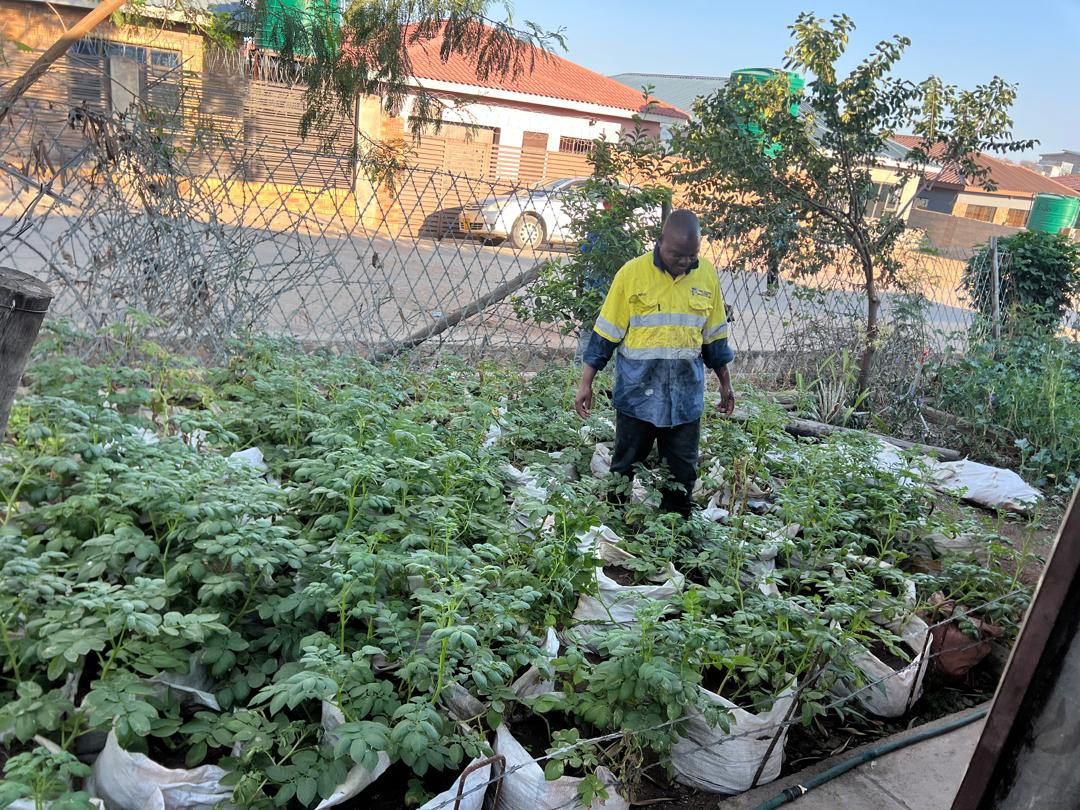
BEITBRIDGE — No longer limited by a shortage of land, a passionate farming enthusiast is transforming ordinary sacks at his homestead into a thriving potato garden.
Beitbridge resident Mureyi of SDP began his potato-growing journey when a friend gifted him a sprouted seedling and shared the fundamentals of potato cultivation with him.
“I researched how to grow potatoes because I had seen someone do it before, but they experienced losses. I then went to Profeeds, where I was advised on how to treat the soil before planting,” he said.
He uses crop protection products to guard the potatoes against pests and diseases, adding soil to the sacks as the plants grow. The process is repeated regularly, along with fertilisation and treatment.
Mureyi said he initially discovered that his plants had been attacked by leaf miners, but he managed to control the problem after seeking advice.
“Potatoes are delicate. They can be attacked from the roots up to the leaves, so they need extra care. I have found that sack farming works for me because I have limited land, yet I can produce more from a small space,” he said.
According to Mureyi, a well-managed sack can potentially produce a significant quantity of potatoes, while the method also allows households to grow food without requiring large tracts of land.
“I love farming, and I believe I am doing my part in fighting hunger, even if it is only at the household level,” he said.
Apart from potatoes, Mureyi also keeps chickens and hopes to expand his farming activities as more land becomes available.
District Agritex Officer Orpheus Ndlovu welcomed the initiative, describing sack farming as a form of climate-smart and conservation-oriented agriculture, particularly useful for households with limited land resources.
He urged farmers to follow recommended production methods, including proper soil treatment, pest control, and fertiliser application.
“Sack farming can be useful at the household level for food security, but it may not be economical for large-scale production. Farmers who intend to produce commercially should use appropriate production methods and focus on production,” Ndlovu said.
The initiative supports Sustainable Development Goal 2 (Zero Hunger) and complements Zimbabwe’s “Zimbabwe is Open for Business” initiative and agricultural transformation agenda, which promote increased food production and household food security.