
By Simbarashe Muparaganda
Bulawayo, (New Ziana) — Government has urged researchers, academics and industry leaders to translate their findings into practical policy proposals for the 2027 National Budget.
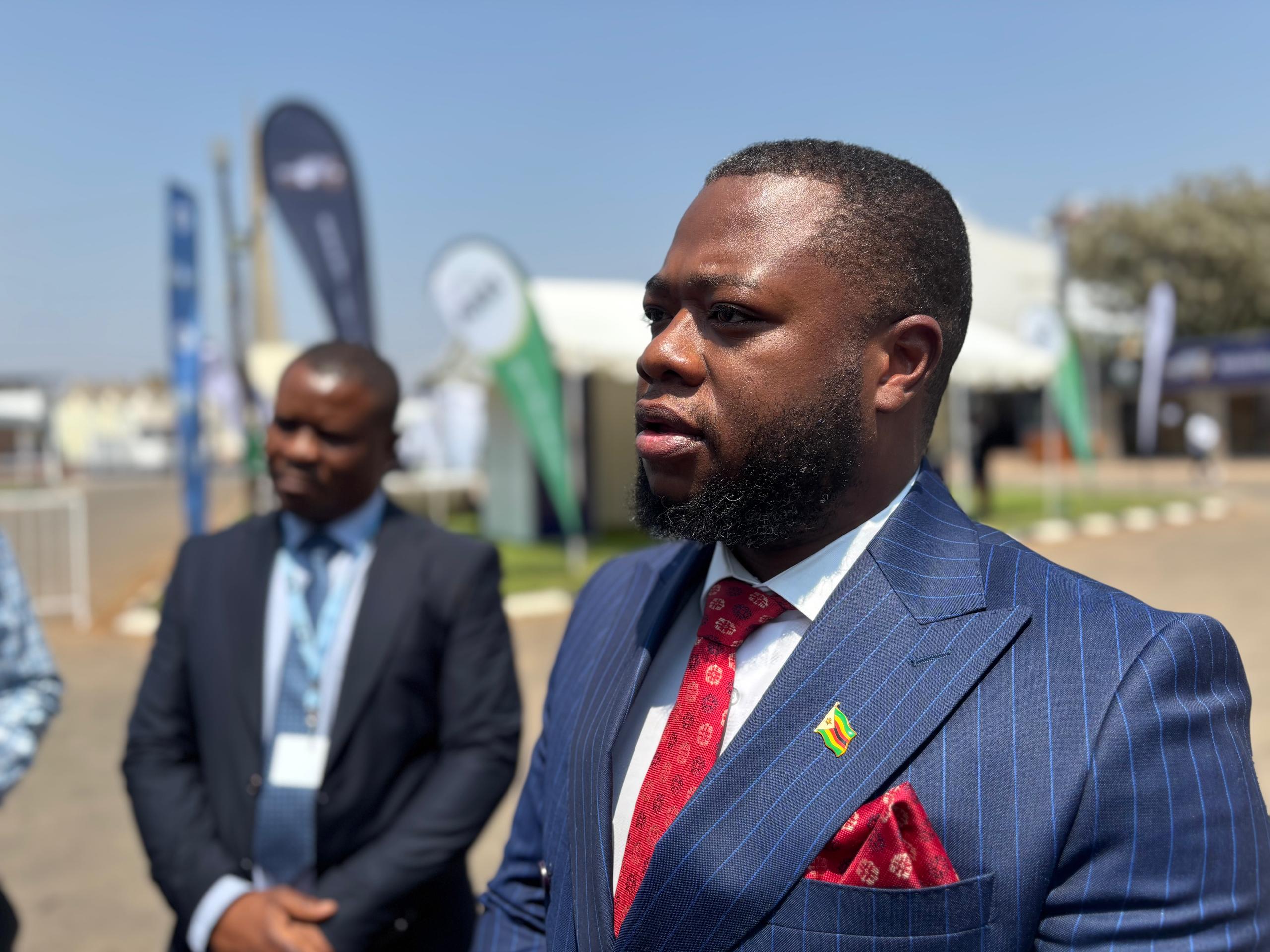
Deputy Finance, Economic Development and Investment Promotion Minister, David Mnangagwa made the call on Wednesday at the on-going 5th Zimbabwe Economic Development Conference (ZEDCON) 2026.
His remarks come as Zimbabwe seeks to raise annual economic growth to between 7 and 8 percent.
This year’s conference, held under the theme “Smart Infrastructure for an Upper Middle-Income Society,” brought together government officials, academics, development partners and researchers to develop strategies for accelerating economic growth.
President Mnangagwa is expected to officially open the conference on Friday.
“The ultimate objective is to implement evidence-based policies to elevate economic growth from the current 5–6 percent per annum to 7–8% per annum,” Mnangagwa noted.
He linked the target to Vision 2030’s ambition of a prosperous and empowered upper middle-income society.
The deputy minister highlighted that the conference’s research papers should guide Treasury’s fiscal priorities and national expenditure decisions.
“We should translate research findings into direct policy inputs for the upcoming 2027 National Budget and beyond,” he stressed.
Mnangagwa described ZEDCON as a key part of the national budgeting process and a technical platform for refining implementation of the Second National Development Strategy (NDS2).
The conference, he added, should help ensure that execution remains responsive, data-driven and aligned with Vision 2030.
Mnangagwa said ZEDCON had grown into a bridge between empirical research, stakeholder input and actionable fiscal policy.
“Treasury established it as a policy incubator because sound macroeconomic policies cannot be crafted in a vacuum, nor can national budgets be built on conjectures and speculation,” he explained.
He cited the conference’s earlier work on economic pressures, drought response and macroeconomic policy as examples of how research could inform government decisions.
“In 2024, evidence presented at ZEDCON helped guide a shift towards climate-smart agriculture, including dam construction, irrigation infrastructure and solar grid expansion,” the deputy minister explained.
Mnangagwa further said infrastructure was fundamental to productivity and competitiveness, adding that weak transport networks raise costs while unreliable power erodes manufacturing margins.
“Inadequate digital networks reduce financial-sector efficiency,” the deputy minister added.
Under NDS2, Mnangagwa indicated that the country would need a fundamental shift toward smart, integrated, and technology-driven infrastructure to reach upper middle-income status.
He pointed to research opportunities in smart grid management, renewable and waste-to-energy power, technology-enabled urban planning and Bulawayo’s Special Economic Zone.
Mnangagwa also implored delegates to focus on practical proposals rather than abstract debate, calling for research that is direct, actionable, empirically verifiable and evidence-based.
“Every presentation and discussion session must yield concise policy recommendations that can be implemented,” he said, adding that delegates should challenge assumptions and develop strategies to accelerate growth.
“Let us use the conference to sharpen NDS2 implementation and build momentum towards Vision 2030,” the deputy minister urged.
New Ziana