Bulawayo, (New Ziana)-The Zimbabwean economy has remained strong and resilient despite geopolitical tensions, conflict in the Middle East and disease outbreaks in parts of Africa, President Emmerson Mnangagwa said on Friday.
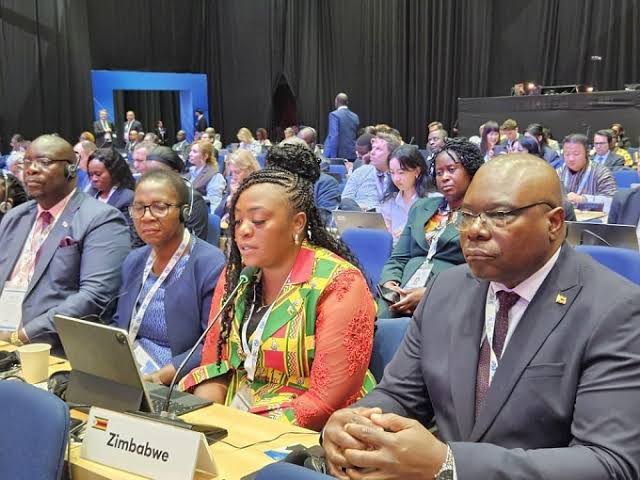
He said this in a speech read on his behalf by Finance and Investment Promotion Minister Professor Mthuli Ncube at the official opening of the fifth Zimbabwe Economic Development Conference (ZEDCON) at the Zimbabwe International Conference and Exhibition Smart City (ZICES).
This year the conference, which brought together researchers, academics, government officials and development partners to explore ways to stimulate economic growth, ran under the theme “Smart Infrastructure for an Upper Middle-Income Society.”
President Mnangagwa called for continued investment in infrastructure to support the push for the country to become an upper-middle-income economy by 2030 (Vision 2030).
“Despite a deteriorating global environment marked by geopolitical tensions, conflict in the Middle East and outbreaks of diseases in parts of Africa, our economy has remained strong and resilient,” he said.
He noted that Zimbabwe had worked over the past 24 months to achieve macroeconomic stability, marked by low and stable, now single digit inflation, as well as currency and exchange rate stability.
President Mnangagwa described the single-digit inflation which was achieved in January this year as a landmark and remarkable achievement, a first in over three decades, ihighlighting infrastructure investment as central to sustaining economic growth and advancing Vision 2030.
He said the government was targeting sustained annual economic growth rates of at least 5 percent per annum, while implementing reforms intended to lower business costs and improve the investment climate.
The rehabilitation of the Harare-Masvingo-Beitbridge Highway, the modernisation of the Robert Gabriel Mugabe International Airport, dam construction and upgrades to border posts were examples of infrastructure projects supporting the country’s development ambitions, he said.
“Government is also prioritising investment in energy, broadband connectivity, transport and rail networks, water and agricultural infrastructure, and urban development under the National Development Strategy 2,” he said.
On transport and trade, President Mnangagwa said Zimbabwe aimed to strengthen its role as a regional logistics hub by improving connections to markets and using regional trade arrangements, including the Southern African Development Community (SADC), the Common Market for Eastern and Southern Africa (COMESA) and the African Continental Free Trade Area (AfCTA).
He also called on the private sector and financial markets to invest in infrastructure, noting thast the government was modernising regulations and removing barriers to investment.
“The foundation is being laid, the legal guarantees are in place. Zimbabwe is open for business and the time to invest in our nation’s smart infrastructure is now,” he said.
President Mnangagwa also encouraged the use of innovative financing, including municipal infrastructure bonds and institutional investment in green energy funds, to accelerate projects.
He urged urged the delegates to turn the conference’s recommendations into action, saying they should “deliver tangible benefits for the economy” and support Zimbabwe’s Vision 2030 goals.
New Ziana