By Thabisani Dube
On Zimbabwe’s 46th Independence anniversary, education stands out as one of the country’s most visible achievements. Since 1980, enrolment has expanded dramatically, supported by government programmes and development partners. Yet behind the celebrations, unfinished classrooms, teacher shortages, and long walks to school remind communities that the promise of inclusive, quality education is still a work in progress.
According to the UNICEF Zimbabwe Annual Report 2024 (published February 2025, in partnership with the Ministry of Primary and Secondary Education), 2,799 schools benefited from the School Improvement Grant (SIG), reaching nearly 893,784 learners. Pre‑primary enrolment stood at 42.9 per cent, Grade 7 to Form 1 transition at 79.5 per cent, and the Form 1–Form 4 survival rate at 80.6 per cent. These figures reflect strong demand and improved retention.
Policy has also shifted. The Ministry now uses a structured Asset Management and Infrastructure Development Framework, empowering School Development Committees (SDCs) to manage projects.
“We have empowered communities to decide their priorities,” said ministry spokesperson Taungana Ndoro. “Through SIG and devolution funds, schools can address their most urgent needs, whether classrooms, boreholes, or sanitation facilities.”
At Sianyanga Primary in Hwange, SIG funds bought furniture and textbooks.
“This has helped learners by providing adequate seating and learning materials,” said John Tshuma, SDC chairperson. Yet one classroom block has stood unfinished and roofless for over a decade.
Parents say the project stalled due to funding constraints, but interviews and budget records suggest deeper issues. Education received only 14 per cent of the 2023 national budget, below the 20 per cent benchmark recommended by UNESCO and the Dakar Framework, leaving infrastructure projects underfunded. Procurement bottlenecks and delayed contractor payments have also slowed progress, while poor rural roads and seasonal rains add logistical barriers.
A parent from Guyu‑Chelesa Irrigation Scheme in Gwanda echoed similar frustrations:
“We want our children to learn in safe classrooms. Our hope is that government and partners will help us complete these projects so our children don’t sit under trees,” said Nothando Moyo.
According to the International Water Management Institute (2021), while community participation at Guyu‑Chelesa has been central, resource shortages limit sustainability. The same pattern is visible at Sianyanga: parents contribute bricks and labour, but without predictable funding flows and transparent procurement, projects stall midway.
When asked about such delays, Ndoro acknowledged the fiscal constraints:
“We are working within tight fiscal space. While education is a priority, resources must also be shared with health, infrastructure, and debt servicing. Projects are often slowed because funds are released in phases or redirected to urgent national needs. That is why we have introduced the Asset Management and Infrastructure Development Framework — to ensure communities can set priorities and funds are used strategically.”
For many learners, completing primary school is only part of the journey. Access to secondary education remains a challenge, especially in remote areas.
At Lupote Secondary in Hwange district, a student explained the daily struggle of distance:
“I walk almost 10 kilometres to school every day. Sometimes I get tired and miss lessons. When I received a bicycle from Greenline, it changed everything — now I arrive on time and even help my younger brother get to class,” said Bandile Tshuma.
According to the Greenline Bicycle Programme (2022), bicycles were distributed in Hwange to reduce fatigue and improve attendance.
These challenges reflect not only community struggles but also the broader fiscal realities acknowledged by the Ministry.
According to CITE (2023), schools in Binga continue to record poor pass rates due to lack of teachers, underfunding, and weak infrastructure.
“I loved teaching in rural areas, but the long distances and poor roads made it impossible to stay,” said Sibonile Ncube, now teaching in Dete, St Francis Xavier.
Local drivers also feel the strain.
“We welcome the upgrades, but potholes make the journey long and costly,” said John Phiri. “Sometimes we carry learners to school, and the rough roads slow us down.”
Zimbabwe’s education system has made notable gains, but comparative experiences from the region show how targeted reforms can accelerate progress. In Botswana, the integration of Technical and Vocational Education and Training (TVET) at lower secondary level has reduced dropout rates by nearly 15 per cent and improved employability.
For Zimbabwe, embedding TVET earlier could help rural learners, especially those who struggle with long distances or limited resources, to acquire practical skills without abandoning education.
Rwanda offers another instructive model. Its adoption of a competence‑based curriculum, combined with strong teacher accountability systems, has raised performance in science and mathematics. According to UNESCO (2021), Rwanda’s reforms improved STEM pass rates by over 10 per cent.
Zimbabwe’s own emphasis on Science, Technology, Engineering, and Mathematics (STEM) could benefit from similar accountability structures, ensuring teachers in both urban and rural schools receive training, mentoring, and clear performance benchmarks.
Regional benchmarking highlights Zimbabwe’s challenges. The Southern and Eastern Africa Consortium for Monitoring Educational Quality (SACMEQ, 2023) found that while Zimbabwe performs well in literacy, mathematics and science scores lag behind regional averages. This underscores the need for targeted investment in teacher training, laboratory facilities, and curriculum reform.
Infrastructure and teacher retention are equally pressing. Evidence from the Zimbabwe Teachers’ Association (ZIMTA, 2022) shows that 50–60 per cent of teachers posted to rural schools leave within five years, largely due to poor housing and transport. Addressing this requires a dual strategy: investing in rural teacher housing and road networks, while expanding boarding facilities for learners in remote districts.
Programmes like the Basic Education Assistance Module (BEAM) and the “Zero‑Rejection” policy already protect vulnerable learners. Extending similar guarantees to teachers — through housing subsidies, rural allowances, and professional development — would strengthen retention.
Community‑driven models remain vital. The International Water Management Institute (2021) study of Guyu‑Chelesa Irrigation Scheme showed that local participation sustains projects but struggles without consistent funding. Applied to education, Zimbabwe’s decentralised SDC framework should be paired with transparent procurement and predictable funding flows. This would prevent decade‑long delays like those at Sianyanga Primary, where an unfinished, roofless classroom block remains a stark reminder of stalled progress.
Taken together, these lessons point to a clear path forward: integrate vocational skills earlier, strengthen teacher accountability, invest in rural infrastructure, and ensure community participation is matched by reliable funding. Independence celebrations highlight progress, but comparative evidence shows that with sharper reforms, Zimbabwe can transform education gains into durable, equitable outcomes for every child.
As independence is celebrated, the gains are clear: more schools, more learners, stronger policies. Yet in communities like Sianyanga and Chelesa, the reality is shaped by unfinished structures and strained infrastructure. Independence cannot be measured only in statistics, but in whether every child learns in a safe classroom and every teacher has the support to remain.
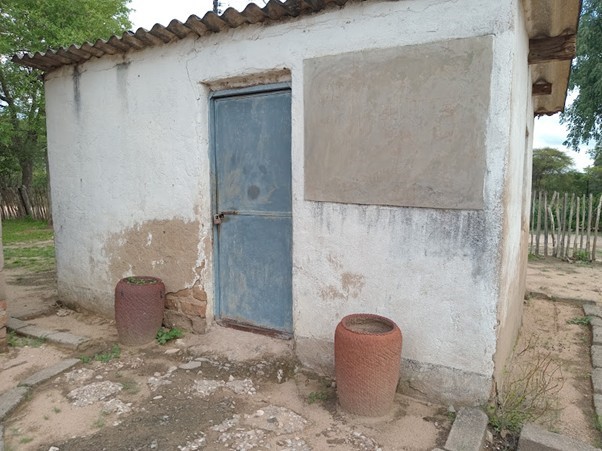
Until then, the small headmaster’s office at Sianyanga Primary — worn yet functional, with visible signs of deterioration — remains a quiet reminder that Zimbabwe’s promise of education for all is not yet fulfilled.