
By Simbarashe Muparaganda
Bulawayo (New Ziana) – The Bulawayo City Council (BCC) requires about US$34 million to complete the servicing of the sprawling Cowdray Park Hlalani Kuhle housing scheme, an official has said.
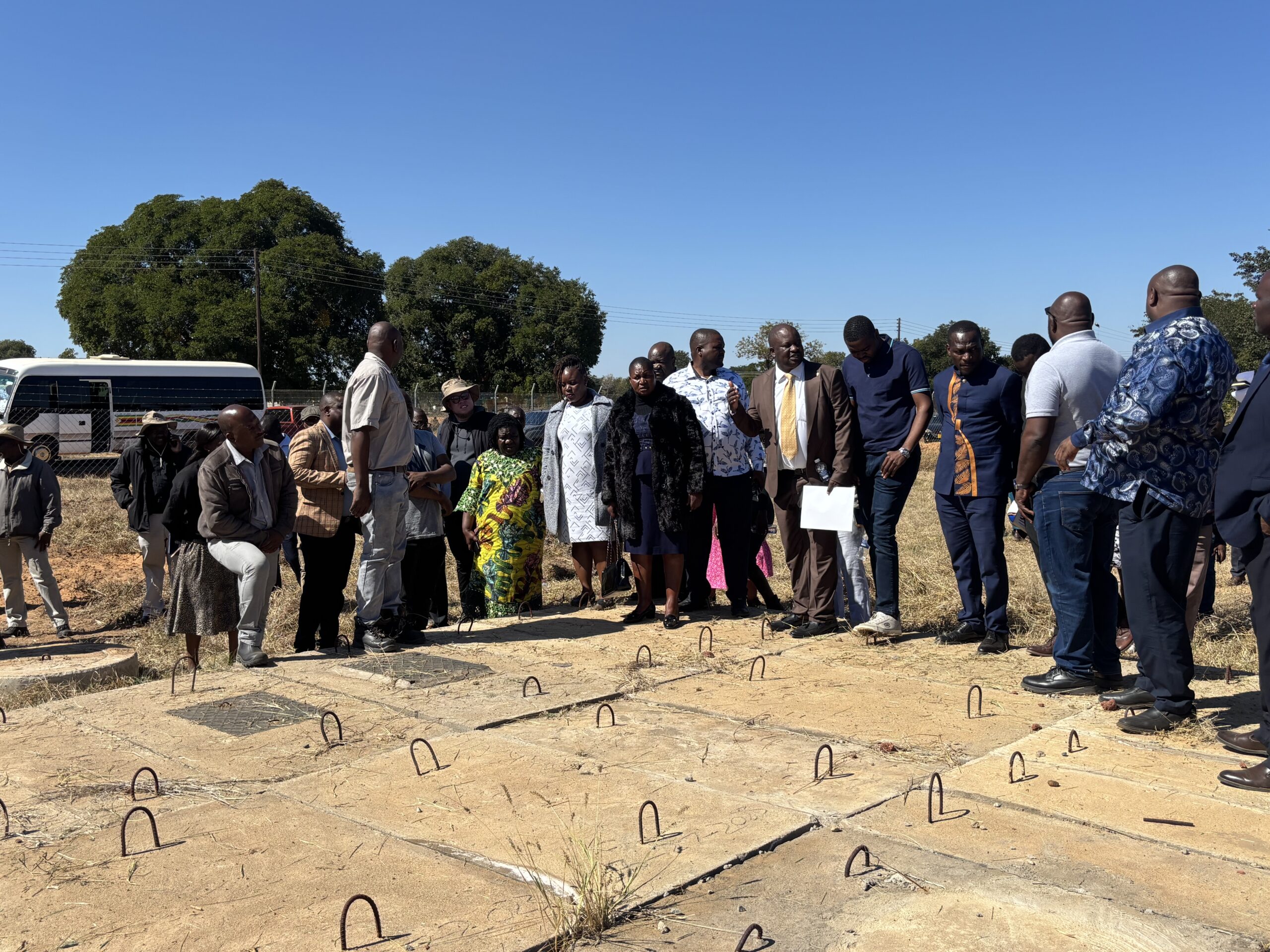
This came out during the Parliamentary Portfolio Committee on Local Government, Public Works and National Housing fact-finding mission on informal and dysfunctional settlements and housing projects in Bulawayo at the weekend.
The committee toured the Cowdray Park Hlalani Kuhle/Garikayi housing scheme, the Richmond Landfill informal settlement, Burombo Flats and Iminyela high density suburb.
Acting BCC director of Works, Engineer Methusi Dibidi told the Committee that the project had recorded significant progress despite funding constraints, with more than US$12.6 million having been mobilised and invested in infrastructure development at the settlement.
He said the council mobilised US$12.655 million through residents’ contributions, donations and grants towards the project.
Dibidi, who is also the projects manager for the Cowdray Park Hlalani Kuhle, said the project was initially estimated to cost US$46 million when it commenced in 2012.
“We managed to get approximately US$12.655 million and, with that, water servicing is now 98 percent complete, sewer infrastructure is 33 percent complete and roads are four percent complete,” he told the committee.
He said the remaining funding requirement now stood at about US$34 million to fully provide water, sewer, roads, storm-water drainage and public lighting infrastructure across the settlement.
Dibidi dismissed suggestions that Cowdray Park was a dysfunctional settlement, saying it was a properly planned suburb awaiting full infrastructure servicing.
“Cowdray Park is not a dysfunctional settlement. It has planned layouts approved by the Minister. It is partially serviced and what is missing is the completion of services,” he explained.
H e also stressed that Bulawayo province did not have land barons, saying the city’s housing developments have remained under orderly planning and administration.
“We don’t have land barons in Cowdray Park or in Bulawayo,” he said.
Covering about 867 hectares, nearly three times the size of Gwanda town, Cowdray Park has an estimated population of around 75 000 people, making it one of largest and fastest-growing residential areas in Bulawayo.
Dibidi said the Hlalani Kuhle scheme was handed over to the Bulawayo City Council by the then Minister of Local Government, Public Works and National Housing, Ignatius Chombo, in 2012 and has since operated as a self-funding project.
Under the original arrangement, beneficiaries contributed US$50 per stand per month, a figure that was later reduced to US$15.15.
Following the country’s transition from the multi-currency system in 2019, residents continued paying the equivalent amount in local currency, resulting in a sharp erosion of the revenue base.
“As we all know, the value of those payments became negligible and contributions from beneficiaries effectively ceased,” he said.
Dibidi highlighted that while water infrastructure was nearing completion, the outstanding sewer and road works continued to affect some residents.
Properties without sewer reticulation are still relying on Blair toilets, while poor road infrastructure has limited access to some areas, making it difficult for refuse collection vehicles and other service providers to reach certain households, he added.
The Parliamentary Portfolio Committee observed that although Cowdray Park faces service delivery challenges, it is a well-planned and organised settlement that requires additional support to complete its infrastructure development.
Committee chairperson Dr Maxmore Njanji said they had embarked on a nationwide verification exercise to assess the implementation of government housing and human settlements programs under the Zimbabwe Human Settlements Policy, the Regularisation and Sanitation Program and Urban Renewal initiatives.
“These programs are central to the achievement of Vision 2030 and National Development Strategy (NDS 2) which seeks to promote sustainability, inclusive and well planned human settlement throughout the country,” he said.
He also commended the Ministry of Local Government and Public Works for promoting orderly urban development and ensuring that human settlements across the country are properly planned and regulated.
“We applaud the Ministry of Local Government and Public Works for its efforts in ensuring that human settlements are developed in an orderly and well-planned manner, which is critical for sustainable urban growth and effective service delivery,” he said.
New Ziana