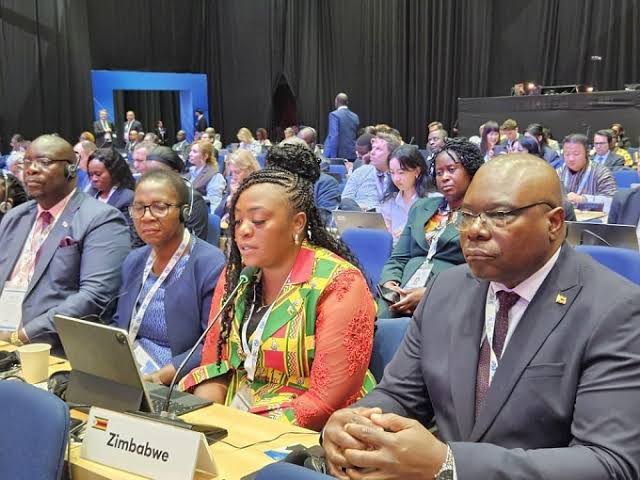
Harare (New Ziana) -Zimbabwe should move away from treating information and communication technologies (ICTs) merely as tools for communication and harness their potential to drive agricultural productivity, public service delivery and social inclusion, a senior government official has said.
Permanent Secretary in the Ministry of Information Communication Technologies, Postal and Courier Services Dr Beullar Chirume said this on Thursday at a Research Dissemination Workshop which the Postal and Telecommunications Regulatory Authority of Zimbabwe (POTRAZ) held in Harare.
She said the digital transformation of Zimbabwe would only be meaningful if it translated into tangible improvements in the lives of the people.
The workshop focused on findings from two studies that POTRAZ commissioned titled: “An Assessment of the Impact of ICT on Agricultural Productivity in Zimbabwe” and “Digital Engagement among Persons with Disabilities in Zimbabwe: Assessing Extent, Determinants and Disparities for Inclusive Digital Economy Participation.”
Dr Chirume said the studies were important in informing policy as Zimbabwe increasingly integrates digital technologies into economic and social development.
“ICT is no longer simply an enabler of communication. It has become an important driver of productivity, innovation, access to information, public service delivery, economic participation and social inclusion,” she said.
Agriculture, which remains central to livelihoods, food security and the economy, was identified as one of the sectors with significant potential to benefit from digital technologies.
According to Dr Chirume, farmers can use digital platforms to access information on weather conditions, market prices, agricultural practices, pests and diseases, financial services and market opportunities.
She however cautioned against simply expanding access to technology as that would not automatically translate into improved agricultural outcomes.
“We must ask ourselves: Are farmers connected? Can they afford the services? Do they have the digital skills required to use them effectively?” she said, stressing the need for digital services that respond to the realities of different categories of farmers.
The government, she said, is therefore looking at strengthening the digital ecosystem supporting agriculture and rural development through expanded connectivity, improved digital literacy, relevant digital services and innovation tailored to farmers’ practical needs, she said.
Dr Chirume also placed strong emphasis on ensuring that Zimbabwe’s digital transformation does not exclude persons with disabilities.
She said digital inclusion should go beyond simply providing internet access to ensuring that platforms, devices, applications and services are accessible, affordable and usable by persons with different forms of disability.
It should include improving access to assistive technologies, digital skills training, accessible public information and inclusive digital-service design, while also ensuring that persons with disabilities participate in the development of digital policies and solutions.
“No one should be excluded from Zimbabwe’s digital future because of disability, location, income or lack of digital skills,” the Permanent Secretary said.
Dr Chirume further described inclusion of persons with disabilities in the digital economy as an economic issue, noting that they are consumers, entrepreneurs, employees, innovators, students and citizens whose participation can contribute to national development.
She urged stakeholders to ensure that the research findings do not remain confined to reports, but are translated into policy and practical interventions.
“The real value of research lies in its ability to inform policy, improve programmes and influence practical action,” the official said.
The government, she said, cannot achieve digital transformation on its own and requires collaboration among regulators, telecommunications operators, technology companies, farmers, agricultural organisations, academia, development partners, civil society, organisations of persons with disabilities and communities.
Dr Chirume called for the development of actionable recommendations from the two studies, including improving the reach of digital agricultural services for smallholder farmers and underserved communities, strengthening accessibility standards, expanding digital skills and improving access to assistive technologies for persons with disabilities.
She said Zimbabwe had an opportunity to use ICT as a catalyst for broader economic and social transformation rather than simply as a technological tool.
Dr Chirume commended POTRAZ for commissioning the studies and providing a platform for dialogue and knowledge sharing, while urging participants to translate the evidence generated through the research into policies and programmes capable of making a tangible difference.
New Ziana