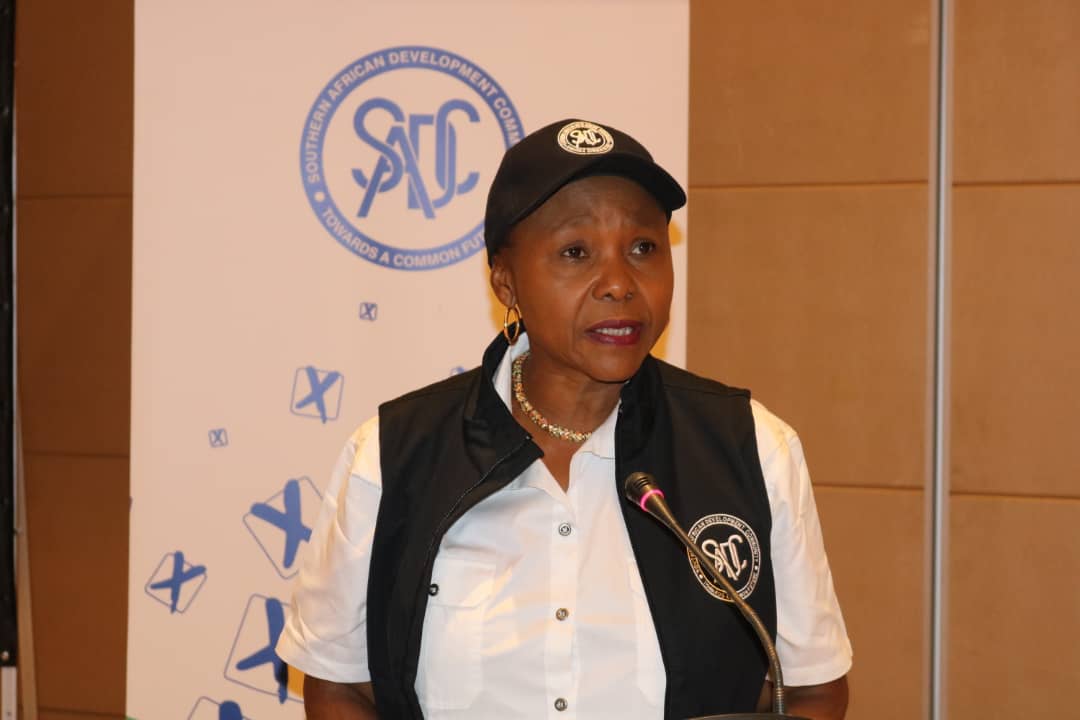

Harare, (New Ziana) – The National Prosecution Authority of Zimbabwe (NPAZ) last year reduced its case backlog in the courts by 45 percent, Prosecutor General, Loyce Matanda-Moyo said on Thursday.
She said this at the official opening of the NPAZ’s legal year, attended by senior court management.
“In 2024, the NPAZ was an institution under immense pressure. We handled over 107 000 cases, yet we faced a difficult reality as our backlog was growing. We began that year with 8 800 pending cases and ended with nearly 12 500 – a 41 percent increase in our workload that threatened to slow the wheels of justice. Our average clearance rate was approximately 67 percent, and we knew that to meet our national goals, a radical shift in efficiency was required. This milestone was attained in 2025, signaling a new era of performance for the NPAZ. We declared war on backlogs and inefficiency, and the results speak for themselves.
“Despite starting the year with a massive workload of 40 000 cases in the first quarter, we didn’t just maintain the status quo-we broke the cycle of accumulation and reduced our backlog significantly. By the end of 2025, we achieved what seemed impossible a year ago. We reduced our quarterly pending cases by 45 percent, ending the year with only 6 149 cases on the pending list. Our efficiency reached a new benchmark, climbing from the 60s in 2024 to a year- high of 77.4 percent by the close of 2025,” Matanda-Moyo said.
She noted that the momentum is tangible proof that NPAZ’s strategic partnerships with fellow criminal justice actors, and the proactive use of fast-track courts are yielding real results.
According to Matanda-Moyo, NPAZ’s pivotal turning point in 2025 was the operationalization of Specialized Anti-Corruption Courts at both the High Court and Magistrates’ Courts.
It also streamlined the Magistrates’ Courts by establishing dedicated fast-track courts for armed robbery, drug-related crimes, traffic offences, wildlife crimes, and sexual offences.
“By synchronizing the performance of these institutions and powering our operations through the Integrated Electronic Case Management System (IECMS) we have ensured that our strategic interventions are no longer just policies on a piece of paper. Our policies have become the high-performance engines of a faster, fairer, and more transparent criminal justice delivery system, transforming the rule of law into a lived reality for every Zimbabwean. We have made incredible strides, but the work of justice is never finished. We have come a long way, but our sights are firmly set on the long road still ahead as we transition into the National Development Strategy-2 (NDS-2),” she added.
Meanwhile, Matanda-Moyo said the NPAZ recognizes that justice is a shared responsibility, requiring a united shield forged through deep cooperation across the criminal justice value chain, hence it has adopted the “Whole-of-Government” approach as articulated to deepen inter-agency cooperation.
“This approach is our most potent weapon against the vices currently threatening our communities, specifically the scourge of drug abuse and the heinous sexual abuse of minors. It is specifically designed to dismantle the complex networks behind human trafficking, money laundering, and wildlife crime, while simultaneously restoring order to our roads by curbing traffic offenses. By dismantling the silos between agencies, we are ensuring that there is no haven for criminals anywhere in Zimbabwe,” she said.
New Ziana