

By Johnson Siamachira
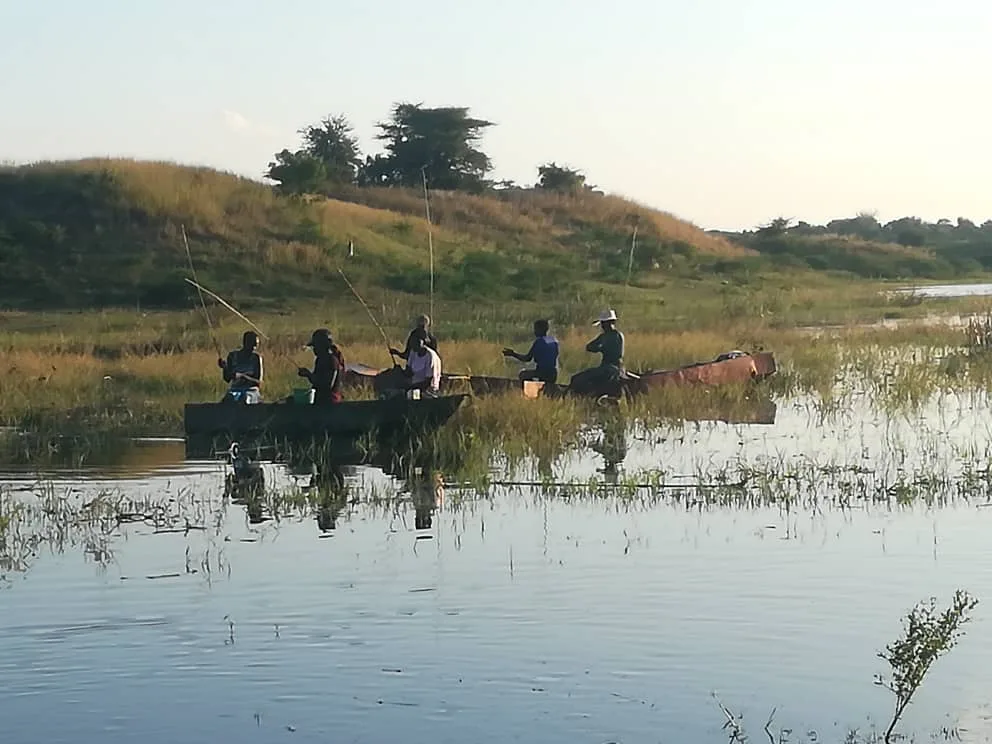
Harare, (New Ziana) — Lake Kariba, one of Africa’s largest fishing grounds, has long been a vital source of food and income for communities in the Zambezi Valley. Since Zimbabwe’s independence in 1980, fish and fish products have generated millions of dollars in exports, making the fishing sector a key player in the nation’s economy.
However, over-fishing in the lake threatens not only local livelihoods but also the sustainability of the crucial marine resource.
The inshore fishery, established after the construction of the Kariba Dam in 1958, produces over 2,000 tonnes of fish annually, supporting both subsistence and commercial fishing. It was the largest man-made reservoir in the world at the time of construction.
Lake Kariba measures 282 kilometres in length, and covers an area of 5364 square kilometres. Today, it is the second largest reservoir in Africa by volume. Lake Kariba fishery provides essential protein and income to local communities, but managing it has become increasingly challenging amid rising populations,economic pressures as well as climate change that is causing a reduction of fishing grounds, resulting in poaching.
Dr. Cecil Machena, an aquatic ecologist and former deputy director(Research) and former principal ecologist of the Lake Kariba Fisheries Research Institute at the Zimbabwe Parks and Wildlife Management Authority(ZimParks) says the inshore fishery began with only 208 licenced fishers in 1962.
By the late 1990s, that number surged to 1,404, and fishers were predominantly male. The rising number of unlicenced fishers has raised alarms about sustainability. Economic hardships have driven many to fish without licences, undermining efforts to manage the resource sustainably.
More than a third of the fish stocks around the world are being over-fished and the challenge is particularly acute in developing countries, the United Nations Food and Agriculture Organisation says in a report released in 2020.
The community of Gache Gache, whose livelihoods and economy are anchored on fishing activities, exemplifies both the challenges and potential solutions. With around 1,000 families reliant on fishing, the Gache Gache Fishermen’s Association has emerged to regulate fishing practices and provide members with marketing and managerial skills.
Richard Ganye, the association’s secretary, emphasises that this collective approach is vital for sustainable resource management. Historically, fishing in the area lacked regulation, leading to open access with no restrictions on catch sizes.
Many fishermen resisted proposals for quotas, fearing loss of access to vital fishing grounds. The growing demand for fish, alongside illegal fishing practices, has further strained the lake’s resources. “There is now over-fishing, as fishermen venture into breeding areas such as the Sanyati Basin,” Ganye warns.
To address these issues, the Zimbabwe Parks and Wildlife Management Authority (ZimParks) has introduced the Lake Kariba Inshore Fishery Management Plan (2023-2033) which aims to incorporate ecosystem-based management and co-management principles. This plan seeks to improve governance and enhance the capacity of the fishery, ultimately contributing to food security in Zimbabwe.
It outlines strategies to climate-proof livelihoods and ensure that fishing communities can adapt to changing environmental conditions. Lungile Sibanda, acting director of the Communal Areas Management Programme For Indigenous Resources (CAMPFIRE), highlights that this initiative will empower local groups, including women and youth, to participate actively in fishery management.
“The technology used for preserving and harvesting fish is simple and well understood by the local people,” she says, encouraging broader participation in sustainable fishing practices.
Henry Varandeni, the environmental officer for the Nyaminyami Rural District Council, explains that fishery management currently operates at the local level, with community committees trained to oversee operations and compliance with regulations.
However, challenges remain. Some fishermen resist council regulations and harbour poachers, complicating enforcement efforts. To combat these issues, the council provides training on fishery laws, licencing, and sustainable practices.
Varandeni says that educating fishermen about climate change and promoting alternative methods, such as pond culture, can help mitigate the impacts of environmental shifts on fishing. Enforcement of laws through joint patrols with other conservation stakeholders (adhering to full moon programme, monitoring fishing gear and depths).
Despite advancements in resource management, the old authoritarian structures still influence fishing practices. A comprehensive development plan is necessary to empower artisanal fishermen in governance and decision-making.
The struggle to balance fishing demands with ecological sustainability is ongoing. Varandeni articulates the urgency: “The war is now on to ensure the sustainable use of both wildlife and fish. We appeal to everyone concerned, including development agencies, to adopt an integrated approach to solve the over-fishing challenges.”
As the Lake Kariba shore line faces mounting pressures, the path to sustainable fishing remains fraught with difficulties. While new management strategies offer hope, their success will depend on the commitment of all stakeholders to collaborate for a thriving, sustainable fishery industry.
New Ziana