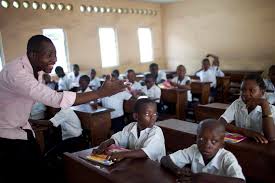
Sadly the effects of the global Covid 19 pandemic two years ago are now beginning to be felt
by many communities. While the country lost lives and everyday routines were disrupted, it
is the education sector that came off worse.
This is particularly so in rural communities where learners virtually stayed at home for the
duiration. While those in urban settings regrouped and benefitted from online and radio
lessons, those from rural communities fell by the wayside.
Access to both radio and the internet was not easy, especially in Matebeleland North province
where local frequency is hard to get. As a result learners became truant with some falling
pregnant and others resorting to substance abuse.
Those who eventually persevered returned to school, but found the going tough. Now two
years later the graduates from the O and A level classes are beginning to feel the pinch. With
zero passes, they can not find work in an environment that begins with at least five O level
passes to get a job.
Innocent Tshuma (18) goes to the Hwange Power Station main gate every day hoping that
one day he will be called for a job opportunity at the energy company. He is aiming for the
general hand position as he did not pass his Ordinary level examination and has lost all hope.
Tshuma is among the Ordinary level learners in Hwange who sat for their examination in
2021 and failed. Hwange is one of the districts in the province with schools which recorded a
zero pass rate in the Grade 7 and Ordinary Level last year.
Local stakeholders pointed out that most of the schools with zero pass rate have no access to
radio lessons and no access to internet in their respective areas.
The Hwange District Resident Association says the district has been lagging behind
academically for both rural and urban school learners due to the lack of ICT infrastructure in
schools and lack of qualified teachers just to mention a few.
“The district is at a disadvantage when it comes to receiving education opportunities, there is
poor internet connectivity, no electricity in most rural schools, no radio frequency in most
rural schools,” said one Abel Mwembe
Schools in Zimbabwe remained closed for the greater part of 2020 and 2021 as the
government placed measures to curb the spread of the deadly Covid-19 pandemic. Learners
in urban areas started to attend lessons online. Without proper ICT infrastructure, learners in
rural areas were negatively impacted and there was no radio frequency for radio lessons
introduced by the government.
At one time, Hwange District School Inspector Walter Moyo confirmed there were radio
lessons which were recorded for Hwange. But, learners dispute that they never had an
opportunity of learning through radio due to radio frequency blackout.
“We had some lessons in Nambya and Tonga to accommodate Hwange learners recorded at
Montrose studios in Bulawayo,” says the Hwange District Schools Inspector.
However, although the lessons were on air, the learners were not able to decode the lessons.
“Most of us never attended full lessons during COVID-19 pandemic, physical lessons were
put on a pause and to attend lessons virtually it was impossible because where I stay in
Nejambezi we have no internet access,” says a learner at Nejambezi Secondary School.
According UNICEF Zimbabwe, COVID-19 pandemic came with the advantage of
establishing digital networks, but the digital network was not a benefit to the rural
communities.
Hwange District has 93 Primary schools and 37 Secondary schools, of which 10 are Primary
and 13 Secondary are annex schools. Most satellite schools in the district suffered low pass
rate due to shortage of staff and learning materials as the satellite schools are run by the
communities. One such school is Sidinda primary School in Hwange West Constituency.
In 2021, the school had a zero percent pass rate for Grade Seven, which was attributed to lack
of qualified staff. However, in some parts of the district, communities have established their
own satellite schools to ensure every child receives education.
Hwange Residents Association is appealing to the government and humanitarian agencies to
intervene through equipping the satellite schools.
The global COVID 19 pandemic has exposed Zimbabwe’s education sector, especially in
vulnerable communities. Given that education is a human right, it is imperative for the
Government to create an enabling environment that guarantees ‘equal access to education for
all.’
Investing in school infrastructure development, alternative learning methods, Orphans and
Vulnerable Children (OVCs), Early Childhood Education (ECD) and teacher capacitation
would place Zimbabwe on a recovery path and ensure ‘no one is left behind.’
Schools in Zimbabwe closed on 24 March 2020, before a national lockdown was imposed on
30 March 2020 as the Government tried to curb the spread of Covid-19. This prolonged
school closures are therefore presenting unprecedented challenges to children’s education,
health and well-being worldwide. The longer a child stays out of school, the higher the risk of
regressing.