

By Thabisani Dube
ZIMBABWE is witnessing a grassroots revolution led by rural women tackling the pressing challenges of climate change, making strides in food security and environmental conservation.
As climate change casts a long shadow over the nation, it threatens many lives and livelihoods. Gradual shifts in temperature and rainfall patterns, coupled with an increase in severe weather events like floods and droughts, are undermining economic development in Zimbabwe.
The Meteorological Services Department reports an alarming trend: more hot days and fewer cold ones. Rainfall patterns have changed dramatically since record-keeping began in the 1890s. Data indicates that Zimbabwe has warmed by approximately 0.4 to 0.6 degrees Celsius from 1900 to 2010.
Women, who constitute roughly 70 percent of the agricultural workforce, are particularly vulnerable to these changes. According to the Zimbabwe National Statistics Agency, many of these women work in smallholder farming but often lack access to essential resources like land, credit, and education.
“The impacts of climate change disproportionately affect women, especially those in rural areas who rely heavily on agriculture for their livelihoods,” says Dr Mavis Sibanda, the Permanent Secretary in the Ministry of Women Affairs, Community, Small and Medium Enterprises Development. “They face increased workloads as they are tasked with finding food and water for their families during times of drought.”
A 2022 report from the Zimbabwe Vulnerability Assessment Committee highlighted that women-headed households are particularly susceptible to food insecurity, grappling with chronic malnutrition.
Despite these challenges, there are notable initiatives focused on improving livelihoods and resilience among rural women.
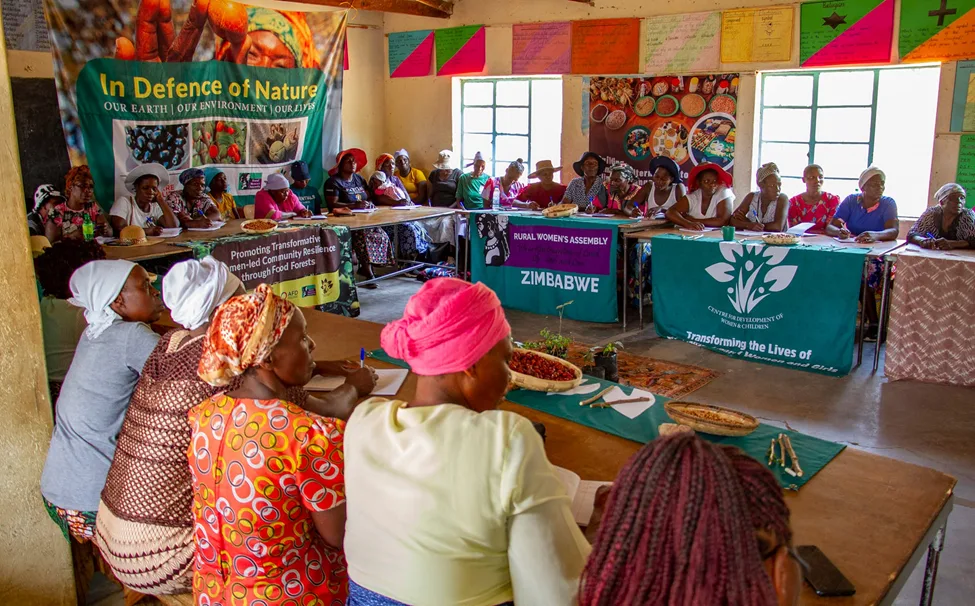
Tendai Mafuku from Makoni District in Manicaland Province, shared how the Centre for Development of Women and Children (CDWC) empowers women. “In these groups, we learnt to save money from selling vegetables. I can now buy my own products, ending financial abuse at home,” Mafuku said, asserting her right to own productive land.
Nothando Moyo, from Tsholotsho District in Matabeleland North Province, echoed this sentiment. “The training and technical support we received have given us hope. We can now grow trees that will provide food and income for our families. It’s empowering to be part of something that makes a real difference in the fight against climate change.”
The CDWC, a non-governmental organisation, is dedicated to empowering women and children in Zimbabwe. The organisation emphasises building the capacity of women to lead community-driven initiatives addressing social, economic, and environmental challenges.
As drought conditions worsen, gender inequality intensifies, with women bearing the brunt of increased responsibilities.
In response, the CDWC launched a grassroots initiative in collaboration with rural farmers in Makoni and Tsholotsho districts. The project aims to plant 15,000 indigenous fruit trees to create food forests that ensure sustainable nutrition, restore biodiversity, and promote environmental conservation.
“This empowerment is key to the long-term sustainability of the food forests,” said Emilia Hatendi, CDWC national director. ‘’Women are now taking charge and using their voices to address these critical issues.’’
The initiative not only benefits participating communities but also holds promise for scalability in other regions facing climate impacts. By placing rural women at the forefront and providing necessary training and resources, the CDWC envisions replicating this food forest model across Zimbabwe.
“This project is helping to build the capacity of women to lead community resilience efforts,” adds Hatendi.
The training focuses on seed collection, selection, and germination of indigenous fruit trees. By restoring biodiversity and creating balanced ecosystems, the project seeks to reverse deforestation and encourage environmental stewardship. The food forests provide nutritious fruits, mitigate drought impacts, and their root systems help retain soil moisture.
However, challenges remain. Indigenous fruit tree seedlings are less accessible than exotic species like citrus and mangoes. Overharvesting for urban consumption disrupts natural seed regeneration, pushing some species towards extinction. Additionally, energy poverty has led to increased deforestation in rural areas.
To combat these issues, the CDWC is empowering communities to grow indigenous trees from seed, which can also generate income.
Furthermore, the Government acknowledges the critical role of gender inclusivity in combating climate change. In 2017, the Ministry of Women Affairs, Community, Small and Medium Enterprises Development, launched a revised National Gender Policy aimed at integrating women into climate adaptation strategies.
The Zimbabwe Climate Change Strategy, introduced in 2015, emphasises gender-responsive approaches in all climate-related projects. “Our strategy outlines how we can integrate gender considerations into our climate action plans,” said Washington Zhakata, director of the Climate Change Management Department at the Ministry of Environment, Climate, and Wildlife. “This is essential for achieving sustainable development.”
While the path ahead is fraught with challenges, the collaborative efforts of the government, NGOs, and the private sector are paving the way for a more equitable and sustainable future for all Zimbabweans. Through the resilience of rural women, a brighter tomorrow is taking root in the heart of Zimbabwe.