Bulawayo (New Ziana) – The government, with financial backing from development partners, is intensifying borehole drilling in areas worst affected by dry weather conditions to provide water for both people and livestock, an official said on Monday.
The country, as the rest of southern Africa, is this year expected to be hit by drought caused by the El Nino weather condition, leading to livestock and crop failure.
Deputy director for Livestock Production in the Ministry of Lands, Fisheries and Water Development, Rutendo Nyahoda said government was working with development partners such as UN agencies, and non-governmental organisations to drill boreholes to provide water to most vulnerable communities and their livestock.
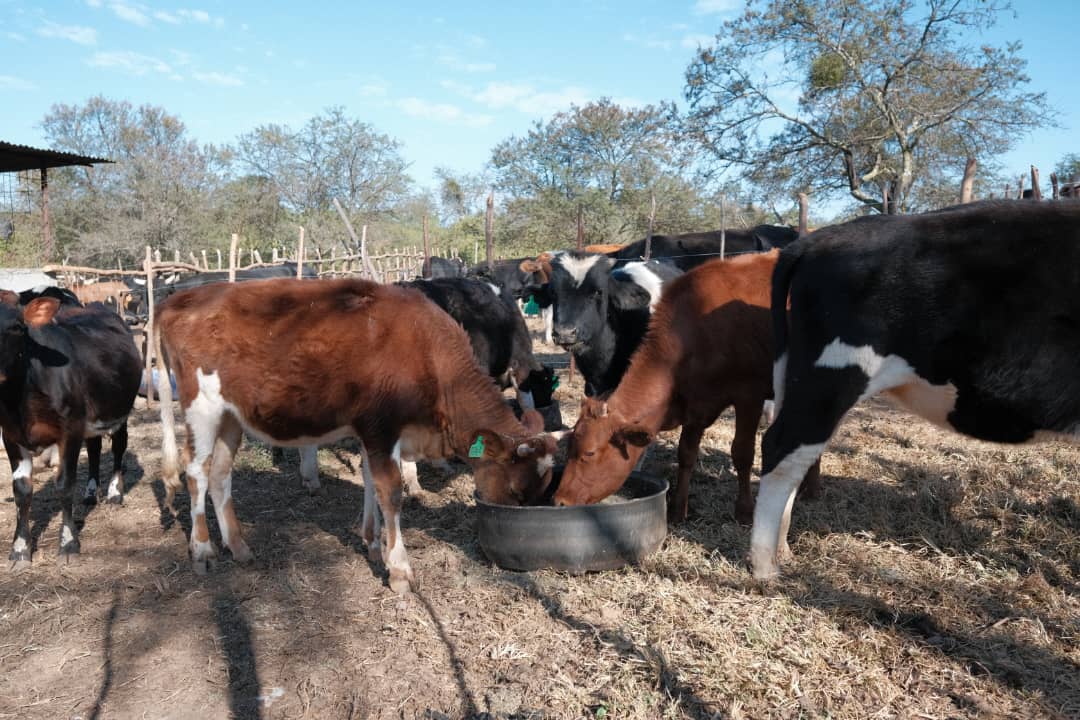
Most at risk, in terms of livestock, was cattle.
“We are saying government has activated the whole of government. The government has approached various stakeholders that include government ministries, partners such as NGOs, UN agencies, private sector and parastatals for short term inventions in order to curb the effects of El Nino on livestock production,” Nyahoda said.
“The government has approached partners in terms of borehole drilling so as to ensure water supply for our livestock. Borehole drilling is set to start on Monday where various players have offered some rigs and boreholes in the worst affected areas,” she said.
She said government will also provide water in bowsers to worst affected areas so that cattle would not end up getting stuck in muddy waters.
Apart from water supplies, Nyahoda said, government would also give farmers supplementary livestock feed in the form of hay or commercially produced feed in worst affected areas.
“El Nino has contributed to poor quality of grazing. The feed is not able to meet the basic nutritive requirements for our livestock. Because of prolonged dry conditions, we are saying we (are) facing water shortage and depending on the natural region, it is very severe and the water shortage is for both livestock and human consumption,” she said.
“With a weakened physiological condition, our livestock is susceptible to various conditions. Our livestock will be susceptible to opportunistic diseases and livestock can be easily trapped in mud once they get into muddy conditions because they are already weak,” Nyahoda said.
“Our livestock is also grazing close to the ground so they are susceptible to soil borne diseases. Due to shortage of feed, our animals tend to ingest anything they find on the ground including foreign objects which can be in form of plastics or remains of clothing materials or pieces of sack and once ingested all these can cause death in our animals,” she said.
She also said due to lack of feed, livestock may end up consuming poisonous plants, which maybe the only vegetative material remaining in some areas.
Nyahoda also advised farmers to always have livestock medicines on hand, to vaccinate and de-worm their animals to shield them from diseases.
“You also vaccinate animals against diseases they are going to pick from the ground as the animals are grazing close to the ground. Make sure animals are provided with supplementary feed so that they are not weakened,” she said.
The country is estimated to have 5,509 983 cattle, 4,259 176 goats, 710 226 sheep and 314 335 pigs.
New Ziana