Harare, New Ziana) – Government has wound down the bulk of its nationwide food assistance programme under the Food Deficit Mitigation Programme, with more than three-quarters of targeted households having received grain and other food support.
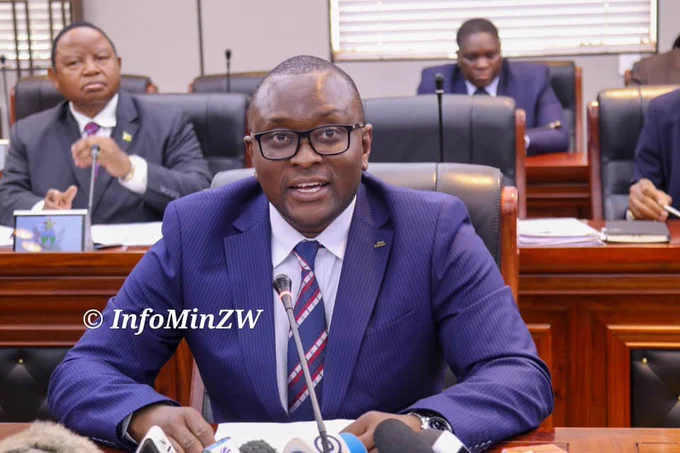
Speaking during a post-Cabinet press briefing on Tuesday, the Minister of Skills Audit and Development, Dr. Jenfan Muswere said Cabinet had approved an update on the Food Deficit Mitigation Programme presented by the Minister of Public Service, Labour and Social Welfare, Edgar Moyo.
Dr. Muswere said the programme, which was approved by Cabinet in November 2025 as part of the Government’s response plan for the October 2025 to March 2026 hunger period, had gone a long way in mitigating food shortages in targeted areas and households.
“Distributions have been concluded across the country, with 77.53 percent of the targeted 1 293 657 households having been covered and provided with the requisite grain and food assistance,” he said.
Despite the progress, Government said some districts remain vulnerable following findings from the Second Crop, Livestock and Fisheries Assessment (CLAFA2) of 2026.
“The assessment indicates that Beitbridge, Buhera and Chivi districts are currently cereal insecure, while Mutare, Uzumba Maramba-Pfungwe and Mberengwa districts will require assistance from October 2026,” said Dr. Muswere.
He added that Government would now shift its attention towards responding to distress calls on a case-by-case basis beginning in June 2026 to ensure no vulnerable households are left behind.
Provincial distribution figures revealed varying levels of coverage across the country. Mashonaland West recorded one of the highest coverage rates at 94.41 percent, although communities in Hurungwe and Zvimba faced challenges mobilising transport resources for grain collection.
Mashonaland Central achieved 87.08 percent coverage in Bindura, Guruve, Mt Darwin and Mbire districts, while Matabeleland North covered 90.61 percent.
Matabeleland South recorded 79.15 percent coverage, with Midlands Province reaching 79.98 percent. Masvingo Province managed 63.52 percent, while Manicaland covered 59.8 percent across Chipinge, Mutare and Buhera districts.
Mashonaland East recorded 58.91 percent distribution coverage in Goromonzi, Hwedza, Mudzi, Mutoko and Uzumba Maramba-Pfungwe districts.
Dr. Muswere said Government had also worked closely with development partners during the peak hunger period in line with the Second Republic’s inclusive approach to humanitarian assistance.
“In line with the Second Republic’s ethos of working with all stakeholders, the World Food Programme and its implementing partner World Vision complemented Government efforts in Bulilima, Kariba, Mberengwa and Mwenezi districts,” he said.
The Food Deficit Mitigation Programme was introduced to cushion vulnerable households from the effects of drought and food shortages experienced during the 2025/2026 agricultural season.
New Ziana