By Norman Dururu
GWERU — The Government has activated a National Drought Plan based on six strategic pillars in preparation for the upcoming rainy season, which the Meteorological Services Department has predicted could be characterised by below-normal rainfall associated with El Niño conditions.
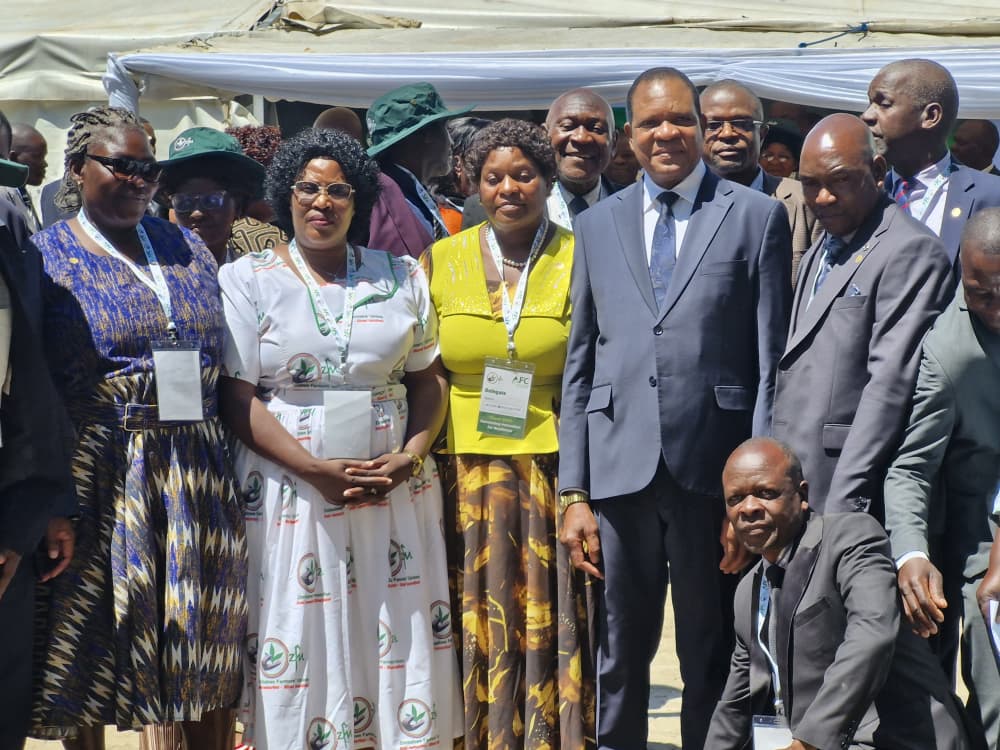
Speaking during the Zimbabwe Farmers Union (ZFU) 86th Annual Congress in Gweru on Thursday, Agriculture, Mechanisation and Water Resources Development Minister Dr Anxious Masuka said the pillars included an enhanced Strategic Grain Reserve, accelerated climate-smart production, livestock drought mitigation and increased imports.
Other pillars include integrated financing and coordination, early warning systems, and capacity-building support.
Beyond the drought plan, Government is implementing long-term resilience strategies focusing on optimised land use, reducing reliance on rainfall, improving farmers’ access to information, strengthening control over seed and inputs, and enhancing income-generation opportunities.
“The Pfumvudza/Intwasa programme is expanding from approximately 718 000 hectares last season to a target of one million hectares this coming season.
“This expansion is achieved through well-prepared basins, mulching and timely planting, rather than simply increasing the amount of land,” Dr Masuka said.
He said provincial and district production targets for the coming season had already been established, but their success would depend on innovations being implemented at ward and village levels.
Dr Masuka called on the private sector and development partners to collaborate with Government in building farmers’ resilience, saying Government did not have the financial resources to independently mechanise, irrigate and digitise the agricultural sector.
“It is the only way farmers can maintain a crop when the weather fails them,” he said.
He warned that, if left unchecked, climate change could reduce rain-fed maize yields by a third by mid-century, underscoring the need for greater innovation and investment in climate-resilient agriculture.
Dr Masuka also said Government had approved a downward review of several agricultural fees and levies as farmers continued to bear the burden of primary production amid unfavourable producer prices.
ZFU president Jemsoni Jawi said the prospect of a low-rainfall season, coupled with geopolitical disturbances in the Middle East, had placed additional pressure on farmers.
He said rising fuel and fertiliser costs, coupled with unaffordable mechanisation and irrigation, were undermining efforts to build resilient farming systems.
“Producer prices haven’t kept up. Last season’s late-announced grain marketing led to poor aggregation mechanisms for smallholder farmers and price uncertainty,” Jawi said.
He said depressed tobacco prices had also affected crop viability.
ZFU secretary-general Paul Zakariya urged farmers to invest in irrigation, including micro-drip irrigation kits, to enable year-round production as adverse weather conditions become increasingly common due to climate change.
The congress was held under the theme “Harnessing Innovation for Resilience.”