

By Sharon Tawuya
Harare, (New Ziana) — President Emmerson Mnangagwa said on Tuesday the Zimbabwe government has put in place a six-pillar resilience plan to mitigate the impact of projected below-normal rainfall during the 2026/27 summer season, as forecasters warn of a strong El Niño.
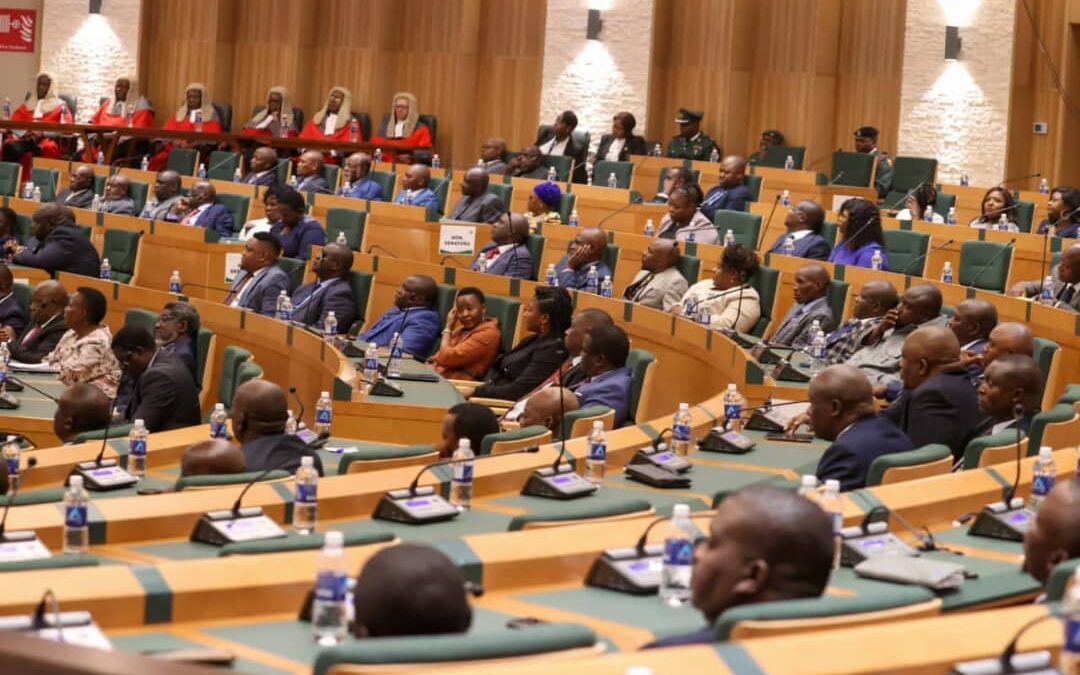
Delivering his State of the Nation Address (SONA) at the official opening of the Fourth Session of the Tenth Parliament, President Mnangagwa said the Southern African Development Community sub-region outlook is unfavourable.
“The 2026/2027 outlook for our SADC sub-region is regrettably projected to be characterised by unfavourable weather patterns with below normal rainfall. So far, my government has put in place a six-pillar plan for resilience. This incorporates an Enhanced Strategic Grain Reserve; Accelerated Climate-Smart Production; Integrated Financing Architecture; Livestock Drought Mitigation; and Co-ordination as well as an Early Warning and Capacity Building mechanism,” he said.
According to the Zimbabwe Meteorological Services Department (MSD) National Climate Outlook issued on 11 September for October this year to March next year, El Nino Southern Oscillation (ENSO) is currently in its warm El Niño phase and is projected to persist throughout the forecast period.
The department said the Indian Ocean Dipole is also positive and is expected to remain so until the end of January next year, before transitioning to neutral in February, and collectively these phenomena increase the likelihood of below-normal rainfall across Zimbabwe.
Consequently, the MSD forecasts a high probability of below-normal rainfall nationwide for the October to December 2026 period, with the southern and western parts expected to receive normal rainfall with a bias toward below-normal totals for January to March next year, while the rest of the country is likely to experience below-normal conditions.
Regionally, the Southern Africa Regional Climate Outlook Forum, which met in Swakopmund, Namibia in August, also favoured below-normal rainfall across much of Angola, southern Zambia, Zimbabwe, Mozambique, Namibia, Botswana, most of South Africa, Eswatini and Lesotho for October through December this year, with the dry signal expected to persist into January-March next year.
SADC attributed the forecast largely to an El Niño already established and expected to strengthen to strong or very strong intensity, peaking around October-December.
President Mnangagwa said communities are being prepared to withstand future shocks through traditional leaders.
“Through our chiefs, headmen and village heads, communities are being prepared to withstand future shocks,” he said.
New Ziana