
Antony Chawagarira
HARARE – The Government is targeting a 22 percent tax-to-Gross Domestic Product (GDP) ratio by 2030 as it moves to broaden Zimbabwe’s tax base and strengthen domestic resource mobilisation.
Finance, Economic Development and Investment Promotion Minister Professor Mthuli Ncube said the target is in line with the country’s national development objectives and efforts to build greater fiscal resilience.
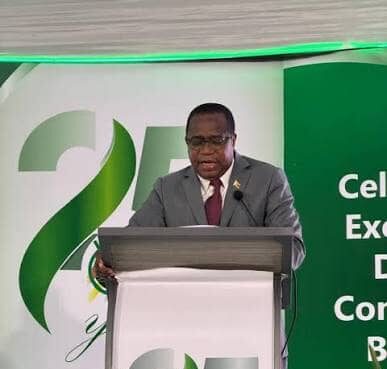
Prof Ncube was speaking during the Zimbabwe Revenue Authority (ZIMRA) Silver Jubilee celebrations held under the theme, “Celebrating 25 Years of Excellence in Revenue Mobilisation and Service Delivery”.
He said Zimbabwe’s economy has grown to more than US$66 billion, creating new opportunities for revenue mobilisation.
“Today, Zimbabwe is a US$66 billion-plus economy and continues to grow. As our economy expands, ZIMRA must rise to meet it,” he said.
Prof Ncube said economic expansion should be matched by growth in the domestic revenue base to enable the Government to finance national development programmes.
“A growing economy must produce a growing revenue base, because a stronger revenue base gives Government greater capacity to finance national priorities and development,” he said.
He challenged ZIMRA to widen the tax net, strengthen compliance, reduce revenue leakages, and make the tax system simpler, fairer, and more predictable.
“Our ambition is to raise the tax-to-GDP ratio to 22 percent by 2030, consistent with our national development objectives and regional convergence ambitions,” said Prof Ncube.
The Minister said domestic resource mobilisation has become increasingly important as developing countries face limited access to affordable international financing, rising financing costs, and a shrinking pool of development assistance.
He said the expansion of Zimbabwe’s economy, characterised by new businesses, increased investment, and more sophisticated economic activity, should translate into a broader tax base.
“As the economy expands, new businesses emerge, investment increases, and economic activity becomes more sophisticated, the authority must ensure that the tax base expands alongside the economy and that every taxpayer contributes fairly and lawfully to the financing of national development,” he said.
Prof Ncube said ZIMRA has evolved significantly since its establishment in 2001, growing alongside Zimbabwe’s changing economy, technology, and patterns of commerce.
He said the authority’s increasing revenue collections are evidence of an economy that has expanded and become more complex.
The Minister attributed improved domestic revenue mobilisation to economic stabilisation measures, investment promotion, strengthened macro-economic management, and support for productive sectors under the Second Republic.
He said domestic resource mobilisation is now an important pillar of economic sovereignty and fiscal resilience as the Government seeks to finance a greater share of its development agenda from resources generated locally.
Prof Ncube also highlighted the importance of taxpayer compliance in supporting national development.
“When taxpayers meet their obligations, they help the Government turn national resources into roads, schools, hospitals, public services, and opportunities for our people,” he said.
The 2026 Taxpayer Appreciation Awards, held during the celebrations, recognised businesses and taxpayers whose compliance and contributions have strengthened Zimbabwe’s fiscal foundation.
The Government’s drive to expand domestic revenue mobilisation is expected to support the financing of national development programmes as the country pursues its Vision 2030 objectives.