By Rutendo Mapfumo
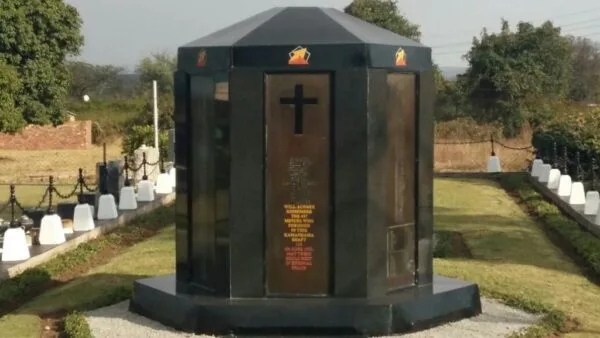
The Hwange community gathered at the weekend at the Kamandama mass grave to mark the 53rd anniversary of Zimbabwe’s deadliest mining tragedy—the 1972 Kamandama mine disaster, which claimed the lives of 427 miners at the Wankie No.2 Colliery in Matabeleland North.
This sombre event remains etched in the nation’s memory, not only for the scale of loss but also for its lasting impact on mining safety and community resilience.
On June 6, 1972, a series of underground methane dust explosions ripped through the Wankie No.2 Colliery, trapping hundreds of miners underground. Despite valiant rescue efforts, the severity of the disaster forced authorities to seal the mine shaft, leaving 424 bodies entombed below, with only three recovered after the initial blasts.
The miners came from several countries, including South Africa, Angola, Zambia, Malawi, and Costa Rica, highlighting the international scope of the tragedy. Every year, families, survivors, company officials, and local leaders gather at the Kamandama mass grave to honour those lost and reflect on the disaster’s enduring lessons.
Chief Hwange, speaking at the commemoration, highlighted the foundational role of the 427 miners in the development of HCCL and the Hwange community. He urged continued support for the widows and families of the victims, “Time may have passed since this mine disaster which shook our community to its core and changed the town’s landscape forever, but memories remain, etched in our minds.”
He applauded HCCL’s efforts in supporting the surviving widows and called for ongoing commitment to their welfare.
Surviving widow Lucia Moyo expressed gratitude for the company’s social welfare initiatives but noted that the financial support, often paid in the local ZIG currency, remains insufficient for daily needs.
Currently, 61 surviving widows are scattered across Zimbabwe and beyond its borders, a testament to the wide-reaching impact of the disaster. The Chief Executive Officer (CEO) William Gambiza has repeatedly emphasised that safety remains its top priority, a commitment deeply rooted in the memory of the Kamandama disaster.
“The company acknowledges the loss of life and the impact on the community, using it as motivation for improved safety practices.” HCCL has recently recertified its international standards for environmental management (ISO 14001), occupational health and safety (ISO 45001), and quality management systems (ISO 9001), underscoring its ongoing efforts to foster a safer and more responsible mining operation.
The company’s approach to safety is practical and inclusive, involving both management and staff in developing work policies, rescue training, and first aid programmes.
The Kamandama mine disaster stands as a stark reminder of the risks inherent in mining and the importance of rigorous safety standards. The tragedy prompted a transformation in safety protocols—not just at HCCL, but across Zimbabwe’s mining sector—with increased emphasis on hazard monitoring, emergency preparedness, and worker training. Today, HCCL’s zero-harm vision and sustainability initiatives reflect lessons learned from the past, aiming to ensure that such a tragedy is never repeated.
As the Hwange community gathers each year to remember the fallen, their legacy endures—not only in the memorial at Kamandama but in the ongoing efforts to protect miners, support affected families, and build a safer, more compassionate industry for future generations.
New Ziana