

By Johnson Siamachira
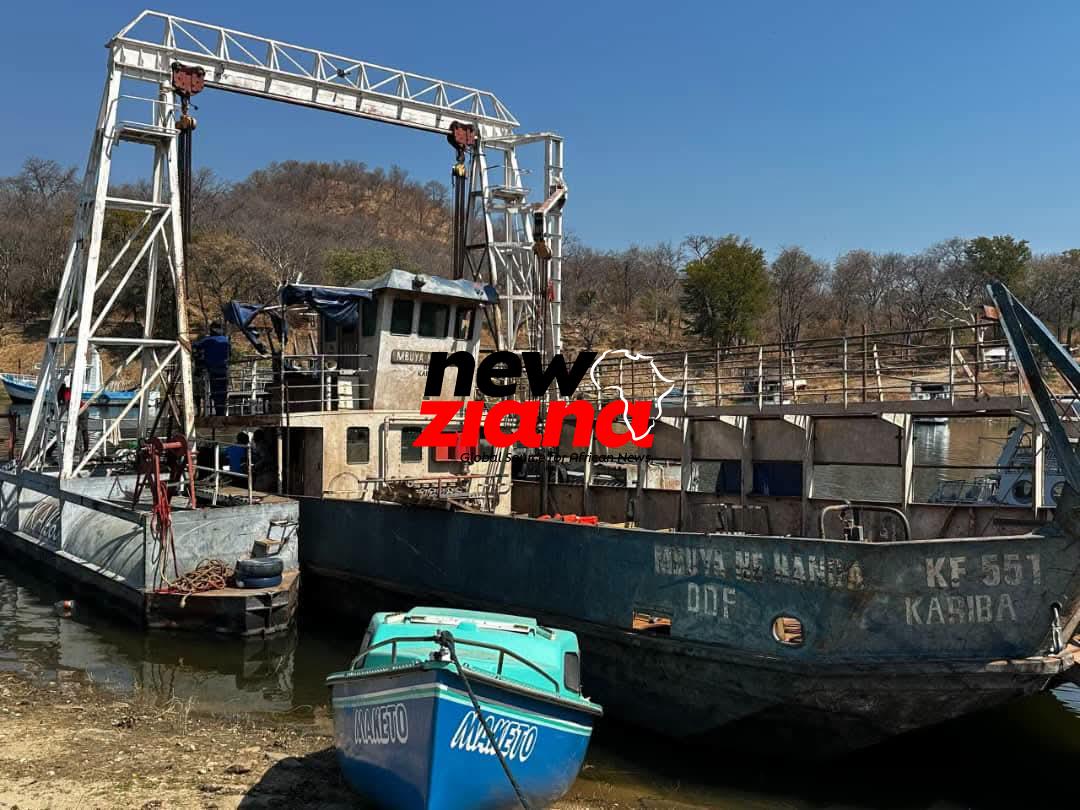
Harare, (New Ziana) — On the morning of August 11, 2026, passengers aboard the ill-fated Mbuya Nehanda boat ferry could see that Lake Kariba was becoming dangerous.
Strong winds were whipping across the water, goods were being blown overboard and water was beginning to enter the boat.
Some passengers wanted to turn back. Others suggested seeking shelter at a nearby island.
But the boat captain adamantly continued the journey.
Hours later, the government-operated ferry lay overturned in the dark waters of Lake Kariba, leaving 97 people dead and exposing a question far bigger than the fate of one ageing vessel: How prepared is Zimbabwe to protect its citizens when disaster strikes?
For survivors, the answer is painfully personal.
Itai Marumisa, who was travelling with groceries and goods for resale in Mola communal lands in rural Kariba district, said passengers had already become uneasy before departure.
“We just felt that there was something wrong with the journey because the winds were already strong,” she said.
She said passengers asked the captain to postpone the journey after a battery and inverter fell into the lake.
Friday Munenga of Dobe Village in Mola said passengers repeatedly urged the captain to turn back or shelter at a nearby island.
“We suggested that we dock at a nearby island, but he insisted on continuing with the journey,” he said.
Those testimonies are central to understanding the disaster. They suggest that the emergency did not begin when the ferry overturned. The warning signs came earlier — and preparedness failed before rescue teams ever reached the scene.
A disaster waiting to happen?
The Mbuya Nehanda ferry, operated by the Rural Infrastructure Development Agency, was authorised to carry 90 passengers. Preliminary government findings put the number aboard at about 180 people and assorted goods.
Survivors described a chaotic struggle for life jackets.
Chance Siamavhu said passengers scrambled for the life savers, but many did not know how to use them. Anymore Chambati, a security official aboard the ferry, said he managed to distribute no more than 10 as the vessel sank.
Marumisa was swept away and spent nearly an hour in the water before a helicopter spotted her.
These accounts expose a crucial weakness in emergency preparedness: having equipment is not enough. Passengers must know how to use it, crews must be trained to deploy it, and operators must prevent an emergency from becoming a catastrophe in the first place.
Zimbabwe has had a formal civil protection framework for decades. The Civil Protection Act establishes structures responsible for preparing for, preventing and responding to disasters, while the Department of Civil Protection coordinates emergency management.
The system also provides for coordination among government departments, security services, local authorities and other actors.
After the Kariba disaster, that machinery was activated.
The Department of Civil Protection coordinated search and recovery operations involving police divers, the Zimbabwe National Army Boat Squadron, local authorities and private organisations, including the Matusadona Conservation Trust. Seventy-seven people were rescued.
A privately owned helicopter also joined the operation.
The response therefore demonstrated that Zimbabwe can mobilise multiple agencies during a major emergency.
But the tragedy exposed a striking contradiction: the country had an emergency response architecture, yet critical elements of maritime disaster preparedness were missing from the national contingency plan.
Nathan Nkomo, chief director of the Civil Protection Unit, acknowledged that maritime disasters had not been included in the national multi-hazard contingency plan.
“Every disaster is a learning curve,” Nkomo said, adding that maritime and aviation emergencies would now have to be incorporated into the plan.
That admission goes to the heart of Zimbabwe’s preparedness problem.
A disaster plan that excludes a major hazard on a lake as economically important as Kariba leaves communities vulnerable precisely when planning matters most.
In Kariba, ordinary residents did not wait for distant rescue teams.
Fishermen, boat operators and local residents joined the search. Their knowledge of the lake, boats and weather made them indispensable.
The Zimbabwe Resilience Network has called for fishing cooperatives and lakeside communities to receive formal training, rescue equipment and communication devices so they can act as certified first responders.
That proposal reflects one of the clearest lessons from the tragedy: preparedness cannot remain concentrated in Harare or within government offices.
Kariba residents live with the lake every day. They know its moods, currents and dangerous winds. Yet their role in disaster management remains largely informal.
A resilient system would turn that local knowledge into organised capacity, trained community responders, functioning radios, rescue boats, drills, evacuation procedures and clearly understood chains of command.
Lake Kariba is more than a tourist attraction. It is a lifeline for communities separated from major roads and markets. The ferry carried traders, children, families, fishing equipment, food and other essential goods between isolated communities and Kariba town.
That dependence helps explain why passengers boarded an overloaded vessel despite deteriorating conditions.
There was often no easy alternative.
The disaster was therefore also a transport failure. The Zimbabwe Urban Residents and Ratepayers Association (ZURRA) argues that poor roads and inadequate alternative transport left communities dependent on a single vessel — creating what it called a “single point of failure.”
Government has pledged a replacement ferry and road rehabilitation, but those measures will mean little without stronger enforcement.
The vessel’s passenger limit must mean something. Weather warnings must trigger action. Maintenance records must be transparent. Crews must receive rigorous training. Life jackets must be sufficient and usable. Search-and-rescue teams must have the equipment to reach victims quickly.
And communities must have a voice in deciding when it is safe to travel.
The government declared the tragedy a state of disaster and launched investigations into the vessel’s condition, operations and compliance.
Amnesty International has called for an independent investigation examining vessel capacity, licensing, weather conditions, crew decisions, safety procedures and enforcement, with the findings made public.
That transparency matters because the 97 dead cannot benefit from another rescue operation.
They can only benefit from what Zimbabwe learns.
For Marumisa, survival brought another kind of uncertainty. The goods she bought in Harare disappeared with the ferry, threatening the livelihood on which her children depended.
“Getting wares in Harare and selling them in Mola was my source of livelihood,” she said.
Her story captures the true cost of the disaster: lives lost, families broken and livelihoods destroyed.
Zimbabwe’s preparedness will ultimately be measured not by how quickly officials issue condolences after the next tragedy, but by whether they act before it happens.
On Lake Kariba, the warnings came.
The question now is whether the country will be prepared to handle such emergencies.
New Ziana