
By Sharon Chimenya
MASVINGO — The monitoring process, which ensures the collection and analysis of data, has been described as important in the implementation of policies or programmes, as it serves as a defence against policy failures.
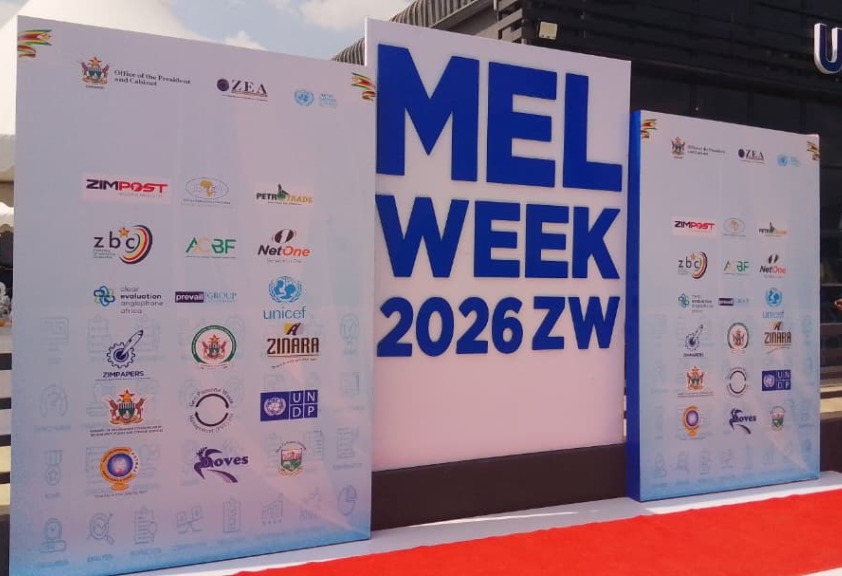
Speaking during the second edition of the Monitoring, Evaluation and Learning Week (MEL) in Masvingo on Monday, the National Director Responsible for Monitoring, Evaluation and Learning, Caroline Makuvire, said that without monitoring, problems will remain invisible until they become a crisis.
The MEL Week, which is being hosted by the government in partnership with the United Nations and other development partners, has brought together stakeholders from various institutions, government, and local authorities.
Unpacking the three components of MEL, Makuvire said monitoring helps in detecting early deviations, enhances accountability, and builds trust with citizens.
She said the monitoring process for various infrastructural projects under the National Development Strategy 1 has improved.
“Monitoring is the ongoing process of collecting and analysing data to track implementation. It answers the question: Are we doing what we planned to do? In Zimbabwe’s NDS1 (National Development Strategy 1), monitoring progress on infrastructure, water, and health projects can actively identify bottlenecks before they escalate. This is evident in the improvements we are seeing on the ground,” she said.
“Without monitoring, problems remain invisible until they become crises. Monitoring is the first line of defence against policy failure, keeping implementation transparent and responsive.”
She said evaluation is equally essential for providing evidence for policy reforms and ensuring value for money. Evaluation must be rigorous, while learning is the process of turning evidence into action and putting it into practice.
She cautioned that when learning is not implemented, policies remain static, and development outcomes are lost when there is a gap between design and operationalisation.
“Learning is the most transformative component of monitoring and evaluation. It asks: What can we do better next time? In Zimbabwe, monitoring and evaluation policies developed between 2015 and 2020 became shelf-drawer documents—impressive in design but never operationalised. When learning is neglected, policies remain static. Institutions fail to respond to emerging challenges and performance strategies,” she said.
“When learning is genuinely embedded, institutions evolve, becoming capable of adaptive, evidence-driven governance rather than symbolic compliance. A policy that is never used is a policy that never existed. The gap between design and operationalisation is where development outcomes are lost.”
Makuvire said the three components are essential in attaining Vision 2030 of an upper middle-income society, as they turn the vision from an aspiration into an achievable and measurable development goal.
She said the use of MEL systems will transform organisations from being reactive firefighters to being proactive in identifying problems before they escalate.
“Monitoring, Evaluation, and Learning should not operate in isolation; together, they form a continuous, self-reinforcing cycle that leads to planning, accountability, and capacity building. An integrated MEL system ensures data-informed decisions. These decisions then shape actions, and actions produce measurable results, transforming governance from reactive to proactive,” she said.
“Vision 2030—achieving an upper middle-income economy—requires more than ambition; it demands rigorous tracking, honest evaluation, and genuine learning from both successes and failures.”
Makuvire added that there was a need to strengthen Monitoring, Evaluation, and Learning, turning them from shelf documents into living documents of change, ensuring Vision 2030 is not merely aspirational but achievable and measurable.