By Sharon Chimenya
MASVINGO — The poaching of four key species in the country is on a downward trend, with only 20 cases recorded since the beginning of the year, amid calls for poaching to be treated as an economic crime.
The four species that have been targeted are elephants, lions, rhinos, and buffaloes.
The Minister of Environment, Climate and Wildlife, Dr Evelyn Ndlovu, said cases have dropped from 60 in 2025 to 20 since the beginning of the year, while wildlife crime also fell from 1,001 last year to 714.
She said the Zimbabwe Parks and Wildlife Management Authority (ZimParks) has increased its law enforcement efforts and invested in technology for the early detection of poachers.
“Turning to wildlife conservation, I am happy to announce that poaching is under control, as shown by the downward trend in the number of key species poached, from 120 in 2019 and 60 in 2025, to only 20 in 2026 as of today. The key species I am referring to include elephants, rhinos, buffaloes, and lions. Wildlife crime statistics also show a slight downward trend from 1,355 in 2019 to 1,001 incursions in 2025 and 714 in 2026 as of today, although there was a surge in 2024,” she said.
“ZimParks has also significantly increased its law enforcement efforts, including acquiring relevant technologies to improve wildlife protection capabilities, especially in providing real and near real-time data for on-ground patrol teams and researchers. This real-time data provision allows early detection of poachers and other environmental changes that may require urgent intervention. Such success is largely due to investment in the enforcement capacity of our leading wildlife protection agency (ZimParks) and other stakeholders involved in wildlife conservation.”
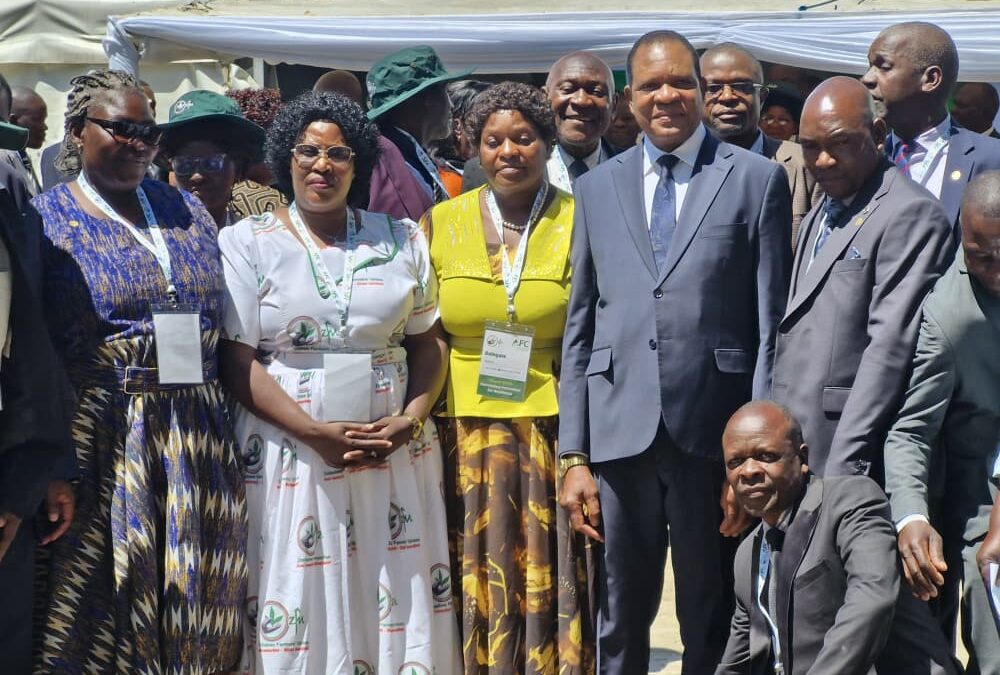
Dr Ndlovu challenged the community along Kyle Recreation Park and Lake Mutirikwi in Masvingo to work together with their traditional leaders to address poaching.
The minister had received reports that some people had engaged in wildlife poaching at the conservancy and at the lake, which she said affects revenue generation by ZimParks for community development.
“You have a school here—does it only cater to the children of rangers, or to the whole community? The money to construct that school came from these animals and fish, so I appeal to you to work together with the Chiefs, Headmen, and Village Heads so that we can identify those who are affecting our livelihoods through poaching and ensure they are prosecuted. If you work together with the government and your Chiefs, it will go a long way in dealing with poaching,” she said.
She called upon the Chiefs to implement stringent measures for those found poaching, proposing a fine of 10 cows and emphasising the importance of guarding against poachers.
Dr Ndlovu said poaching undermines decades of investment in conservation.
“Despite our conservation successes, our wildlife continues to face many threats, including habitat loss and fragmentation, illegal trade, and poaching,” she said.
The minister stated that poaching is an economic crime that threatens the safety of rural communities, destroys wildlife tourism—thus depleting revenue for the country—undermines decades of investment in conservation, and deprives future generations of their heritage.