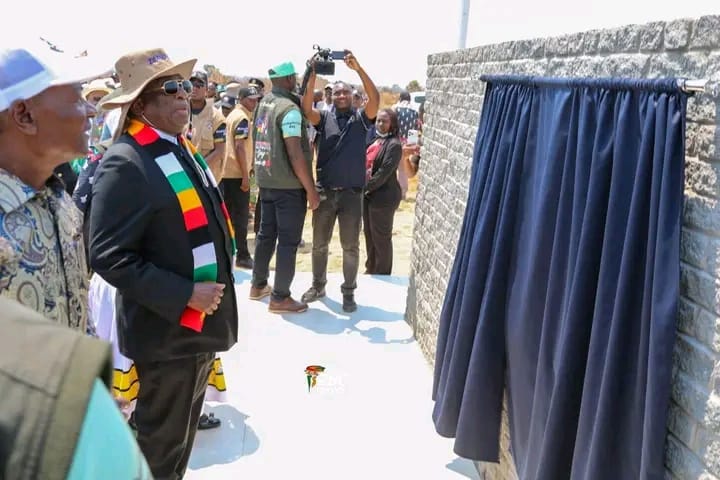
Harare, (New Ziana) – President Emmerson Mnangagwa on Thursday commissioned the Geo Pomona Waste Management Sorting Plant and refuse collection fleet, describing it as a defining moment in the transformation towards a cleaner, healthier, and more sustainable future for the country.
Unveiling the state-of-the-art facility, President Mnangagwa said the milestone marked a turning point in the quest towards efficiency in waste management, hailing it as a symbol of what visionary leadership, strategic partnerships, and national unity can achieve.
As part of the commissioning, Geo Pomona Waste Management rolled out 45 refuse collection trucks and 100 skip bins, with more equipment set to follow, in a bid to overhaul Harare’s failing waste management system.
“We are not just collecting garbage, we are converting waste into economic opportunity and clean energy,” President Mnangagwa said, as he praised the sorting plant for its role in supporting Zimbabwe’s waste-to-energy ambitions.
Once fully operational, the facility is expected to contribute between 16 to 22 megawatts of electricity to the national grid.
President Mnangagwa, who first officiated at the project’s ground-breaking ceremony in November 2023 and later toured the site with fellow SADC Heads of State, said the commissioning was further proof of investor confidence in the country’s improving business climate.
“Public-Private Partnerships, including this one, are a cornerstone of our national development strategy. Projects such as Geo Pomona reflect the potential of private capital, expertise, and innovation in delivering public goods and services,” he said.
He did not mince his words about the waste crisis that has long plagued the capital. “We have seen outbreaks of diseases, a situation that is wholly unacceptable,” he said, adding that such conditions should become a thing of the past.
President Mnangagwa urged local authorities and stakeholders in other towns and cities to emulate the Geo Pomona initiative and intensify efforts towards modern waste management systems.
“Cleanliness and the efficient management of service delivery are not just indicators of good governance,” he said, “but also essential benchmarks for a nation’s competitiveness.”
Highlighting the broader environmental and economic impact of the sorting plant, President Mnangagwa stressed that waste is not just waste, but a resource.
The facility will recover recyclable materials, repurpose them for productive use, and feed them back into the economy, supporting the growth of a green, circular economy.
“This project is aligned with our climate action commitments and contributes to the building of a green economy,” Explained President Mnangagwa.
He commended Geo Pomona management and staff for their clarity of role in supporting both global environmental goals and national development.
However, President Mnangagwa also made it clear that success in waste management would require more than corporate investment.
“The responsibility does not lie with Geo Pomona alone, but with every Zimbabwean,” he said.
He called on citizens to desist from illegal dumping and embrace a culture of recycling and responsible waste disposal.
“Let us be stewards of our environment, together, we can realise our goal of a clean, safe, and healthy Zimbabwe.”
The commissioning of the Pomona facility adds to growing momentum under the government blueprint for transforming Zimbabwe into an upper-middle-income economy by 2030, with clean cities and efficient public services as key pillars.
New Ziana