Harare, (New Ziana)-President Emmerson Mnangagwa on Wednesday called on young people to remain patriotic and mindful of the sacrifices made during the liberation struggle as the country works towards attaining upper middle income status by 2030.
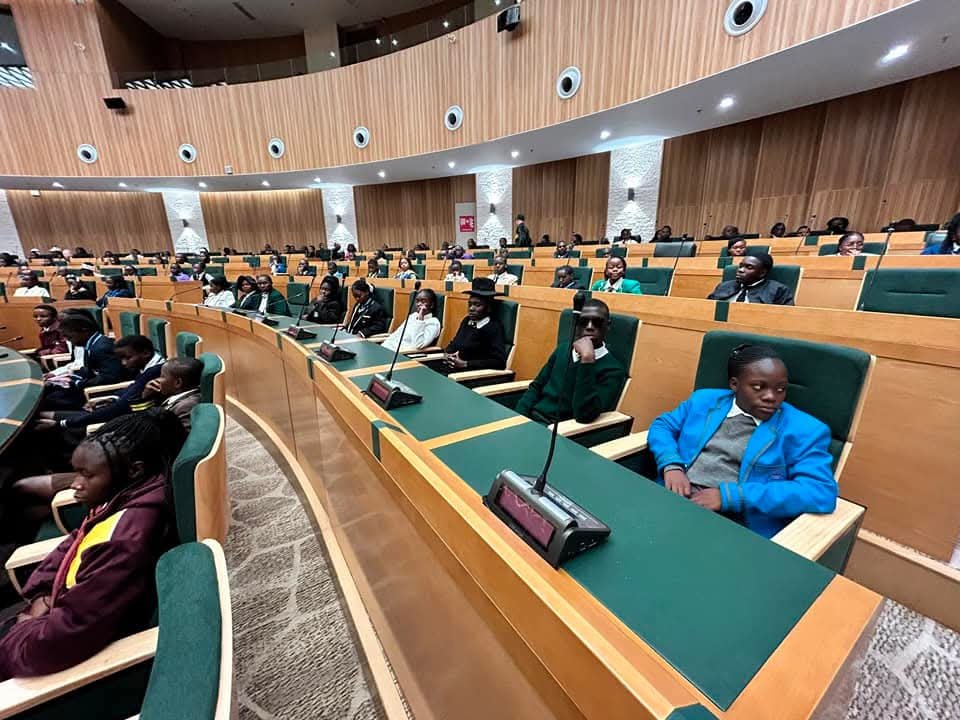
He was speaking while officially opened the 34th Session of the Junior Parliament of Zimbabwe at the new Parliament Building in Mt Hampden.
President Mnangagwa said the annual gathering had become an important feature on the national calendar and a testament to the commitment of the Second Republic to preserve the liberation war heritage.
He reminded the Junior Parliamentarians that independence “never came on a silver platter,” noting that many young people, some as young as the current members, left school and families to fight the colonial regime.
“I, therefore, challenge the children and young people of Zimbabwe to remain mindful. Love your country, be patriotic at all times and honour the departed heroes and heroines who brought about this freedom, which you can now exercise in the august house,” he said.
The event also marked the belated commemoration of the Day of the African Child under the theme; “Ensuring universal access to water, sanitation and hygiene for every child in Africa.”
President Mnangagwa linked Zimbabwe’s future to broader African goals, stating that under the African Union, the continent is working to realise Agenda 2063: “the Africa we want” — united, peaceful, integrated and trading with each other.
He said current African leaders are determined to ensure children have access to quality education, health care, shelter, safe environments, and skills training.
The government, he said, is evolving the education system around a heritage and competency-based model, with greater emphasis on information communication technologies (ICTs), maths, science, innovation and engineering.
“Government is expanding school infrastructure, modernising learning environments, and improving access to teaching and educational materials. Greater emphasis is being placed on digital and industrial skills as well as innovation, so that all children are prepared for ‘life beyond examinations’, in an ever-evolving world,” he said.
President Mnangagwa applauded Child President Tinashe Mugodhi for a “thoughtful and articulate address” and congratulated Junior Members of Parliament for their focus during debates.
“That is how participatory governance ought to be, always grounded in the lived realities of the ordinary people,” he said, stressing the need for the three Arms of the State to deepen democracy, responsiveness, inclusion and accountability “to ensure that no voices are ignored.”
“Thirty-four years of persistently hosting the Junior Parliament is a clear indication of Government’s commitment to nurture the future generation of leaders by involving children and the youth in development and governance matters, from an early age,” he said.
He also took the opportunity to convey his condolences following the passing on of Kimberly Mwanza, a former Child Parliamentarian and requested the house observe a minute of silence in her memory.
President Mnangagwa commended the Ministry of Primary and Secondary Education, the Parliament of Zimbabwe, the Zimbabwe Youth Council, development partners and other stakeholders for making the session a success.
The Junior Parliament was established in 1991 and it mirrors the structure of the national government, providing practical civic education while focusing heavily on critical issues such as children’s rights, education, and substance abuse prevention.
Members use the platform to advocate for critical issues such as child protection, education, mental health, and substance abuse.
New Ziana