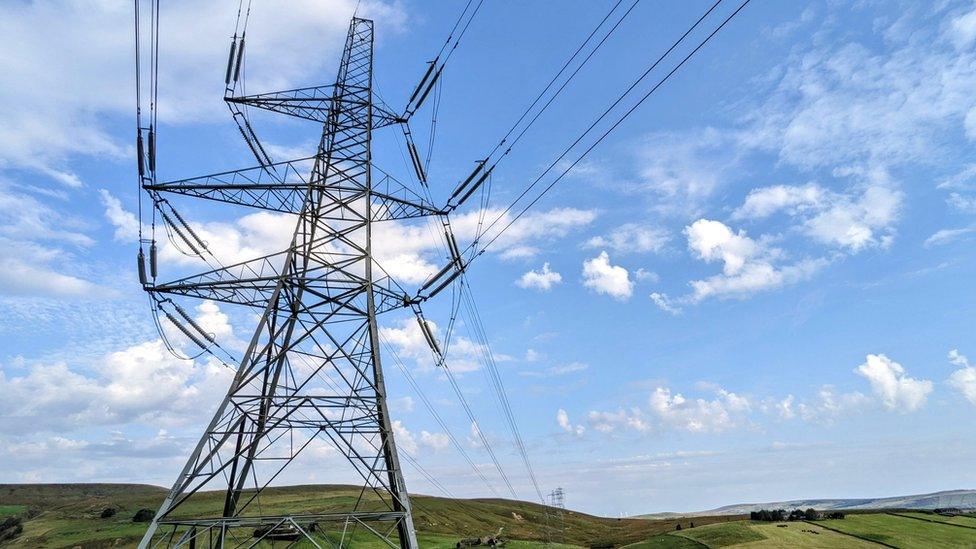
Harare, (New Ziana) – The Southern African Development Community (SADC) recorded a significant increase in electricity generating capacity in the reviewed 2025/26 period, although the region continues to face challenges in extending reliable power access to households, businesses and public institutions.
SADC Executive Secretary Elias Magosi said the region added 3 253 megawatts (MW) of installed generation capacity across 12 mainland member states, while the bloc’s island states contributed an additional 1 611 MW.
Magosi made the remarks at the SADC Council of Ministers meeting in Durban, South Africa. He said the gains demonstrated that the region was continuing to make progress despite a difficult global economic and geopolitical environment.
The new additions have pushed SADC’s total installed electricity generation capacity to 88 202 MW, while operational capacity has risen to 54 812 MW. This is above the region’s combined peak electricity demand and reserve requirement of 52 617 MW.
Magosi, however, cautioned that increased generation capacity should not be regarded as the sole measure of progress in the energy sector.
“It must also be measured by the number of households, schools, health facilities and businesses that gain access to reliable electricity. Encouragingly, regional electricity access increased from 56 per cent in 2024 to 60 per cent in 2025, which is still below our target of 85 per cent electricity access across the region by 2030,” he said.
He noted SADC would need to intensify efforts to expand electricity networks and improve regional power links in order to reach communities that remain without reliable electricity.
“To close this gap, we must continue accelerating grid expansion, strengthening cross-border interconnections and scaling up off-grid and renewable energy solutions that will leave no community behind,” Magosi said.
The executive secretary also pointed to continued growth in the region’s digital economy, with 4G network coverage reaching 79.2 percent and mobile penetration rising to 95.2 percent.
“These achievements are helping us to drive innovation, improve connectivity and expand economic opportunities across the region. Just as energy powers our economies, digital connectivity powers our future. In today’s interconnected world, digital infrastructure has become an essential enabler of communication, innovation, accelerated economic activity and inclusive development,” he said.
Despite these gains, Magosi said the region’s broader economic performance remained mixed. Manufacturing value adding as a proportion of gross domestic product declined from 11.3 percent in 2024 to 10.9 percent in 2025, highlighting the need for renewed efforts to promote industrialisation.
He said the decline should also be viewed as an opportunity for SADC countries to increase investment in productive sectors and build stronger regional value chains. Intra-regional trade grew modestly to 20.2 percent in 2025, supported by trade in manufactured goods, fuels, machinery, vehicles and agricultural products.
“While this growth remains below pre-COVID pandemic levels, it demonstrates the continued dynamism of regional markets and the potential for further expansion,” Magosi said.
He further stressed that peace, security and good governance remained critical to attracting investment, supporting development and achieving the region’s long-term objectives.
Magosi cited progress in addressing political and security challenges in the Democratic Republic of Congo and Madagascar as evidence of the value of collective regional action. He said the SADC Panel of Elders and Mediation Reference Group had continued to contribute to conflict prevention, mediation and preventive diplomacy.
“Their work demonstrates the value of dialogue, partnership, and regional solidarity in preserving peace and stability. However, the work is not complete without an inclusive agenda. Women’s participation in peace and security processes remains below desired levels despite the disproportionate impact that conflicts have on women and girls,” he said.
The remarks come as SADC seeks to deepen regional integration and strengthen its capacity to withstand global economic and geopolitical pressures. Magosi has urged member states to build greater trust and cooperation, arguing that the region’s future increasingly depends on its ability to pursue its own development agenda.
New Ziana