
Bulawayo, (New Ziana) – Southern African countries are intensifying efforts to improve regional air connectivity and reduce the high cost of travel across the continent through the implementation of the African Union’s Open Skies initiative, a Cabinet minister has said.
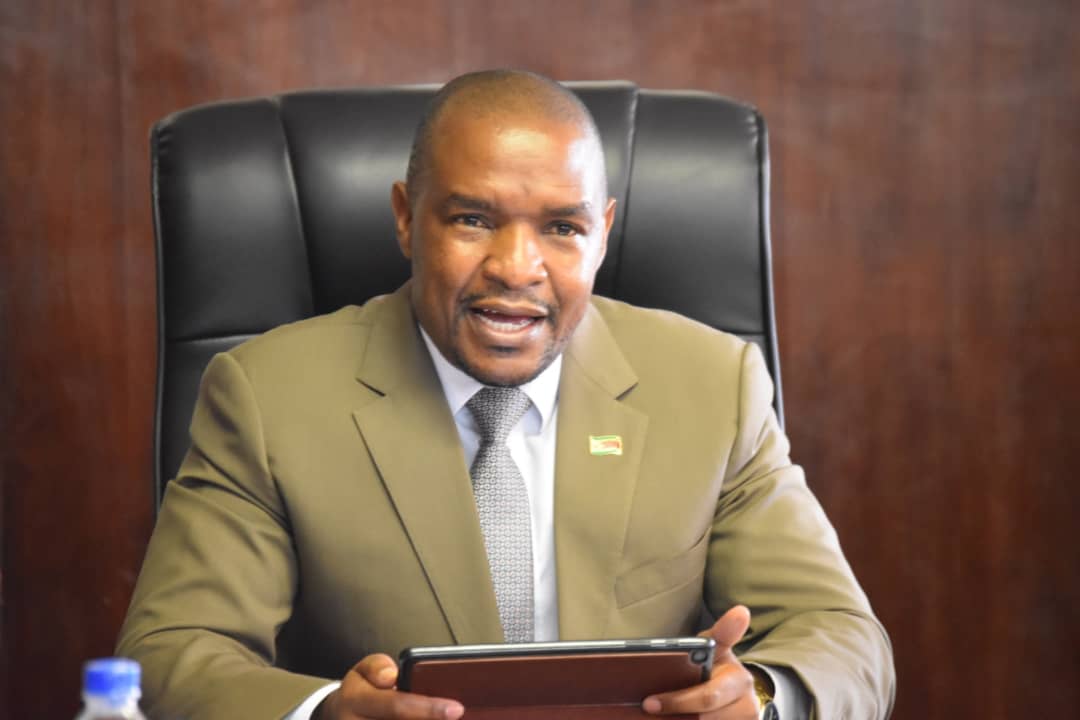
Transport and Infrastructure Development Minister, Felix Mhona said this on Thursday on the sidelines of the Southern African Development Community (SADC) Cluster Meeting of Ministers Responsible for Transport, ICT, Meteorology and Information in Bulawayo.
He said African nations were working to remove barriers that continue to hinder seamless movement of people and goods within the continent.
Mhona said despite the adoption of the Yamoussoukro Decision more than two decades ago, Africa still faces significant connectivity challenges that make travel between some African countries unnecessarily expensive and cumbersome.
The Yamoussoukro Decision (YD) is a landmark 1999 agreement signed and adopted by African nations in Cote d’ivoire to liberalize the continent’s air transport market.
It was implemented in 2002 and establishes ‘Open Skies’ by removing government restrictions on traffic rights, flight capacities, and frequencies for eligible airlines to operate safely across signatory borders.
“We are trying to come up with solutions to address the connectivity issues that we are facing, especially within the region and across the continent.
“What we must hasten to discuss is regional connectivity within the continent. We are saying that as Africa, at times it becomes problematic to connect with one another, where in some instances you have to cross out of Africa and come back again,” Mhona said.
He said about 38 African countries had already acceded to the Yamoussoukro Decision agreement, which aims to create an integrated African aviation market through the opening up of national air spaces.
“We are trying to create a single window in Africa and the issues of open skies, where we are opening our skies so that we fly into one country based on the freedom of rights.
“These are the rights that will enable a country to pick and drop passengers in different jurisdictions, making travel easier and more efficient,” he said.
Mhona said the regional ministers were focusing on identifying and eliminating bottlenecks that continue to impede regional integration.
“It is high time that we do not just talk about connectivity, but address the bottlenecks and barriers that we are facing.
“We find that it becomes very expensive, even ticketing and routing issues. We also need to address visa requirements and ensure countries are opening up,” Mhona said.
He said Zimbabwe had positioned itself as a regional transport and logistics hub through significant investments in aviation and transport infrastructure.
He cited the upgrading of the Robert Gabriel Mugabe International Airport, Victoria Falls International Airport and Joshua Mqabuko Nkomo International Airport as part of efforts to improve connectivity and attract investment.
“Enhancing connectivity is critical, and we have developed our infrastructure in terms of airports. We are saying fly into Zimbabwe, and in terms of safety issues, we are in a sound position,” Mhona said.
Beyond aviation, he highlighted ongoing rehabilitation of key transport corridors, including the Beitbridge-Harare highway and the planned upgrading of the Harare-Chirundu road, which form part of the strategic North-South Corridor linking Southern Africa to regional markets.
He also cited Zimbabwe’s dry port facility at Walvis Bay in Namibia and efforts to strengthen the Beira Corridor as part of broader regional integration initiatives.
“We recently signed a Memorandum of Understanding (MoU) to connect the missing railway link between Kafue and Lion’s Den, and this will further enhance regional trade and movement,” Mhona said.
He said infrastructure development remained central to the country’s strategy of improving regional connectivity and facilitating trade under the country’s engagement and re-engagement policy.
“We are tapping into our own resources to make sure that we come up with climate-resilient infrastructure that resonates with the theme of this gathering,” he said.
The SADC Cluster Meeting brought together ministers and senior officials from across the region to discuss transport, digital connectivity, meteorology and information sector priorities aimed at advancing regional integration and economic development.
New Ziana