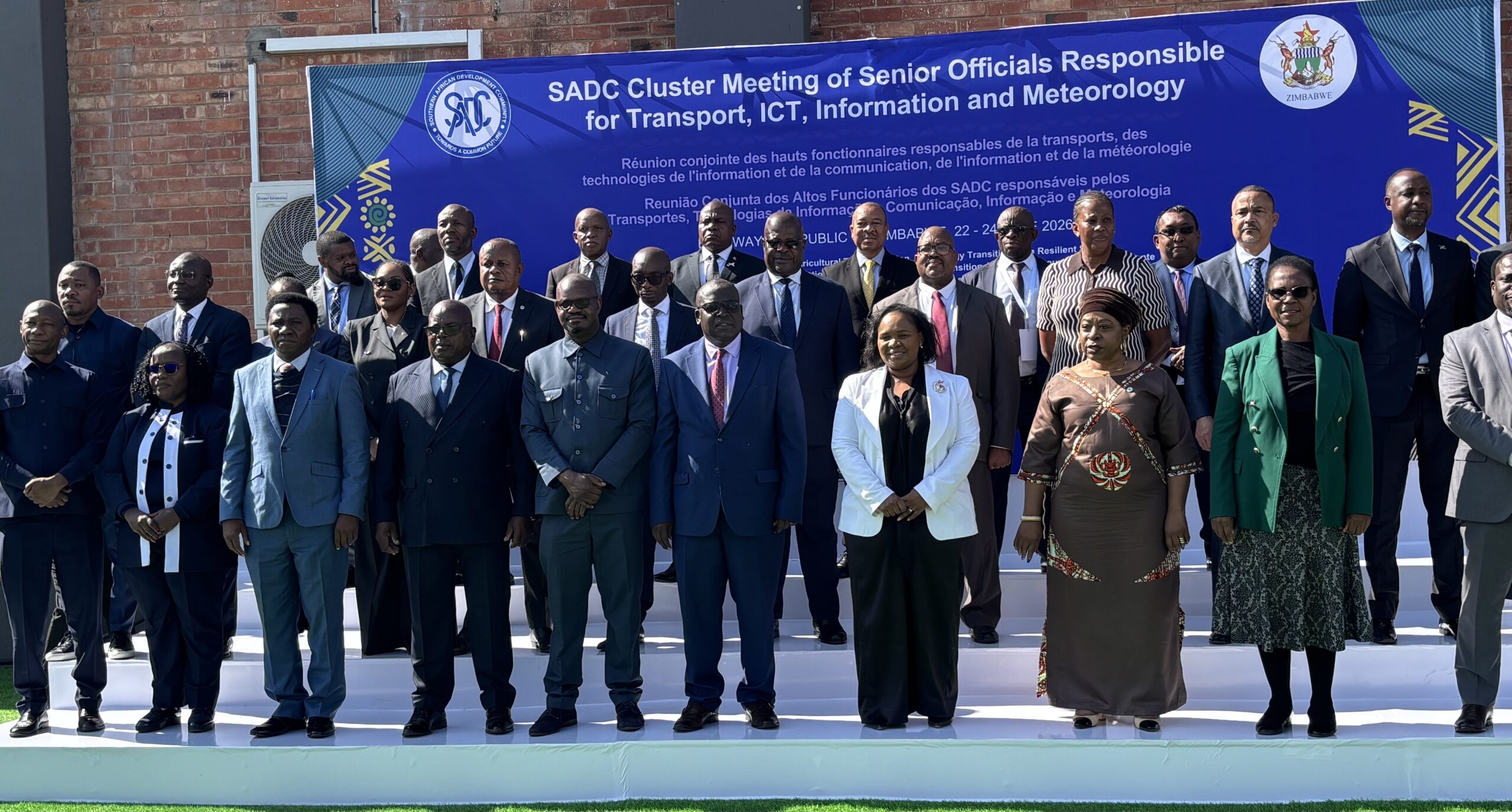
Bulawayo (New Ziana) – Southern African Development Community (SADC) countries have been challenged to accelerate the implementation of infrastructure and digital transformation programs to ensure citizens experience tangible benefits from regional integration.
South African Department of Communications and Digital Technologies Director-General Nonkqubela Jordan-Dyani made the call on Monday during the official opening of the SADC Cluster Meeting of Ministers Responsible for Transport, ICT, Information and Meteorology.
She said the region’s citizens were expecting practical improvements in their daily lives rather than policy commitments alone.
The high level engagement, which will run until Friday, brings together Ministers and senior policymakers from SADC Member States to deliberate on strategic priorities aimed at strengthening regional infrastructure, enhancing connectivity and promoting sustainable development across the region.
Jordan-Dyani said transport, ICT, information and meteorology remained critical pillars for economic growth, trade facilitation, connectivity and sustainable development across the SADC region.
“Across our region, citizens look to SADC not only for commitments and declarations, but for tangible improvements in their daily lives.
“They expect integrated, modern transport networks, greater and affordable digital connectivity, improved access to information, stronger climate resilience, and opportunities that support economic growth, entrepreneurship and job creation,” Jordan-Dyani said.
She said senior government officials carry the responsibility of ensuring that regional cooperation mechanisms delivered measurable results and that agreed policies translated into practical programs that benefit ordinary citizens.
“Our responsibility is clear, to ensure that regional cooperation mechanisms operate effectively, with clear accountability, and deliver measurable outcomes. We serve as the bridge between the strategic decisions of ministers and heads of state and the practical implementation of regional programs and policies,” she said.
Jordan-Dyani said the regional integration efforts remain anchored on the SADC Vision 2050 and the Regional Indicative Strategic Development Plan (RISDP) 2020-2030, which provide strategic direction in infrastructure development, industrialisation, peace and security, and social and human development.
She said delegates would, over the next three days, focus on enhancing regional transport corridors, promoting digital transformation and ICT integration, strengthening climate resilience and meteorological services, as well as advancing innovation through emerging technologies.
“The convening of this cluster meeting underscores SADC’s continued commitment to regional integration through coordinated infrastructure development and policy alignment among member states. The outcomes are expected to contribute to improved efficiency in regional systems, enhanced trade facilitation and strengthened resilience to climate and economic challenges,” she explained.
Jordan-Dyani also highlighted ICT development as one of the key areas under review, including progress in expanding regional connectivity, strengthening policy and regulatory frameworks, advancing research and innovation, promoting industry development and improving regional postal services.
She said transport and meteorological cooperation would also receive significant attention, with discussions focusing on aviation, road infrastructure, regional transport corridors and transport management systems.
“The credibility of our regional institutions depends not only on the quality of the decisions we make, but also on our ability to implement them effectively. This review presents an opportunity to assess progress, identify implementation challenges and strengthen accountability across our programs and institutions,” she said.
Jordan-Dyani challenged delegates to reflect on whether the pace of infrastructure development across the region was satisfactory and whether existing initiatives were creating meaningful trade, investment and economic opportunities for citizens and businesses.
“The true measure of our success lies not in the number of meetings we hold, but in the impact of our collective action,” she said.
She implored member states to pursue practical, implementable and results-oriented solutions, stressing that sustainable development could only be achieved through cooperation, partnerships and a shared commitment to addressing regional challenges.
“By working together and drawing on our collective expertise, we can develop effective responses that advance regional integration and improve the lives of our citizens,” she said.
New Ziana