
By Mvelo Mthiyane Zondo
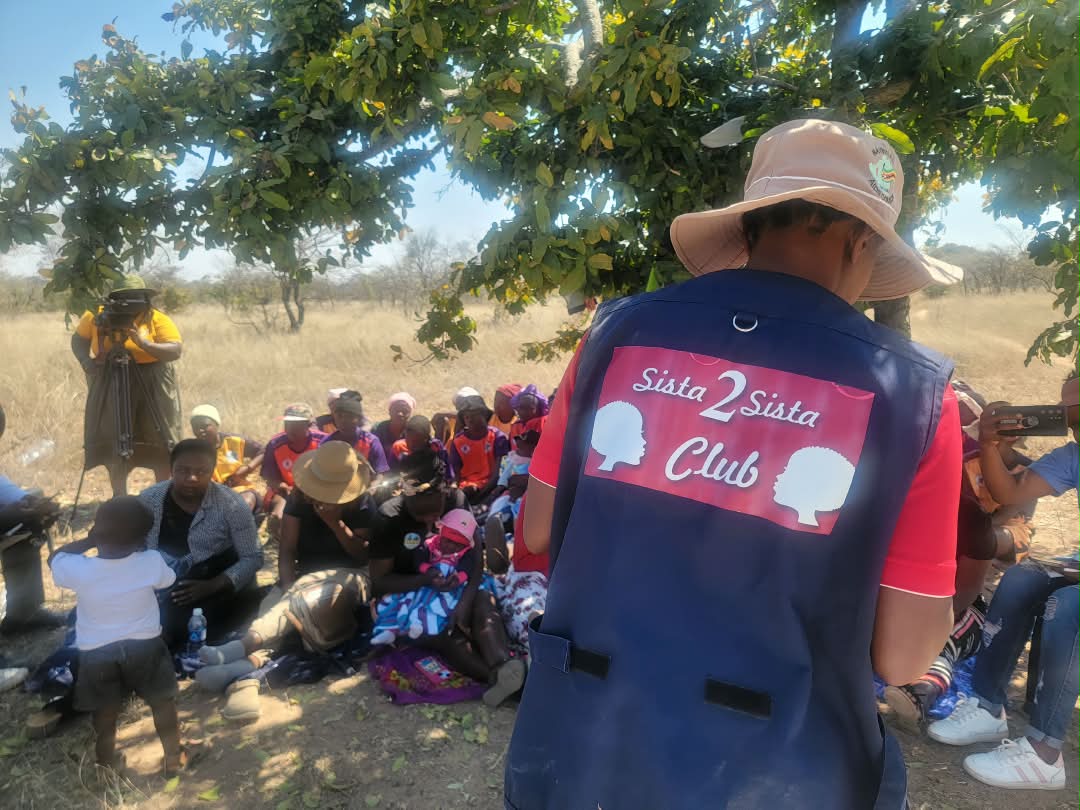
INSIZA — Sista2Sista clubs in Insiza are going beyond their traditional focus on sexual and reproductive health and rights (SRHR), equipping adolescent girls and young women with financial literacy and income-generating skills to reduce their economic vulnerability.
The initiative, which is being implemented through mentorship programmes supported by the National AIDS Council (NAC) and the Insiza-Godlwayo AIDS Council, is helping girls develop livelihoods that can reduce their dependence on male partners for basic needs.
Ward 16 Sista2Sista mentor, Siduduzike Zondo (23), said financial empowerment was critical in addressing vulnerabilities that could expose young women to transactional sex and HIV infection.
“Having realized that most of us young girls are financially dependent on our male partners, our organizers, the National AIDS Council and Insiza-Godlwayo AIDS Council, have taught us life-sustaining skills,” Zondo said.
Zondo, who mentors 50 girls, said her mentees had already embarked on a poultry project, constructing a fowl run with a capacity of 500 broilers.
“We intend to produce white meat on a large scale, targeting local restaurants and amakhanando (small-scale miners). As we grow, our vision is to establish a horticulture market garden at Avoca Irrigation in a bid to move away from dependency,” she said.
“An economically empowered girl cannot be easily sexually abused by men because she can manage her life economically.”
Although Sista2Sista clubs primarily provide information on HIV prevention, SRHR and related issues, Zondo said the programme had also encouraged members to pursue income-generating projects, including poultry and indigenous chicken rearing.
“Instead of asking for money to buy sanitary wear from our boyfriends, we have empowered ourselves,” she said.
The Sista2Sista programme targets vulnerable adolescent girls and young women aged between 10 and 24. In rural communities such as Filabusi, the initiative seeks to address the social and economic factors that can contribute to teenage pregnancies, early marriages, gender-based violence and HIV transmission.
For some beneficiaries, the programme has also helped build confidence in making informed decisions about their health and relationships.
Nokuthula Mpofu, a mother of one from Amazon B village, said she joined the club after being encouraged by her peers and had gained knowledge that changed her outlook on relationships and HIV prevention.
“This is a very good initiative which empowers us as young girls and women on how to prevent gender-based violence and economic abuse by men,” Mpofu said.
She said the mentorship had also encouraged her to overcome her fear of HIV testing.
“Before I joined this club, I was afraid to know my HIV status, but from the knowledge I received from my mentor, I gathered the courage to get tested. Fortunately, I tested negative,” she said.
Mpofu subsequently encouraged her partner, a gold miner, to undergo an HIV test.
“It was a mammoth task to convince him, although I eventually succeeded, and he also tested negative. We are now living happily and regularly go for HIV tests,” she said.
The beneficiaries spoke during a media tour organized by the National AIDS Council to showcase community-level interventions aimed at improving the welfare and health outcomes of adolescent girls and young women.
New Ziana