Bulawayo, (New Ziana) – Zimbabwe cannot tackle unemployment without bringing small and medium enterprises (SMEs) into the formal economy, as the sector remains the country’s largest source of livelihood and holds the biggest potential for creating decent jobs, a cabinet minister said on Thursday.
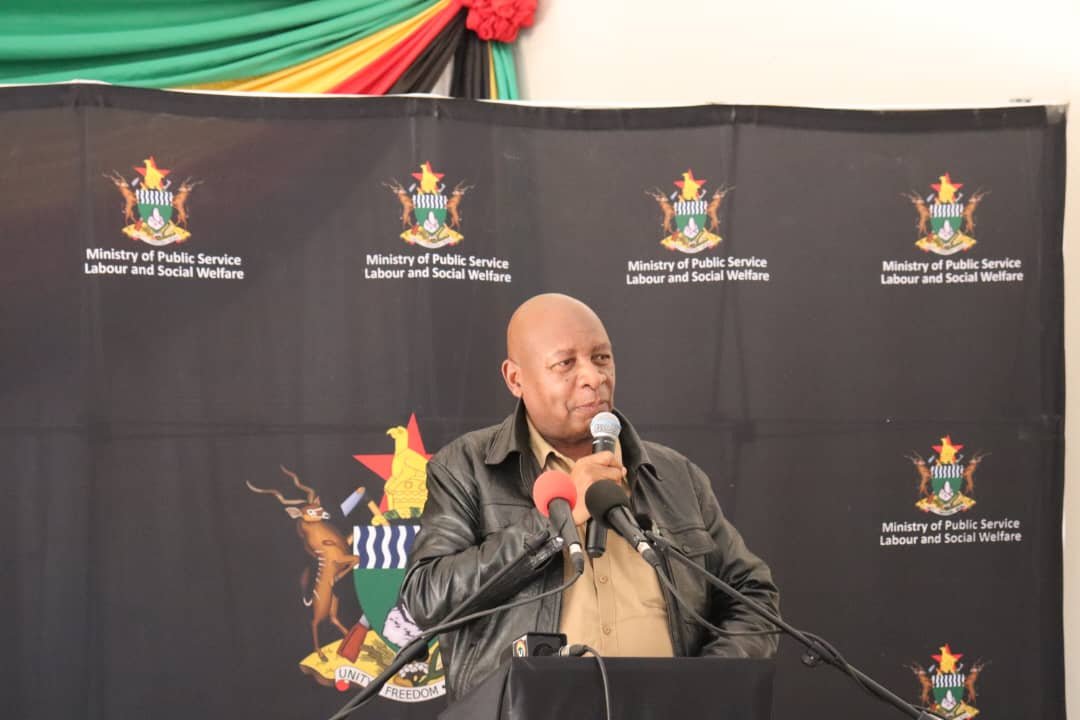
Public Service, Labour and Social Welfare Minister, Edgar Moyo said this while officially opening the National Labour and Employment Summit 2026 here.
The summit brought together government, organised labour, employers, development partners and academia to discuss policies, innovation and practical solutions to the country’s labour and employment challenges.
He highlighted that government was accelerating the formalisation of SMEs to enable them to unlock access to finance, markets and social protection, while driving employment creation.
“We cannot speak about employment in the country without speaking about small and medium enterprises. These remain the largest source of livelihood for our people, yet the majority continue to operate informally outside the reach of regulation, finance, social protection and public support,” Moyo said.
He said government viewed SME formalisation also as an empowerment strategy, rather than a punitive measure.
“Government remains committed to accelerating the formalisation of our SMEs sector, not as a punitive exercise but as a pathway to access to finance, market opportunities, social security coverage and long-term business growth.
“We must simplify registration processes, expand access to affordable capital, strengthen business development support services and create genuine incentives that make formalisation the natural and attractive choice for every entrepreneur,” Moyo said.
He also said a vibrant and formalised SME sector offered one of the quickest pathways to mass employment.
“I challenge every delegate in this room to leave this summit not with another list of recommendations but with concrete, time-bound, measurable commitments,” he said.
He said the summit came at a critical time as the country sought to ensure economic growth translated into quality jobs and improved livelihoods.
“A society cannot call itself developed while its youth remain idle and its women remain economically marginalised.
“The President has consistently reminded us that the economy must work for the people and that no one and no place should be left behind. This summit is therefore not merely a conference, it is a national moment,” Moyo said.
He said although the country had recorded macro-economic gains, including relative currency and price stability, improved agricultural output, growth in mining and manufacturing, the country still faced significant labour market challenges.
“Government is under no illusion that macro-economic stability on its own is sufficient. The true test of any economic policy is the number of decent jobs it creates and the quality of livelihoods it sustains,” Moyo explained.
The minister said informality, youth unemployment, skills mismatches and barriers limiting women’s participation in the economy remained key issues requiring urgent attention.
“Under the National Development Strategy (NDS2), government has placed industrialisation, value addition, investment promotion, innovation, youth employment, women’s economic empowerment and decent work at the centre of national development.
“Every policy instrument, every investment incentive and every public programme must now be assessed not only by its contribution to Gross Domestic Product(GDP) but by its contribution to productive and decent employment,” said Moyo.
He also announced that Cabinet had approved two key policy instruments, the National Employment Policy (2026-2030) and the National Formalisation Strategy, which he described as landmark frameworks for promoting decent work across the economy.
“These policies mark a decisive and deliberate shift in national focus from merely generating jobs to actively improving the quality, safety and security of employment for every single Zimbabwean worker,” he said.
Moyo also said that a National Social Contract, negotiated through the Tripartite Negotiating Forum (TNF) by government, organised business and organised labour, was now before Cabinet for consideration.
He said once approved, the agreement would provide a shared framework for industrial peace, enhanced productivity, decent work, responsible investment and broad-based economic growth.
He stressed the need for the country to embrace emerging technologies, including artificial intelligence and digitalisation, while ensuring these created employment opportunities, and not the opposite.
“We shall not resist this technological wave. Instead, we shall shape it, regulate it and harness it so that artificial intelligence and digitalisation become instruments of inclusive job creation rather than sources of exclusion,” he said.
New Ziana