By Pelagia Cynthia Guma
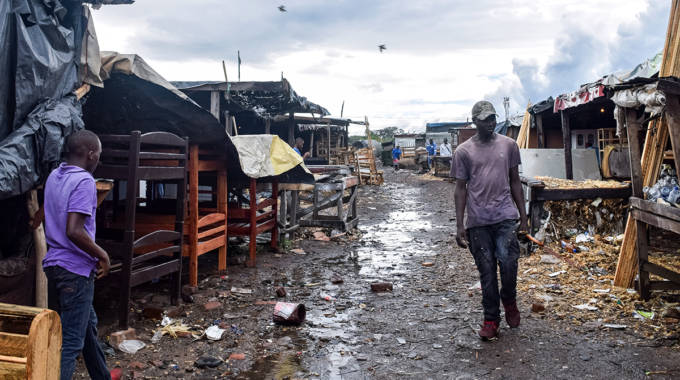
Harare, (New Ziana) – The Glen View Area 8 furniture complex in Harare has suffered regular fire outbreaks over the years, reducing entire rows of workshops to ashes.
While many blame negligence and flammable clutter, others insist the true cause lies in the supernatural — a vengeful mermaid (njuzu) said to reside in the nearby stream, a tributary of the Mukuvisi River.
Traders believe the complex was built on sacred ground, disturbing the mermaid’s dwelling. They say the njuzu punishes those who desecrate the waters or use black magic to promote their businesses.
“When it gets angry, it causes a fire that cannot be put out even by the fire brigade. The flames run so quickly that everything is burnt to ashes,” explains Cloudiaus Mutongwizo, secretary of the complex, who believes in the Nzuzu conspiracy theory.
Mutongwizo adds that workers who toil at night often use traditional heaters (mbaura) to keep warm in the cold area. This, he says, provokes violent winds sent by the Njuzu, which does not tolerate fire in its domain.
Concurring with Mutongwizo, another furniture maker who has worked at the complex for more than 20 years, who pleaded anonymity, explained that some of his colleagues use juju or black magic known locally as Sandawa. This ritual involves burning all possessions into ashes annually before multiplying them, a practice that is believed to provoke the mermaid’s anger.
“Angered by the use of this black magic, it causes an explosion of fire that cannot be put out as it runs so fast that they are unable to stop it until everything is burnt to ashes,” he says.
Mutongwizo noted that there is a spiritual side to the fires, but solutions remain elusive because of the diversity of beliefs among workers. “It is something spiritual that needs to be attended to, but people are failing to understand it as they come from different backgrounds and different churches of various denominations and beliefs,” he explains.
At the complex, artisans belong to Roman Catholic congregations, Pentecostal churches, African traditional religion and others. Each group interprets the fires differently, making it difficult to unite around a common spiritual response. This religious diversity has left the community divided, with no shared approach to confronting what many believe is the wrath of the Njuzu.
The Glen View 8 Furniture Complex chairman, Sydney Mandewe, explained that most of the fire outbreaks usually occur during the hot, humid month of October, “when the temperatures are very high.”
Furthermore, Brighton Chitauro from the complex’s security department says thefts have been occurring, with massive amounts of furniture stolen. To conceal the evidence, culprits have ended up starting fires that then spread and destroy the whole complex.
“This has made us find prevention measures so as to end the fire outbreaks. We have implemented measures which include training security guards, exchanging working hour shifts, and also enforcing rules at the workplace that will enable us to bring sanity to the complex,” explained Chitauro.
He further noted that the lack of proper electrical installation has also left the complex vulnerable, with naked wires sparking at night when no one is monitoring. Combined with bottles of flammable liquids, wood shavings, plastics, and glue scattered across workshops, the risk of fire is ever‑present.
“We are appealing to ZETDC (Zimbabwe Electricity Transmission Distribution Company) to curb the breaching of electricity, install industrial meters, and ensure everyone connects with proper piping. This can end fire outbreaks as workshop operators are breaching electricity meters,” he says.
Chitauro also noted that diesel and petrol generators often explode, fueling the flames, while littered plastics and other waste accelerate the spread of fire. In his view, these hazards make the complex highly vulnerable, with blazes capable of destroying entire rows of workshops within minutes
Moreover, on the issue of insurance, Mandewe explained that most companies operating at the complex are not formally registered. This lack of registration has left them unable to secure insurance or compensation when their furniture is destroyed by fire.
“We urge all workers who operate in the complex to register their companies so that they can get insured or compensated when their furniture is destroyed. This will help them to move forward with their business in the event of theft or fire outbreaks. We have no record of any business that is formally registered or has been assisted in past incidents,” says Mandewe.
The absence of formal registration and insurance has compounded the artisans’ vulnerability. Each fire leaves them starting over, with no financial safety net to recover their losses. For many, this cycle of destruction and rebuilding has become a defining feature of life at Glen View Area 8 furniture complex.
The fires at the complex remain shrouded in mystery — a clash between belief and reality. For some, they are the wrath of a mermaid guarding sacred waters; for others, the inevitable result of negligence, theft, and poor infrastructure.
Religious diversity further complicates the issue, with churches and traditional healers offering conflicting interpretations. What is clear is that without proper regulation, insurance, and collective solutions, artisans remain vulnerable — rebuilding after each blaze while caught between the flames of human error and the fury of the supernatural.
New Ziana