By Rutendo Mapfumo
Many young girls in the rural areas of Binga and Hwange are dropping out of school at the Grade 7 level due to a lack of birth certificates often leading to early marriages. The majority of these girls drop out of school as soon as they are required to present birth certificates to register for the Grade 7 Zimbabwe School Examination Council (ZIMSEC) examinations.
An investigation by New Ziana, revealed that it is common for girls as young as 12 years old to be married. By the age of 15, some have as many as two children. On average, three out of 10 teenage girls in these communities are married.
The lack of birth registration predominantly affects rural communities nationwide. According to the ZIMSTAT 2022 report, 2,335,741 people lack birth certificates or records, with 1,968,218 from rural areas and 367,523 from urban areas. Notably, Matabeleland North Province has 115,097 individuals without birth documentation, with Binga district in the lead, followed by Hwange district.
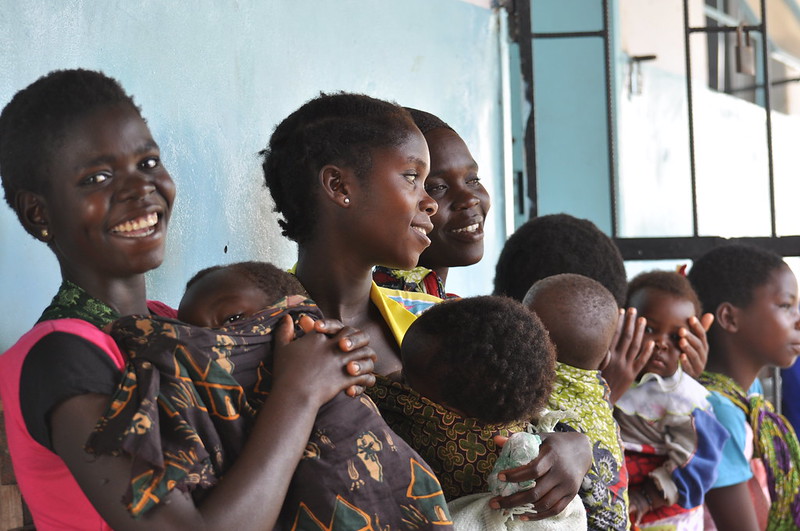
Fifteen-year-old Lugwasyo Mudimba, accompanied by her sister Luse Mudimba, 18, who is also a mother of two, come from Sianzyundu village in Binga district about 11 kilometres from Sianzyundu business centre. Both teenage sisters went as far as Grade Six only in primary school and were unable to register for their final Grade 7 examinations because they did not have birth certificates.
“I stopped attending school in Grade Six when my school kept asking for birth certificates to register for the Grade Seven examination. Without one, I had no choice but to stay at home,” Lugwasyo says. “My late parents had no birth record; my mother delivered me at home.”
Luse shares a similar story. “When I was 15, I wasn’t in school either. I got married because that was the only way I could support my younger siblings,” she says.
Lugwasyo and Luse represent a troubling trend in Binga and Hwange, where the inability to acquire birth certificates is pushing girls into early child marriages after dropping out of school. The cycle often begins when a teenage girl delivers a child at home and is unable to register the birth without an identity card. The Mudimba sisters have not registered their toddlers because they themselves do not have identity documents.
This issue extends to Makwandara village under the Hwange Rural Council, where many teenage girls fall victim to child marriages due to their inability to obtain identity cards that would allow them to continue their education.
Several factors contribute to the lack of birth registration in rural areas. Proximity to registration centres and an increase in home births are significant contributors.
According to Valletta Moyo, a Ward 14 councillor representing Makwandara village in rural Hwange, many young girls struggle to register their new-borns because they often give birth at home.
“I have observed many young girls who deliver at home and are unable to obtain birth records due to the long distances to health centres. Several factors contribute to these home births, including the fear of encountering wild animals on the way to the clinics,” said Moyo.
Never Muleya, a councillor from Sianzyundu in Binga, emphasised that the distance to health centres significantly affects mothers’ ability to deliver their babies in medical facilities.
The distance between health centres and communal areas can be as much as 10km, which is not proper to pregnant and expectant mothers.
Despite these challenges, Anna Mandizha Ncube, the Director of Bwalo Matalikilo Trust (BMT), a Hwange based organisation which deals with sexual health reproductive rights, says there is a need to break the cycle of child marriages.
“As development programmers, we must tackle child marriages at the grassroots level. This involves not only raising awareness on sexual rights but also raising awareness on the right to identity such as birth certificate, we constantly refer the women and young girls to the registrar’s department.
“By educating communities about the legal and social significance of birth registration, we can empower young girls to assert their rights and understand the value of staying in school,” said Mandizha.
The BMT in collaboration with SAFAIDS have trained 30 community Gender Action Teams (GATs) to mobilise their communities and hold state institutions to account for gender justice in Hwange District.
Although the government has empowered traditional leaders to issue birth records to facilitate the acquisition of birth certificates, most people are still not aware of this service.
“The community is not aware of this development, highlighting the need for increased awareness,” says Chief Sinampande in Binga.
However, a number of organisations are actively working to combat child marriages in Binga and Hwange. Notably, Basilwizi Trust has taken significant strides to address this issue.
Basilwizi Trust has so far registered 1271 young girls in Binga to obtain both birth certificates and Identity cards.
Danisa Mudimba, the Programmes Manager at Basilwizi Trust, notes that teenage pregnancies and early marriages significantly contribute to the high number of unregistered children in Binga District.
“During our surveys, we found that teenage pregnancies increase the number of unregistered children. Young mothers under 16 lack the necessary documents to register their children for early birth registration,” Mudimba says.
To tackle these challenges, Basilwizi Trust launched the Campaign for Birth Certificates and Identity Cards (CICABID) in 2023, aimed at increasing birth registration in the region.
However, Mudimba says while some clinics in Binga have birth registration offices they are underutilised by young mothers due to a lack of relevant documents.
“We educate the community on the importance of early birth registration, complementing the Ministry of Health and Child Care’s initiative for child registration within the first three days. We encourage communities to acquire IDs and birth certificates as their right, enabling them to access education, as every child requires a birth certificate for examination registration,” she adds.
Mudimba also highlights the challenges posed by distances to sub-offices for birth registration.
“People often walk long distances for registration, such as mothers traveling from Chunga to Siabuwa, where a sub-office is located. This trip can cost US$10 by bus, and accommodation is often needed, all contributing to low birth registration rates,” she said.
For many, the travelling and accommodation expense is too high forcing them to choose between registering their child births and meeting basic needs like food.
Mudimba appealed to the government to review the Civil Registration Act to facilitate birth registration for children of mothers under 16. She also advocates for more decentralised birth confirmation processes with traditional leaders and the establishment of additional sub-offices for birth registration.
By addressing the issue of acquiring birth certificates, the Binga community can take significant steps toward ensuring girls’ access to education and breaking the cycle of early child marriages, ultimately empowering the next generation.
Basilizwi trust is currently carrying out a second phase which started in June 2024 where they are assisting people in Binga wards to acquire birth certificates.
Amanda Phiri, a lawyer with the Legal Resource Foundation, emphasised that failing to register births in Zimbabwe is a criminal offense.
“The law mandates that every child should be registered within 42 days of birth. Not adhering to this requirement is considered a crime. The government should take action by criminalising this behaviour and holding accountable those who neglect to register their children,” she stated.
Meanwhile, President Emmerson Mnangagwa has signed into law the Criminal Law Amendment Protection of Children and Young Persons Act 2024 (Number1). The law criminalises having sex with persons under the age of 18 years. The law is further meant to end child marriages.
While the law is likely to curb child marriages, it is, however, not likely to solve the problem of getting birth certificates which will continue to be a significant barrier to education for young people in Binga and Hwange. As young mothers such as Lugwasyo and Luse confront the harsh realities of their situations, it becomes increasingly evident that empowering communities through education and awareness is vital.
By working together to improve birth registration processes and raising awareness about the importance of education, the community pave the way for a more equitable and prosperous generation. The path forward lies in collaboration among government agencies, local organizations, and community members to create an environment where girls can thrive, complete their education, and secure their rights.
This story is published under the Voluntary Media Council of Zimbabwe Investigative Journalism Fund with support from ActionAid Zimbabwe under the Partnership for Social Accountability Programme.
New Ziana