
By Zachary Gava
Harare, (New Ziana) — Zimbabwe has been urged to strengthen the conservation, exchange and use of indigenous seeds as the country seeks to build resilient food systems capable of withstanding climate change and other agricultural shocks.
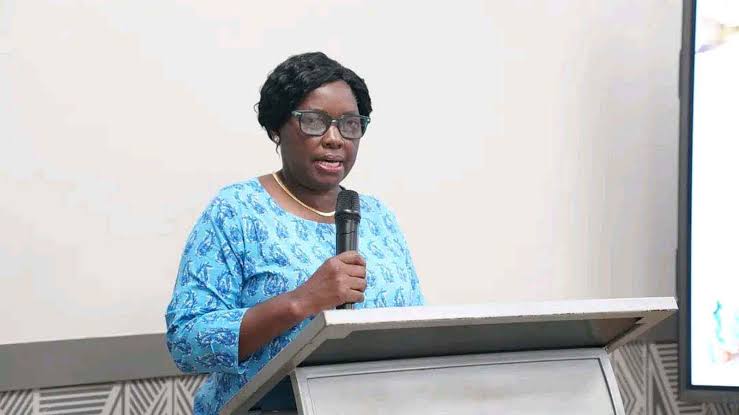
The call was made by Medlinah Magwenzi, Chief Director of the Agricultural Development Advisory Services in the Ministry of Lands, Agriculture, Fisheries, Water and Rural Development, who officially opened the 2026 National Seed Fair in Harare on Friday on behalf of Minister Dr Anxious Masuka.
The two-day event, running from September 18 to 19 at the Harare Botanical Gardens, is being held under the theme “It’s Our Life: Safeguarding Indigenous Seeds and Food Diversity.”
It brings together farmers, seed producers, farmer organisations, civil society, government departments, development partners and other stakeholders to showcase indigenous seeds, traditional foods and knowledge.
Magwenzi said seeds should not be viewed merely as agricultural inputs, but as an important part of Zimbabwe’s cultural heritage, livelihoods and food sovereignty.
“Seeds are life, seeds are culture, seeds are knowledge, seeds are livelihoods and seeds are an important foundation of our food sovereignty and resilience,” she said.
She said Zimbabwe had a rich diversity of indigenous crops, including cowpeas, sorghum, finger millet, pearl millet, Bambara nuts and indigenous vegetables, which had sustained communities for generations.
Cowpeas have been designated the seed of the year for the event.
According to Magwenzi, indigenous crops possess characteristics that are increasingly important as farmers confront changing climatic conditions, including adaptation to local environments, drought tolerance and the ability to contribute to dietary diversity.
She said the preservation of indigenous seeds was therefore both a cultural responsibility and a practical strategy for strengthening national food security.
“This is precisely what we see here today — farmers showcasing the diversity of our indigenous seeds, foods and knowledge,” Magwenzi said.
She linked the Seed Fair to the country’s development priorities, particularly food and nutrition security, sustainable natural resource management and climate resilience under the National Development Strategy 2.
At continental level, she said the initiative was also consistent with the Comprehensive Africa Agriculture Development Programme (CAADP) Strategy and Action Plan 2026-2035, which includes food and nutrition security and the building of resilient agri-food systems among its strategic objectives.
The African Union’s CAADP framework specifically calls for diversification of agricultural production and the preservation and use of traditional and indigenous genetic resources to strengthen resilient, diverse and nutritious food systems.
Magwenzi also drew attention to the 22nd CAADP Partnership Platform, which was being held in Harare, saying the National Seed Fair demonstrated at community level the kind of diverse and climate-responsive agricultural systems envisaged under the continental framework.
She said the preservation of seed diversity had become even more important in the face of climate change and anticipated weather-related pressures during the 2026/27 agricultural season.
“As we confront the realities of climate change, especially the predicted El Nino in the 2026/2027 farming season, food insecurity and environmental degradation, agricultural biodiversity is becoming increasingly important,” she said.
Magwenzi called for greater collaboration among Government, farmers, researchers, civil society, development partners, the private sector and communities to ensure that farmers retained the capacity to conserve, exchange and use diverse seed varieties.
She urged participants to use the Seed Fair not only to exhibit their seeds, but also to exchange knowledge, establish partnerships and strengthen efforts towards seed and food sovereignty.
“Every seed preserved is a possibility for the future; every variety protected is a contribution to food diversity and every farmer empowered is a guardian of our food sovereignty,” she said.
PELUM Zimbabwe Country Coordinator, Theophilus Mudzindiko said the Seed Fair provided an important platform for Zimbabweans to reflect on the relationship between seeds, food, culture and the future of African food systems.
He encouraged participants to move beyond simply displaying indigenous seeds and foods to actively sharing knowledge and experiences that could help strengthen community-based food systems.
He said the practices surrounding indigenous seeds and food had been passed from generation to generation and remained an important part of communities’ agricultural heritage.
Mudzindiko urged participants to fully engage with the activities taking place during the festival, including learning, sharing, exchanging ideas and celebrating Zimbabwe’s diverse food culture.
“I invite you today and tomorrow to fully immerse yourself, fully engage in everything that is happening here — learn, share, exchange, dance and eat — but above all, reflect and be part of the movement that is shaping the future that we want, an Africa that is food sovereign,” he said.
He said the gathering should also encourage renewed appreciation of local knowledge and farming practices that have sustained communities over generations, while creating space for farmers and other stakeholders to shape the future of food and agriculture.
Mudzindiko welcomed participants to what he described as the 2026 Good Seed and Food Festival, underscoring the event’s broader objective of bringing together people around indigenous seeds, traditional foods, agricultural knowledge and food sovereignty.
The National Seed Fair forms part of a wider movement in Zimbabwe promoting indigenous and locally adapted crops.
PELUM Zimbabwe has documented farmers using traditional crops such as sorghum, finger millet, cowpeas, pumpkin seeds and groundnuts to preserve agricultural biodiversity while supporting household livelihoods.
The 2026 national event follows a series of community and district-level seed and food festivals held during the year, including an August festival in Mbire that brought farmers, researchers, government departments, development partners and other stakeholders together to showcase indigenous and locally adapted crops and exchange knowledge.
The Harare gathering provides a national platform for bringing these community experiences together while placing indigenous seeds, food diversity and farmer-managed knowledge at the centre of discussions on Zimbabwe’s future food systems.
New Ziana