By Zachary Gava
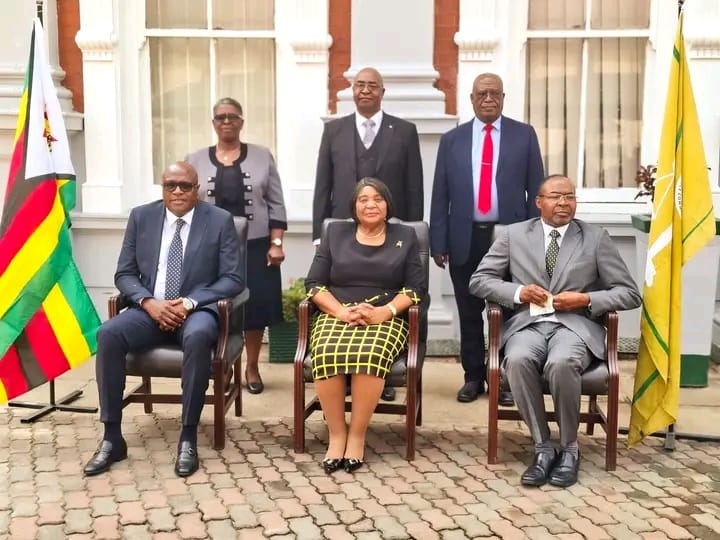
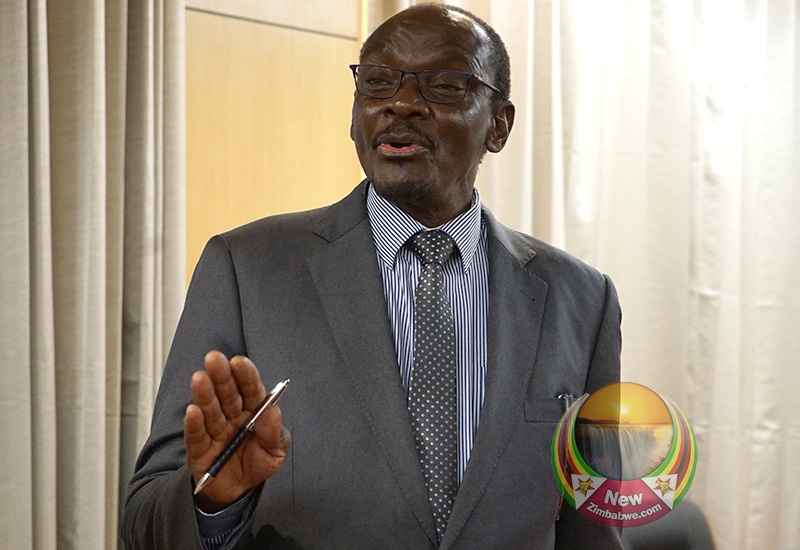
Harare, (New Ziana) – Vice President Kembo Mohadi has hailed the Institute of African Knowledge (INSTAK) as a strategic national asset that is helping Africa reclaim ownership of its history, heritage and future, as the institution marked its 10th anniversary in Harare on Thursday.
The anniversary was celebrated under the theme, “Celebrating a Decade of Advancing African Knowledge, Heritage and Liberation.”
Vice President Mohadi described the milestone as a celebration not merely of an institution, but of Africa’s determination to achieve intellectual sovereignty and preserve its collective memory.
“Today, we are not merely celebrating the anniversary of an institution. We are celebrating an idea and a vision. Above all, we are celebrating Africa’s continuing determination to reclaim ownership of its history, knowledge, heritage and future,” he said.
He noted that although INSTAK was formally established in 2016, its roots stretch back to Africa’s centuries-long struggle against slavery, colonialism and neo-colonialism, which systematically eroded African knowledge systems and cultural confidence.
VP Mohadi said Zimbabwe’s liberation struggle had secured political independence, but that the fight for intellectual sovereignty and economic independence remained unfinished.
“Our liberation movements corrected political injustice and we won our independence through blood, sweat and tears; but another struggle remained unfinished, the struggle for intellectual sovereignty and economic independence,” he said.
He said the Second Republic under President Emmerson Mnangagwa regards the advancement of knowledge, culture and heritage as strategic pillars of national development.
He said Vision 2030’s economic modernization agenda must be underpinned by citizens who understand their identity, history and national direction.
VP Mohadi praised INSTAK for publishing the landmark Africa Factbook, endorsed by African leaders at the 2016 African Union Summit in Kigali, saying the project demonstrated Africa’s capacity to invest in its own intellectual renaissance.
“Its publications, research programmes, educational initiatives, heritage projects and infrastructural undertakings contribute not only to Zimbabwe’s national development, but also to the broader objectives of regional and continental integration,” he said.
He highlighted the strong partnership between Government and INSTAK, describing it as a model public-private collaboration that extends beyond traditional infrastructure projects.
VP Mohadi said the partnership was positioning Zimbabwe as a centre for African scholarship, heritage preservation and Pan-African cooperation.
A major focus of the address was Liberation City, which VP Mohadi described as “an expression of African civilization” where research, culture, tourism, education and commerce converge.
He said facilities such as the Heritage Village, Skydeck Gazebo, recreational amenities and conference infrastructure were strengthening Zimbabwe’s heritage-based tourism and cultural industries.
VP Mohadi also underscored the importance of the Museum of African Liberation, calling it one of the continent’s most ambitious heritage projects.
“The Museum is far more than an architectural landmark. It is a repository of Africa’s collective memory, which will preserve the history of liberation movements from across our continent,” he said.
He said that President Mnangagwa had granted Liberation City National Project Status and appointed Ambassador Simbarashe Mumbengegwi as Special Envoy on the Museum of African Liberation.
He said Mumbengegwi had already engaged at least 22 Heads of State and Government in support of the project, reinforcing the principle that the museum belongs to the entire African continent.
Looking ahead, VP Mohadi said the next decade for INSTAK should focus on consolidating gains, expanding partnerships across Africa and completing transformative projects such as Liberation City and the Museum of African Liberation.
“The first decade of the Institute of African Knowledge has been about laying strong foundations. The next decade must be about consolidation, expansion and deepening impact,” he said.
He reaffirmed Government’s commitment to creating an environment in which public-private partnerships can thrive, arguing that such collaboration is essential for the achievement of the African Union’s Agenda 2063 and the Sustainable Development Goals.
He urged Africans to continue advancing African knowledge, preserving African heritage and safeguarding the ideals of liberation for future generations.
New Ziana