By Simbarashe Muparaganda
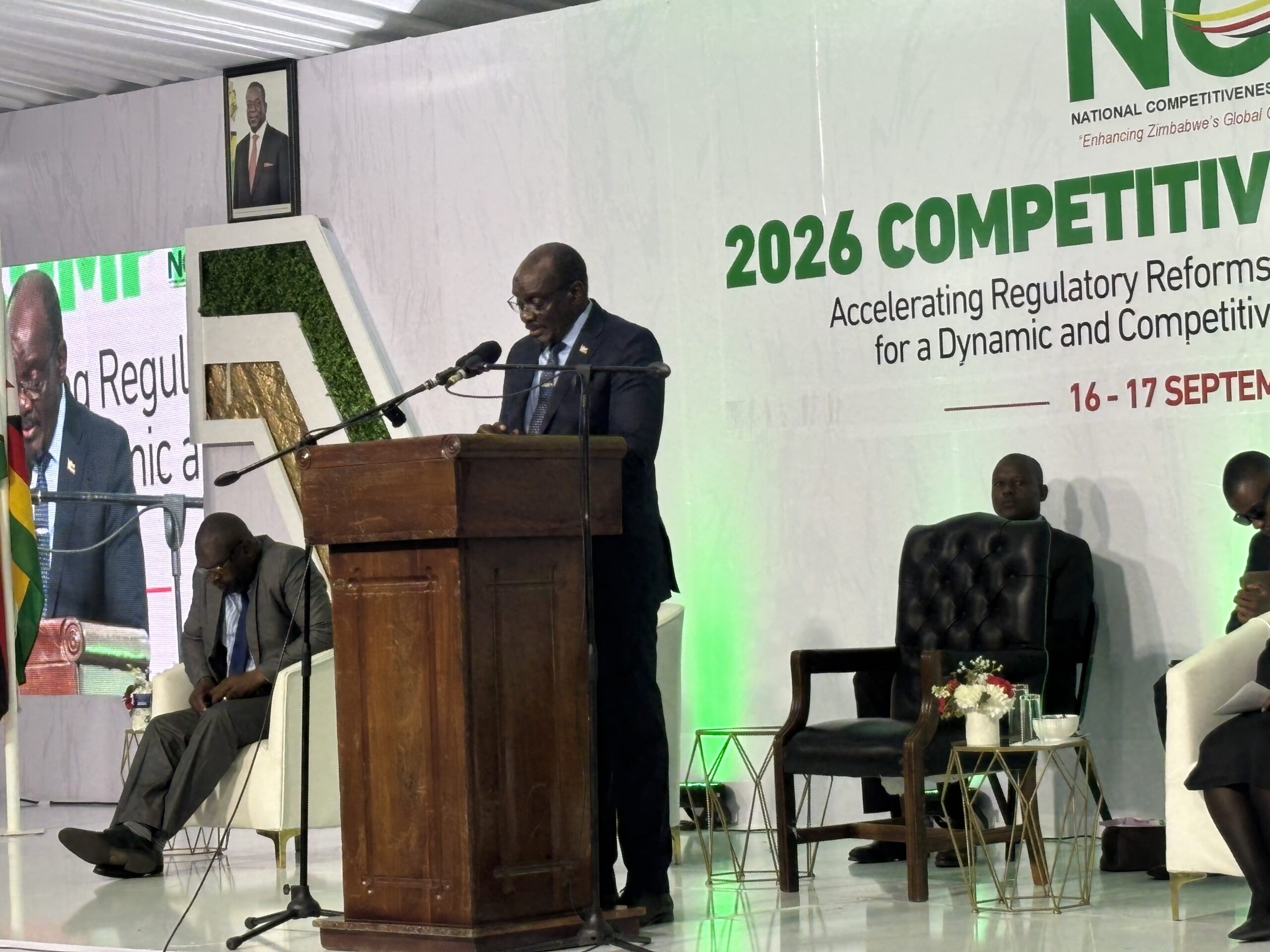
Bulawayo, (New Ziana) — Government ministries, departments and agencies should work closely with the National Competitiveness Commission (NCC) and take ownership of regulatory reforms aimed at reducing the cost of investment and improving Zimbabwe’s business environment, Vice President Colonel (Rtd) Kembo Mohadi has said.
He said this on Thursday at NCC’s second National Competitiveness Summit in Bulawayo.
The two day summit is being held under the theme, “Accelerating Regulatory Reforms and Enhancing the Ease of Doing Business for a Competitive Zimbabwean Economy”.
VP Mohadi stressed that regulations should promote enterprise and economic growth rather than obstruct them.
“I therefore call upon all ministries, departments and agencies to work closely with the Commission and to take full ownership of its reform agenda.
“We must collectively ensure that our regulatory environment becomes an enabler of investment, enterprise and economic growth rather than a constraint,” he highlighted.
VP Mohadi commended Cabinet for progress in streamlining regulatory processes in livestock, dairy, tourism, transport, manufacturing, mining, financial services, wholesale and retail, energy, construction and health.
He also noted the streamlining of selected licences and payments under the Zimbabwe Investment and Development Agency’s(ZIDA) Special Economic Zones Regulations, published through Statutory Instruments 226 and 227 of 2023, saying these measures are important in reducing the regulatory burden and lowering cost of investment in the country.
“These measures are important in reducing the regulatory burden and lowering the cost of investment in Zimbabwe.
“These initiatives and policy directions demonstrate that we are a Government that listens, that responds and, most importantly, that acts,” VP Mohadi said.
He said the reforms reflected government’s commitment to creating an enabling environment for investment and sustainable economic growth at a time when technological change, geopolitical shifts and climate pressures are reshaping global trade and production.
VP Mohadi highlighted that the quality of a country’s laws, regulations and administrative processes would determine how effectively it unlocks its productive potential.
“We should therefore ensure that our regulatory environment is smart, responsive, predictable, transparent and growth-enhancing — one that protects public interest while enabling enterprise, encouraging investment and fostering innovation,” he noted.
The Vice President pointed to the National Development Strategy (NDS) 2, launched in November last year, as the framework guiding the next phase towards Vision 2030. The strategy places emphasis on competitiveness, industrialisation, governance reforms, devolution and sustainability.
He indicated that government’s August 14, 2026 directive on the implementation and institutionalisation of Regulatory Impact Assessments across government demonstrated political commitment to improving policymaking and regulatory quality.
Under the 2026 National Budget, the NCC has been mandated to review the impact of proposed regulations, licences, fees, levies and payments before they are submitted to the Attorney-General’s Office.
VP Mohadi said the Commission would coordinate the implementation of Regulatory Impact Assessments across ministries, provide quality assurance and technical oversight, and help ensure new regulations are evidence-based, cost-effective and competitiveness-enhancing.
He further highlighted the importance of digitalisation, noting that e-government systems could improve transparency and accountability while reducing unnecessary human discretion and bureaucracy.
“While government has established the Zimbabwe Investment and Development Agency and accelerated digital services, business environment remained less competitive than required,” VP Mohadi said.
He implored public officials to act as facilitators of growth, rather than merely regulators, and challenged the private sector to bring constructive, evidence-based proposals to the reform process.
VP Mohadi also called on businesses to improve corporate governance, ethics and environmental, social and governance standards.
“To (the) private sector, I call upon you to be proactive partners, do not critique from the sidelines, bring forward constructive, evidence-based and data driven proposals.
He further said the country should position its producers, manufacturers and service providers to benefit from opportunities under the African Continental Free Trade Area through efficient, transparent and digitally enabled regulatory systems.
The Vice President applauded the NCC for developing a five-year National Competitiveness Strategy, following a directive issued by President Emmerson Mnangagwa at the inaugural summit.
VP Mohadi challenged the Commission and stakeholders to ensure summit resolutions translate into concrete and measurable reforms.
“Zimbabwe should be a country where doing business is easier, investing is more attractive, innovation is encouraged and our enterprises are able to compete successfully in regional and global markets,” he emphasised.
Vice President Mohadi also launched the five-year National Competitiveness Strategy during the same occasion.
New Ziana