By Thabisani Dube
HARARE — Zimbabwe’s war veterans are urgently appealing for comprehensive reforms to improve their welfare, healthcare, and economic prospects.
They said the current monthly payments do not meet their essential needs, and previous government initiatives have failed to provide meaningful support. The veterans are seeking immediate, effective solutions that will ensure long-term stability and dignity for those who served the nation.
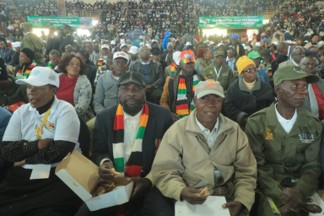
Speaking during a Zimbabwe National Liberation War Veterans Association (ZNLWVA) meeting in Harare on Saturday, delegates from various provinces raised concerns over healthcare, housing, land, transport, livelihoods, mining and support for their families.
Manicaland delegate Nowa Kahari said the monthly US$153 payment received from Government was inadequate and could not provide sustainable support.
“The money we receive every month is little. That is welfare, but it is not sustainable,” Kahari said.
He said many retired war veterans were struggling with poor health and called for stronger Government intervention in medical support.
Kahari also said some former combatants continued to experience trauma linked to the liberation struggle, with some still dreaming about guns and events from the war.
Retired Major Amon Mudluli from Matabeleland North called for resources to support individual projects and better reporting mechanisms to demonstrate progress to potential investors.
He also raised concerns over the lack of transport to enable officials to visit veterans in different areas and called for improved access to medical assistance.
Midlands provincial chairperson Fanuel Magasa called for properly resourced offices and transport for the association to improve its outreach programmes.
“We need offices to operate and resources for outreach. We have no transport,” Magasa said.
He also called for Government assistance with healthcare, employment opportunities for the children of war veterans and the drilling of boreholes at veterans’ homes, saying some elderly veterans no longer had the strength to walk long distances to fetch water.
Magasa said some mining claims allocated to war veterans had yet to deliver meaningful benefits, while some fields lay idle.
Matabeleland South chairperson Onesimus Bhebhe said veterans in rural areas were facing severe socio-economic challenges, including lack of land, and called for improved support from the Ministry of Public Service and Social Welfare.
Mashonaland Central provincial chairperson Francis Chikoturo raised concerns over delays in the issuance of mining certificates and lack of funds for funeral expenses.
He also called for the identification and support of widows and widowers of liberation war veterans and assistance for their children.
The Mashonaland West chairperson called for faster processing of title deeds and timely responses from Government offices where veterans had submitted correspondence.
The Masvingo vice chairperson said previous initiatives, including housing schemes launched in 2024, had not yielded the expected results.
He also called for the resumption of borehole drilling programmes and said a proposed scheme for war veterans to acquire shares in companies had gone quiet.
In a speech delivered to the meeting, Justice, Legal and Parliamentary Affairs Minister Ziyambi Ziyambi said remembrance of the liberation struggle should be accompanied by tangible efforts to improve the lives of those who fought for the country’s independence.
He said the welfare and social security of war veterans were a constitutional obligation rather than charity.
“Social security and material welfare are not charitable rentals. They are a sacred constitutional right and an enduring national obligation that stands as an unbreakable shield for human dignity,” Ziyambi said.
He challenged the association to turn veterans’ grievances into sustainable economic opportunities and complement Government’s economic programmes through initiatives in agriculture, mining, SMEs, cooperatives and housing.
Ziyambi said Government was prepared to work with a legally compliant association to advance such initiatives.
He also urged war veterans to resolve internal differences through dialogue and constitutional processes.
“Use this revived platform to heal our fractures, not to deepen them,” he said.
Responding to the concerns raised by delegates, ZNLWVA national chairman Moffat Marashwa called for resolutions adopted by the association to be translated into concrete action.
“Let’s ensure we spearhead the welfare of members of the liberation struggle, which is action-based. If we have agreements here, let’s see them through,” Marashwa said.
He urged members to remain united and committed to the association’s welfare mandate.
Delegates called on the national leadership to provide regular progress reports on resolutions adopted by the organisation, saying commitments should translate into tangible improvements in healthcare, housing, water, livelihoods and economic empowerment.
The meeting comes as liberation war veterans, many of whom are now elderly, push for practical programmes that can provide long-term support beyond monthly welfare payments.