
By Thabisani Dube
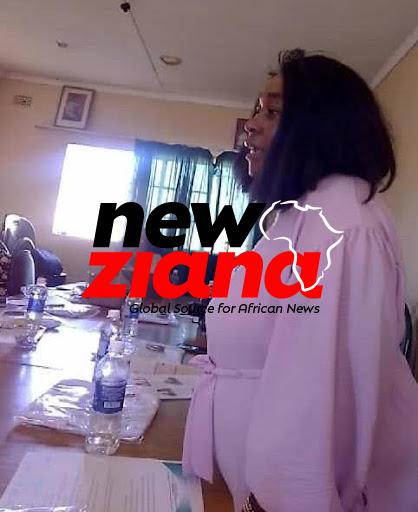
When Margaret Chinogurei recently stood before a packed hall at the Scouts Association in Eastlea, her voice trembled as she recalled the moment doctors discovered a tumour in her brain.
Around her, survivors, caregivers, and health workers sat in silence – some wiping away tears.
For years, she had endured severe headaches, neck pain and exhaustion, moving from one clinic to another without answers. Pain medication offered only temporary relief.
“I kept feeling tired and waking up with pain in my neck and shoulders,” she said. “Nothing seemed to work until I finally had a Magnetic Resonance Imaging (MRI) scan in 2021. The doctors started calling each other to look at my scan, and that is when I realised something was seriously wrong.”
The diagnosis changed her life.
Chinogurei, who lost her husband during her illness, underwent complex brain surgery on July 31, 2023. She recalled saying goodbye to her daughter before being taken into theatre.
“I told my child this could be the last time she would see me alive,” she said. “She was crying, and I told her to pray instead.”
The operation began at six in the morning and ended late in the evening. She spent days in intensive care, fainting repeatedly as physiotherapists helped her relearn basic movement.
“I went through a lot of difficulties,” she said. “But today I am standing in front of you.”
Her experience reflects a wider reality captured in global cancer data.
World Health Organisation Global Cancer Observatory (2020) data show that brain and central nervous system tumours account for about 1.6 percent of all cancers globally, yet they remain among the most lethal, particularly in low- and middle-income countries where late diagnosis and limited neurosurgical services continue to undermine survival.
The Zimbabwe National Cancer Registry (2019) reports that brain tumours account for 2.6 percent of all recorded cancers in the country, although specialists caution that the actual burden may be higher due to limited diagnostic capacity and underreporting.
The gathering brought together survivors, caregivers, doctors, nurses, volunteers, and health advocates to reflect on the challenges facing brain tumour patients in Zimbabwe and the urgent need for stronger support systems.
It was against this backdrop of medical uncertainty and emotional strain that the Zimbabwe Brain Tumour Association (ZBTA) was born two decades ago.
Founded in 2005 from a small support group in Belvedere, Harare, the ZBTA has grown into one of the country’s leading patient advocacy organisations. Registered as a Public Voluntary Organisation, ZBTA was established by parents, survivors, and caregivers seeking to confront stigma, improve awareness and advocate for better access to diagnosis and treatment.
Chairperson of the association, Romano Nyahwa, said many patients in Zimbabwe still delay seeking medical help due to limited awareness and misconceptions surrounding brain tumours.
“Brain tumour is a journey of faith and hope,” she said in her opening remarks at the seminal workshop. “Families often carry the burden of care at home without training or adequate support, and that is why empowering caregivers is so important.”
Across sub-Saharan Africa, medical studies and neurosurgical reports indicate that outcomes for brain tumour patients remain significantly poorer than global averages. Experts attribute this to late presentation, limited access to MRI and CT scans, shortages of neurosurgeons, and weak cancer registration systems that make the true burden difficult to measure.
Doctors note that while tumours such as meningiomas are commonly diagnosed in hospital settings, many cases remain undetected until advanced stages, when treatment options are limited.
Caregivers at the Harare forum shared emotional accounts of living with the daily realities of long-term care.
Jonathan Tserayi, a caregiver, said he is looking after a child with a brain tumour who is turning blind and may be forced to leave school.
“Caregivers are often forgotten, yet we suffer more in silence,” he said. “We need counselling, support systems and people who understand what we go through every day.”
His remarks moved most attendees, with several caregivers in agreement as the discourse turned to the absence of structured psychosocial support for families.
The emotional weight of caregiving echoed throughout the forum, where participants spoke about financial strain, long travel distances to hospitals and the psychological burden of prolonged illness.
Neurosurgeon Dr. Shungu Ushewokunze said delayed diagnosis remains one of the biggest challenges, noting that while headaches are common, they often mask the presence of tumours. He stressed that awareness is vital, since most patients with brain tumours do experience headaches, yet only a small fraction of headache cases are tumour‑related.
Ushewokunze, who trained in Zimbabwe, the UK, and Australia before returning home in 2024, added that access to MRI scans, radiotherapy and specialist equipment continues to shape patient outcomes.
“We are seeing improvements,” he said, “but affordability and availability remain major barriers.” He also warned that cultural beliefs and misinformation sometimes delay treatment, as families may first seek help from churches or traditional healers before turning to hospitals.
ZBTA Director Christine Mungoshi said the organisation’s mission is rooted in ensuring that both patients and caregivers are heard.
“The patient has a voice, and we need to amplify it,” she said. “It is about empowerment, dignity, and ensuring no one feels isolated.”
Mungoshi, a social worker by trade, said ZBTA has expanded its partnerships locally and internationally, including engagement with the Union for International Cancer Control to strengthen advocacy and collaboration.
The organisation also provides home visits, psychosocial counselling and limited assistance with medication and nutrition support where resources allow.
Despite progress, major challenges remain.
Zimbabwe continues to face a shortage of neurosurgeons, limited diagnostic infrastructure and high treatment costs. In some cases, families are forced to sell property or exhaust savings to fund surgery and ongoing care, raising difficult ethical and economic questions about survival versus financial security.
Ushewokunze noted that some aggressive brain tumours still have poor survival rates even with treatment.
Yet amid these challenges, the forum remained anchored in solidarity.
Survivors shared experiences with newly diagnosed patients, caregivers exchanged coping strategies and volunteers offered emotional support.
For Chinogurei, standing before the audience was itself a milestone.
“I am here today because someone cared enough to walk with me,” she said. “This association gave me hope when I thought I had none.”
As Zimbabwe strengthens its cancer response and aligns with global health priorities under WHO guidance, the experience of organisations like ZBTA reflects a wider African reality – where survival often depends not only on medical expertise, but on how early patients can access diagnosis, treatment and sustained care.
For Chinogurei and many others, survival is not measured only in scans or surgeries, but in the compassion that sustains them when medicine alone is not enough.