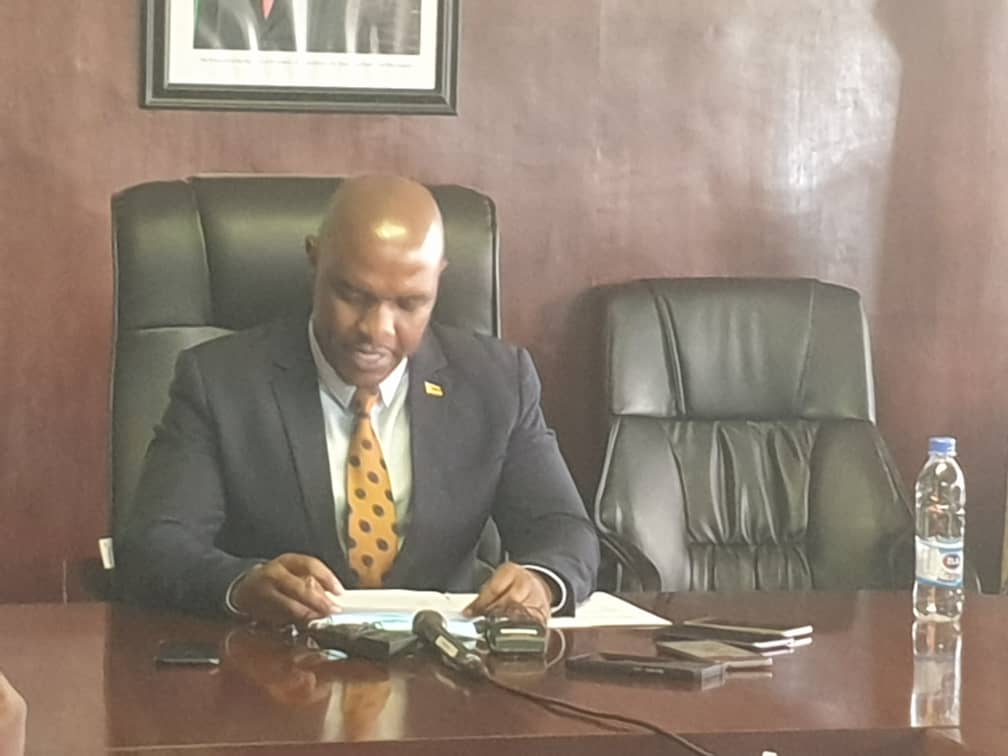
Harare, (New Ziana) – Zimbabwe has intensified its drive to strengthen cybersecurity and combat the growing threat posed by artificial intelligence-powered cybercrime, with Information Communication Technology, Postal and Courier Services Minister Tatenda Mavetera warning that deepfakes now pose a danger to national security, democracy, and public trust.
Officially opening the 2026 International Telecommunication Union (ITU) Inter-Regional CyberDrill for Africa and Arab States in Victoria Falls on Wednesday, Minister Mavetera called for stronger regional cooperation, warning that cyber threats transcend national borders and require coordinated responses.
“We cannot protect tomorrow’s digital economy with yesterday’s static defences. The era of building a fortress and hiding inside is over. The perimeter is dead. The new logic is about resilience,” she said.
The minister said Zimbabwe’s Smart Zimbabwe 2030 vision can only succeed if citizens have confidence in the country’s digital systems.
“Cybersecurity is not a side project to Smart Zimbabwe 2030. It is the bedrock on which the entire master plan rests. A digital service that citizens cannot trust is one that citizens will not use,” she said.
Minister Mavetera highlighted several initiatives already underway, including the implementation of the National Artificial Intelligence Strategy 2026–2030, establishment of an AI-Cybersecurity Fusion Centre, mandatory AI safety standards for critical sectors, and the forthcoming National Child Online Protection Policy aimed at protecting children from online exploitation.
She also revealed that Government is finalising the National Cybersecurity Strategy 2026–2030, which proposes the establishment of a National Cybersecurity Authority to coordinate incident response, safeguard critical information infrastructure and build local cybersecurity capacity.
The minister devoted significant attention to the emerging danger posed by deepfake technology, describing it as one of the greatest cybersecurity challenges facing governments and societies.
“I speak of deepfakes… This is not science fiction. This is the weaponization of artificial intelligence against truth,” she said.
She warned that manipulated videos and audio recordings have the potential to spark diplomatic crises, financial instability and social unrest.
“Cybersecurity is no longer just about confidentiality and integrity of systems; it is about the integrity of truth itself,” Minister Mavetera said.
To strengthen national resilience, the minister announced six key commitments, including establishing a robust National Cyber Incident Response Team, launching a national cyber hygiene campaign for small and medium enterprises, creating a Deepfake Detection and Public Media Literacy Taskforce, training 10 000 cybersecurity professionals over the next three years, fast-tracking Zimbabwe’s ratification of the African Union’s Malabo Convention, and institutionalising annual national cyber drills.
She urged African countries to move beyond isolated national responses and embrace continental cooperation.
“It is time for Africa to retire an old habit of mind. Cyber threats do not carry passports, and they certainly do not respect the lines on our maps. Africa cannot afford fragmented, disconnected responses to one borderless threat,” she said.
Minister Mavetera also encouraged participating countries to openly exchange experiences and best practices throughout the four-day CyberDrill.
“I call upon every technical team, every cyber manager and every official present to carry back from this engagement not merely notes and certificates, but concrete, actionable improvements to how your respective nations detect, respond to, and recover from cyber incidents,” she said.
The four-day ITU Inter-Regional CyberDrill has brought together cybersecurity experts, regulators, law enforcement agencies, computer incident response teams and policymakers from Africa and the Arab States to strengthen preparedness against increasingly sophisticated cyber threats and enhance regional cooperation in protecting digital infrastructure.
New Ziana