By Zachary Gava
Harare, (New Ziana) – Zimbabwe’s Munhumutapa legacy should be understood not merely through ancient ruins and royal wealth, but through the sophisticated systems of governance, production, trade, diplomacy, technology and social organisation that enabled complex African societies to flourish, speakers at a public lecture in Harare said on Thursday.
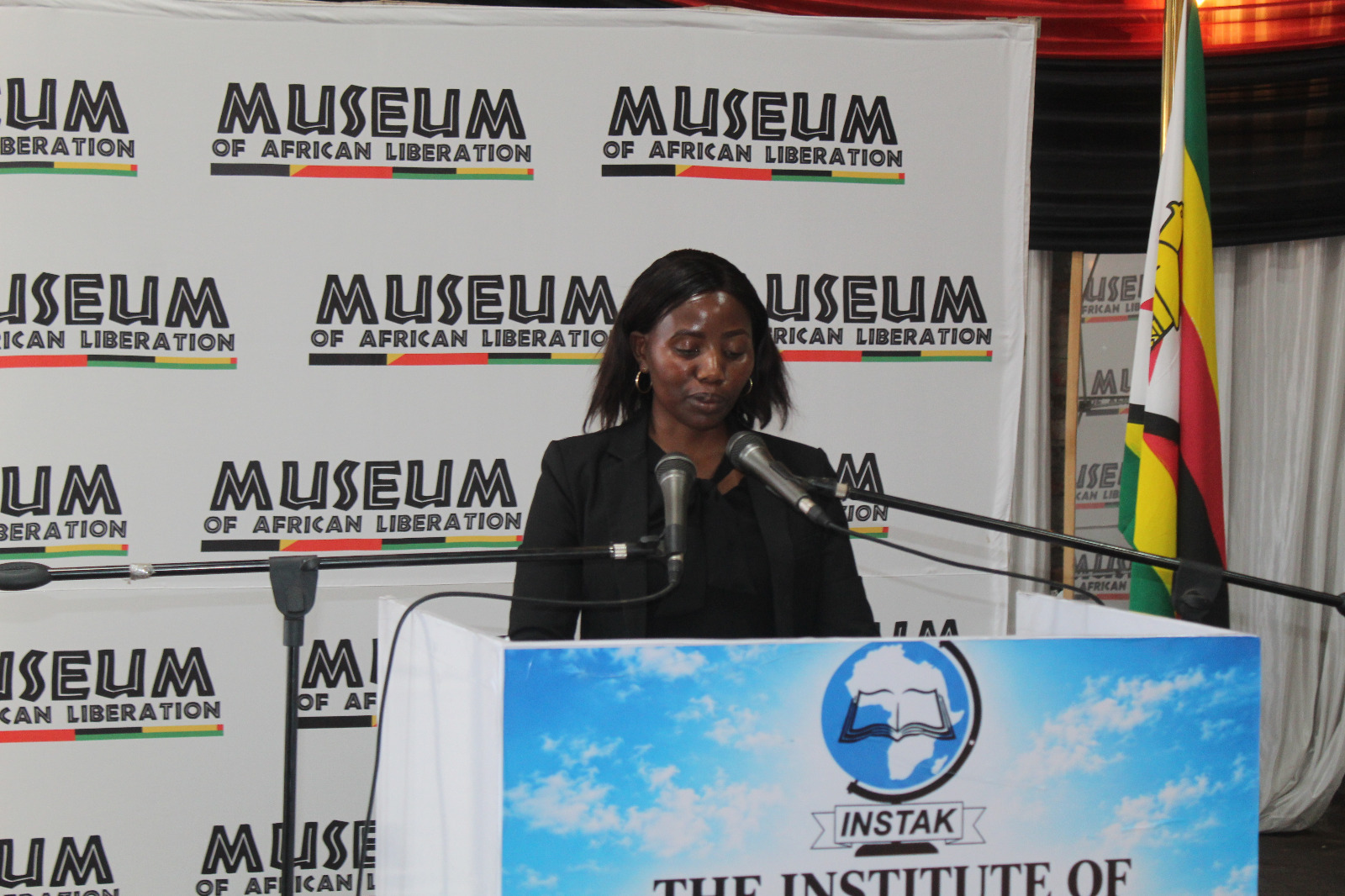
The lecture, organized by the Institute of African Knowledge (INSTAK) under the theme “Why Munhumutapa Matters”, brought together scholars, students, heritage practitioners and the public to examine the historical significance of the Mutapa State and its continuing relevance to contemporary Zimbabwe.
The discussions challenged approaches that reduce pre-colonial African history to monuments and archaeological sites, arguing that the real significance of the Mutapa civilisation lies in the knowledge systems, institutions and economic structures that sustained it.
Speaking during the lecture, Curator of Ethnography at the National Museums and Monuments of Zimbabwe, Esther Chipashu said the strength of the Mutapa State was rooted in its ability to integrate different aspects of society into a functioning system.
“The creation of Mutapa was not simply measured by the wealth of its rulers and the scale of its monuments,” Chipashu said.
“It lay in the ability of people to organize land, labour, production, trade, political authority, diplomacy, technology, belief and knowledge into an interconnected system, capable of sustaining a complex society across a vast territory.”
Chipashu said the achievements of the civilisation extended beyond the stone structures associated with Great Zimbabwe, encompassing agriculture, livestock production, mining, political authority and social and economic organisation.
She argued that understanding these dimensions was critical to appreciating the sophistication of African societies before colonial rule.
“The civilisation was both material and intangible,” she said, pointing to long-distance trade, indigenous architectural technology and cultural practices as important components of the Mutapa legacy.
Chipashu also placed the rise of Mutapa within the wider historical development of complex societies in the region.
She noted that Great Zimbabwe flourished from around 1100 to 1450, before the centre of political power shifted northwards following its decline.
This, she said, complicated simplistic explanations that Nyatsimba Mutota migrated from Great Zimbabwe solely in search of salt.
“The search for salt was just an additional factor to other pressing factors which were happening at Great Zimbabwe,” she said.
Chipashu said the preservation of Mutapa history was also important in confronting the distortion and marginalisation of African history during the colonial period.
She described the historical stripping away of African heritage and knowledge as an “epistemic” injustice, arguing that institutions responsible for heritage preservation had an important role in restoring Zimbabweans’ understanding of their past.
She said the National Museums and Monuments of Zimbabwe and the National Archives of Zimbabwe played complementary roles in preserving the country’s heritage, including archaeological remains, material culture, manuscripts, documents and audiovisual records.
She urged Zimbabweans to actively preserve and promote the Mutapa legacy.
“I encourage everyone, all Zimbabweans, to be proactive and revitalize where possible, promote and preserve the Mutapa legacies, both as history and heritage, for continuity and posterity,” she said.
Chipashu further noted that Zimbabwe’s commitment to heritage preservation was reinforced by its participation in international conventions dealing with tangible and intangible cultural heritage.
Chitepo Ideological College lecturer, Godwine Mureriwa, said the Mutapa State provides historical lessons about organisation, strategy and national development.
He said the state was characterised by military, economic, cultural and organisational systems that enabled it to exercise influence over a considerable geographical area.
“The Mutapa State was organized militarily, economically, culturally, organizationally and strategically,” Mureriwa said.
He argued that the historical experience of the Mutapa State should encourage contemporary Zimbabweans to confront modern challenges while maintaining an appreciation of the country’s historical foundations.
Mureriwa also linked the country’s historical experience to contemporary questions of sovereignty, economic development, land and international relations.
He said Zimbabwe’s historical experience had shaped its approach to sovereignty and engagement with other countries, while stressing the importance of pursuing economic development in an increasingly technological world.
He said the historical achievements of African civilisations should not become an excuse for living in the past.
“Much as we cherish the magnificence of Great Zimbabwe and so on, we are now in a new era of technology, digitalization and so on,” he said.
“And therefore, we should do more and better things, perhaps than Great Zimbabwe itself.”
His argument underscored one of the central themes of the lecture that celebrating African achievements of the past should translate into ambition for the future rather than nostalgia alone.
INSTAK chief executive Kwame Muzawazi said historical knowledge should serve as a bridge between generations and a source of ideas for confronting contemporary challenges.
“We need to meet from time to time, exchange ideas and nourish our minds with the inspiration that comes from yesterday as a guide for where we want to go tomorrow,” Muzawazi said.
He described history as a continuing process rather than a closed chapter.
“History is not really the past. History is, in fact, the past, the present and the future,” he said. “It is very critical to understand that it is not a dead part of our yesterday, but we are living our history today.”
Muzawazi said commemorating the Munhumutapa Empire was important because it broadened the narrative about Africa by highlighting periods of political organisation, economic activity, cultural achievement and regional influence.
He said the Mutapa legacy could provide young Zimbabweans with a stronger sense of identity while encouraging them to think about how historical achievements could inform present-day development.
“The legacy of the Mutapa Empire acts as a cultural shield against historical amnesia, offering Zimbabwean youth a profound sense of identity rooted in sophisticated governance and continental influence,” Muzawazi said.
He further argued that studying the Mutapa State could stimulate reflection on economic independence, the management of natural resources and Zimbabwe’s relationships with the international community.
Muzawazi said the architectural and technological accomplishments associated with pre-colonial Zimbabwe demonstrated that advanced engineering, urban planning and sustainable development had indigenous African precedents.
“We therefore continue not borrowing from Western concepts, but getting inspired by the achievements, the milestones and the great deeds of our ancestors,” he said.
From the organisation of land and production to diplomacy, technology, trade and cultural identity, speakers argued that the Mutapa experience offered historical lens through which contemporary Zimbabweans can examine both the country’s achievements and the challenges that lie ahead.
New Ziana