
By Maxwell Mapungwana
Marondera, (New Ziana)-Zimbabwe’s blueberry industry is poised for significant growth this year, with one of the country’s leading producers targeting a sharp increase in exports as global demand for the fruit continues to rise.
Speaking to journalists on a media tour facilitated by the Ministry of Information, Publicity and Broadcasting Services, Wiserow Pvt Ltd managing director, Bruce Meikle said his company expects to increase exports from 597 tonnes last year to about 900 tonnes this season, with Europe remaining the primary market. While some shipments previously went to the Middle East, exports to the region have slowed due to the ongoing conflict.
The June-to-September harvest window, said Meikle gives Zimbabwe a unique competitive advantage, as it coincides with low blueberry production in many other parts of the world.
”Zimbabwe is able to produce blueberries from June to the end of September, which is when there’s low production elsewhere.
That gives us an ideal opportunity, particularly in the European market,” said Meikle.
The company, he said, is also exploring opportunities to penetrate the Chinese market during the same export window.
Zimbabwean blueberries have earned a strong reputation internationally for their superior quality and taste, helping local exporters secure premium prices.
”Our berries have developed a very good name in terms of quality and flavour. That reputation is giving us a strong competitive advantage in the export market,” he said.
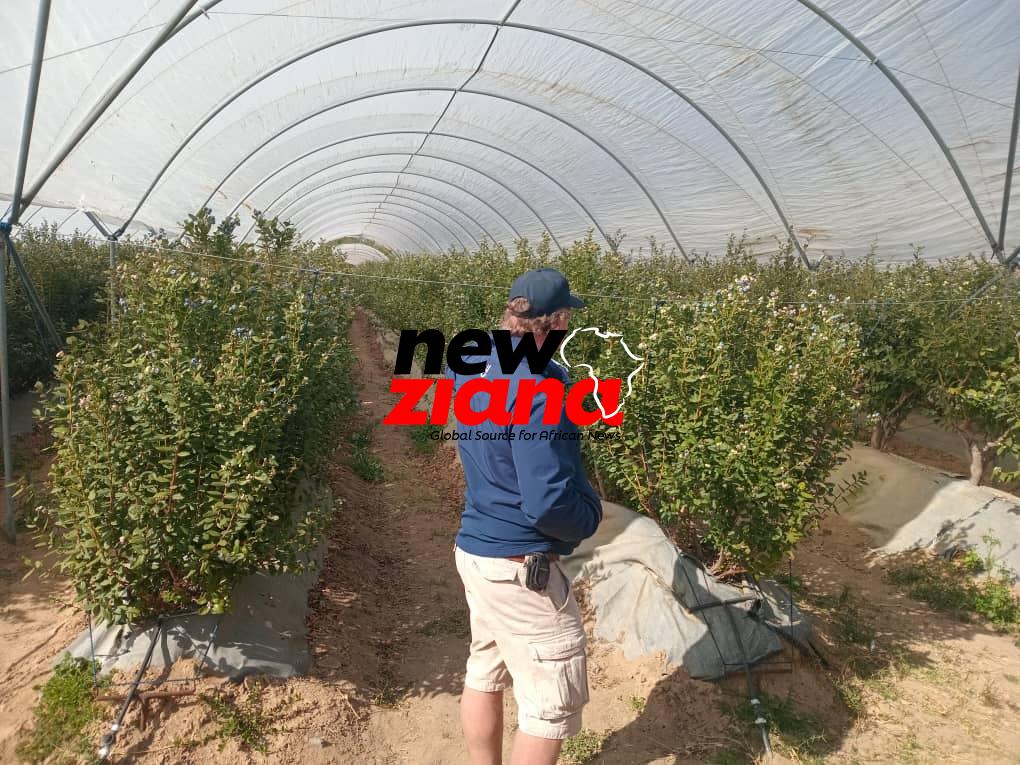
The company plans to expand its blueberry plantations from the current 72 hectares to 125 hectares over the coming years.
Once the new orchards reach full production, Meikle said annual output is expected to increase to about 2,500 tonnes.
Although the company supplies the domestic market, only about five percent of total production is sold locally.
”We quickly saturate the local market because demand is relatively small. The bulk of our blueberries therefore go to export markets where we receive better prices,” he said.
The expansion is expected to significantly boost export earnings.
The company generated approximately US$2 million in revenue last year after entering the export season later than planned, while this year, it is targeting around US$5 million in export revenue.
Meikle also encouraged farmers interested in venturing into blueberry production to first assess their soil conditions carefully.
”Blueberries thrive in very sandy soils, particularly tobacco sands. They don’t perform well in heavy clay soils, unless they are grown in pots. The sandier the soil, the better,” he said.
Beyond their commercial value, blueberries are increasingly sought after for their nutritional benefits.
Rich in antioxidants and vitamins, they are regarded as a superfood that supports heart health, helps regulate blood pressure and contributes to disease prevention.
With expanding production, growing international recognition and access to premium export windows, Zimbabwe’s blueberry industry appears well positioned to strengthen its contribution to the country’s horticultural export earnings.